




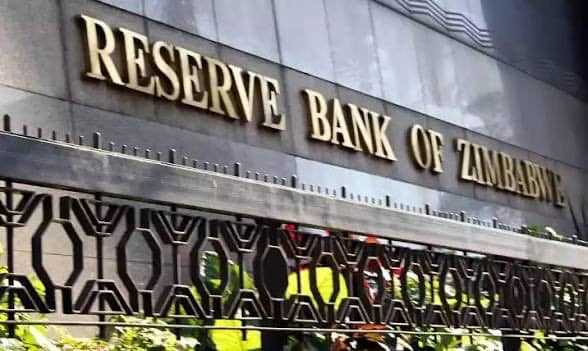
Zimbabwe's monetary authorities have cut the cost of central bank funding, but the move is now running into a more difficult question: whether commercial banks will pass those reductions on to businesses that need capital to produce, invest and expand.
The Reserve Bank of Zimbabwe (RBZ) has stepped up pressure on banks to review lending rates following its decision to ease monetary policy, arguing that expensive credit is shutting productive businesses out of formal financing.
The latest intervention comes after the Bank Policy Rate was reduced from 35% to 30%, while the interest rate on the Targeted Finance Facility (TFF) was cut from 20% to 15%. The RBZ retained a maximum all-inclusive on-lending rate of 25% for productive-sector borrowers under the facility.
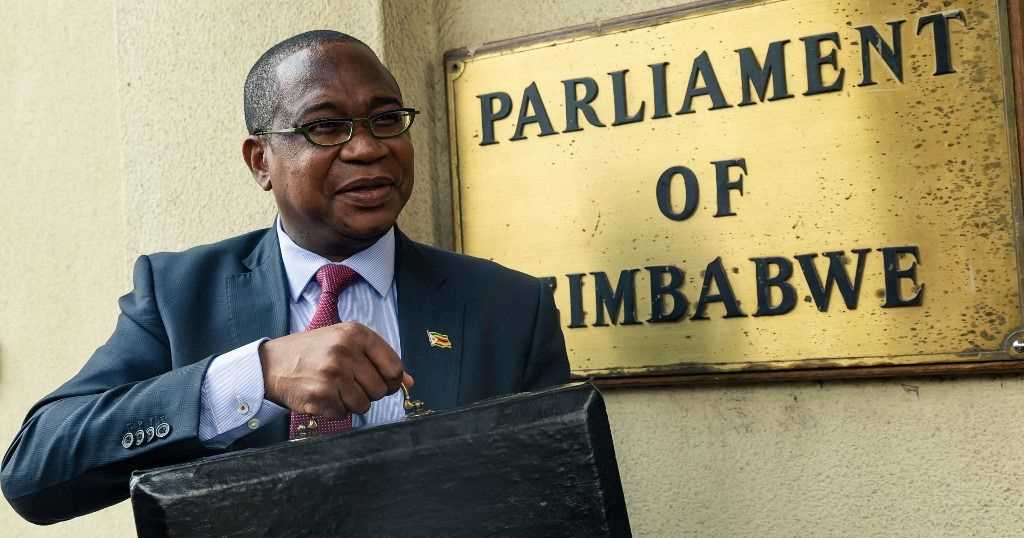
Governor John Mushayavanhu said the TFF reduction was deliberately aligned with the cut in the main policy rate.
“This is proportional to the proposed reduction in the bank policy rate, albeit with a cap on banks’ on-lending to the productive sectors at an all-inclusive interest rate of 25 percent.”
That distinction matters because the TFF is not simply another source of commercial bank funding. It is designed to channel relatively cheaper money towards activities capable of expanding production, including agriculture, manufacturing and other productive enterprises.
The problem is that the benefit of lower official rates can disappear if businesses continue to face high borrowing costs outside targeted facilities.
Recent analysis based on RBZ data indicates that ordinary commercial lending rates have remained above 40%, considerably higher than both the 30% policy rate and the 25% ceiling applicable to productive-sector lending through the TFF.
This leaves Zimbabwe with an unusual monetary policy transmission problem.
The central bank has gained room to loosen policy because inflation has fallen sharply, yet the cost of credit in the wider banking system has not necessarily fallen at the same speed.
The RBZ says annual ZiG inflation remained below 5% from January through July, reaching 3.2% in July. The improvement in price and exchange-rate stability has provided room for the central bank to begin shifting its attention towards supporting economic activity.
For a manufacturer, cheaper credit can determine whether new machinery is purchased or an expansion plan is shelved. For farmers, it affects access to seasonal inputs, irrigation and equipment. For mining companies, the cost of finance can influence investment in exploration, extraction and processing.
The same applies to smaller businesses that depend on working-capital facilities to maintain inventories and meet operating costs.
When borrowing becomes too expensive relative to expected returns, businesses can simply decide not to borrow.
That creates a problem for an economy seeking to increase domestic production.
The RBZ has already identified productive-sector financing as a priority. The TFF has an envelope of ZiG1.2 billion and was specifically designed to provide financing at more favourable terms than ordinary commercial borrowing.
But targeted funding alone cannot solve the wider cost-of-credit problem if the majority of businesses remain dependent on ordinary bank lending.
The central bank's latest push therefore places commercial banks at the centre of the next stage of Zimbabwe's economic recovery.
Banks have their own reasons for maintaining lending spreads, including credit risk, operating costs, capital requirements and concerns about borrowers' ability to repay.
Related Stories
But the RBZ's argument is that those considerations should not prevent monetary easing from feeding through into the real economy.
The policy environment has changed considerably from the conditions that previously required a much tighter monetary stance.
Mushayavanhu said the strengthening of the country's external position had helped support monetary stability, with foreign-currency reserves backing the ZiG rising above US$1.5 billion by May.
“The sustained increase in foreign currency inflows supported the accumulation of foreign currency reserves backing ZiG to over US$1,5 billion as at May 2026.”
The Governor said the improved reserve position had also strengthened the central bank's capacity to meet legitimate foreign-currency obligations and support exchange-rate stability.
By July, reserves had risen further to about US$1.7 billion, equivalent to roughly 1.7 months of import cover, according to the RBZ's mid-term assessment.
That improved stability provides room for lower interest rates. But it does not guarantee that cheaper credit will automatically produce faster investment.
If uptake increases after the reduction to 15% and productive-sector borrowers can access loans capped at 25%, it would suggest that financing costs were a significant constraint on investment.
If demand remains weak, the problem may lie elsewhere, including collateral requirements, business confidence, limited project pipelines, uncertainty over future returns or companies' reluctance to take on ZiG-denominated debt.
That is why the RBZ's latest intervention should not be viewed simply as a call for banks to cut rates.
It is a test of whether Zimbabwe's entire financial system can convert monetary stability into productive investment.
The central bank itself has said its policy framework will continue aligning money-supply growth with real economic activity while maintaining conditions consistent with price stability and sustainable growth.
Mushayavanhu also signalled that policy would remain responsive rather than fixed.
“Going forward, the MPC will continue to calibrate the monetary policy stance on a meeting-by-meeting basis based on the evolution of macroeconomic fundamentals.”
That leaves commercial banks with a clear signal: the monetary environment is becoming less restrictive, and the RBZ expects the financial sector to respond.
For Zimbabwean businesses, however, the question is more practical.
Will the rate cuts show up on their loan statements?
The answer will determine whether the latest phase of monetary stabilisation becomes an investment story or remains largely a financial-sector story.
If banks respond with meaningful reductions in lending rates, businesses could have greater scope to finance machinery, working capital, expansion and new productive capacity.
If they do not, Zimbabwe risks having cheaper money at the centre of the financial system while companies on the ground continue to regard bank credit as too expensive.







Leave Comments