







Zimbabwe’s housing crisis is creating a lucrative grey market in land where desperate home seekers can pay for a residential stand, build a house and still end up with nothing to show for their investment.
Housing Minister Paul Mavima’s admission that illegal land sales have become “a cancer that has gone on for a while” exposes a failure in the country’s housing system: demand for homes is moving faster than the institutions responsible for making land legally available, planning settlements and protecting buyers.
The problem is no longer simply about people constructing houses without approval. It is about how people are able to acquire supposedly residential land in the first place, sometimes through cooperatives or traditional structures, before discovering that the land was never legally available for housing.
Mavima said some land barons began as legitimate cooperatives before transforming into what he described as “personal fiefdoms” that ignored development protocols while selling land.
“Some of the land barons started off as bonafide cooperatives and then morphed into personal fiefdoms that did not follow any protocols in the development of the land that they sold,” he said.
That admission raises an uncomfortable question: if government and local authorities know that land is being sold illegally, why are home seekers only discovering the problem after they have paid and built?
The answer cannot simply be that citizens should have checked with councils.
Mavima urged prospective homeowners to approach councils before buying or building and establish whether developments are sanctioned. But this places a significant burden on ordinary home seekers operating in a housing market where the very distinction between legitimate and illegitimate land can be difficult for a layperson to establish.
A person looking for a residential stand may be presented with cooperative documents, allocation letters, receipts, meeting minutes or even apparently legitimate local structures. By the time the buyer discovers that the land is not approved for residential development, their savings may already have been sunk into the property.
This is where the housing crisis becomes a governance crisis.
The desperation for housing creates a market. Weak enforcement creates the opportunity. And when enforcement finally arrives, it can be the home seeker, rather than the person who sold the land, who bears the greatest cost.
Mavima himself acknowledged the need for stronger intervention.
“When all is said and done, we need strong enforcement mechanisms that limit the un-procedural sale of land,” he said.
But enforcement after transactions have occurred is not enough.
The more important question is why unauthorised land allocation and construction can progress far enough for families to invest substantial amounts of money before authorities intervene.
This contradiction becomes even sharper when viewed alongside the minister’s position on demolitions.
“We do not want demolitions at all,” Mavima said.
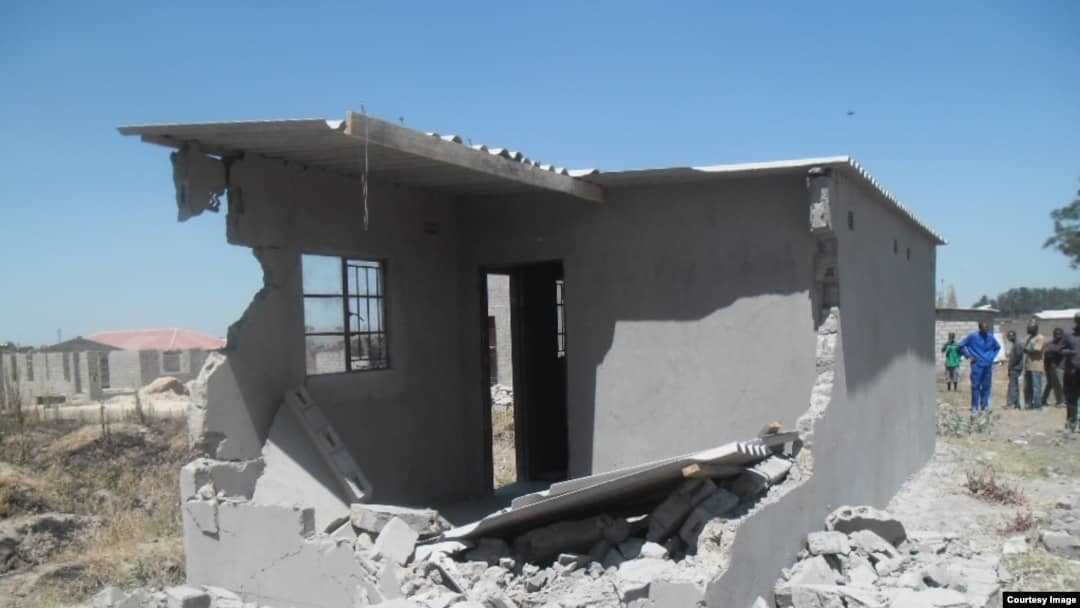
Yet Zimbabwe has repeatedly faced disputes over houses and settlements deemed illegal after construction has already taken place. Mavima’s response is that citizens should verify approvals before building.
That is necessary, but prevention cannot rest entirely on the buyer.
If a development is unauthorised, there should ideally be mechanisms capable of stopping the transaction and construction before a family commits years of savings to a house.
Otherwise, the system effectively allows a person to enter an illegal housing market, collect money, permit construction to proceed and then punish the end user when the illegality is eventually discovered.
The minister’s comments about peri-urban Sabhukus expose another layer of the problem.
Mavima said some traditional leaders in peri-urban areas had begun parceling out land to town dwellers even where such areas were earmarked in master plans for future urban expansion.
“An emerging issue is the aspect of Sabhukus in periurban areas who have taken advantage of town dwellers who want to have a place of their own and started parceling out land in areas, which according to town master plans, are earmarked for urban expansion,” he said.
Related Stories
This is potentially explosive because Zimbabwe’s urban footprint is expanding into areas where traditional land administration, rural governance and municipal planning intersect.
A home seeker may therefore receive what appears to be a legitimate allocation from one authority while another authority considers the same piece of land reserved for a completely different purpose.
Mavima warned that people should establish whether land allocated by a village head or headman falls within an urban master plan or is reserved for schools, clinics, grazing areas or other uses.
But that also exposes a fundamental information gap.
How many ordinary home seekers have access to current master plans and can confidently determine whether a piece of land is earmarked for urban expansion, a school, a clinic or residential development?
If the answer is that citizens must personally navigate complex planning systems before buying land, then the state still has a significant consumer-protection problem.
The infrastructure issue makes the situation even more troubling.
Mavima said developers are required to provide water and sewer services, either by connecting to existing infrastructure or developing alternatives such as biodigesters.
“Without such services, the development would not be authorized,” he said.
Yet the existence of developments where people are able to build without adequate water and sewerage suggests that the gap between regulation and enforcement remains significant.
And that gap has consequences beyond individual property disputes.
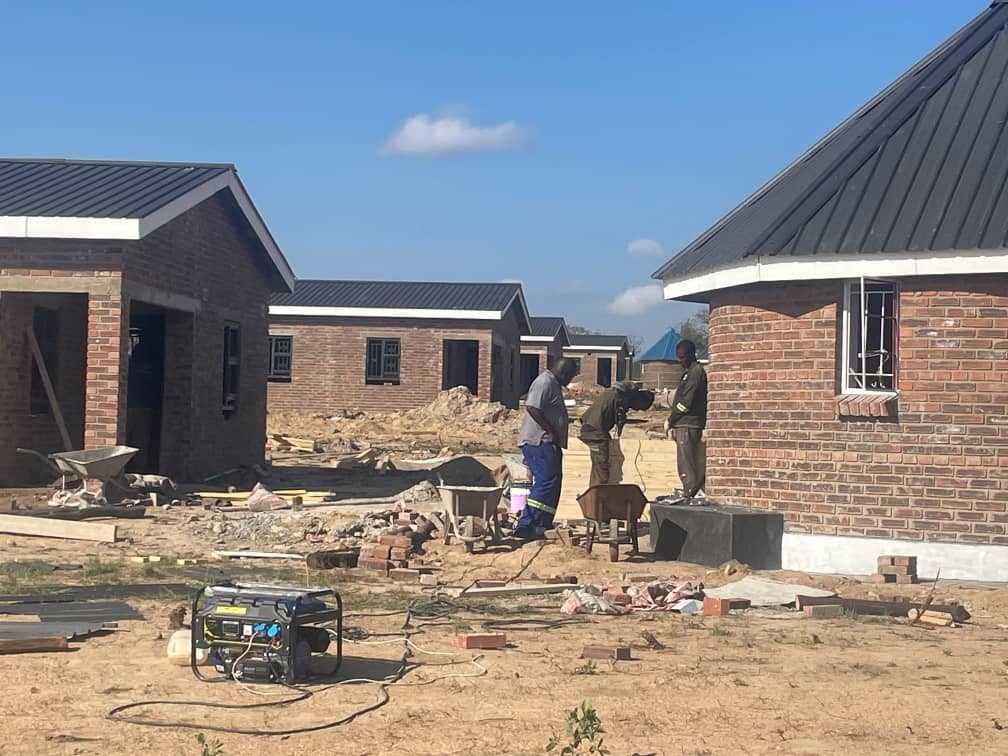
Unplanned settlements place pressure on councils that must eventually provide roads, drainage, water, sewerage, refuse collection and other services. The cost of correcting poorly planned development can ultimately be transferred from the developer or land seller to the public.
In that sense, illegal land development can create a second housing bill: families pay to acquire and construct on the land, while taxpayers and local authorities may later face the cost of retrofitting infrastructure.
The deeper problem, however, is that Zimbabwe has a housing demand problem large enough to sustain the informal land market in the first place.
People do not ordinarily turn to questionable land dealers because they prefer illegal transactions. They do so because the formal housing system is often too slow, expensive or inaccessible.
That means enforcement alone will not solve the problem.
If government closes one avenue for informal land sales without expanding affordable, serviced and legally secure alternatives, the demand will simply move elsewhere.
Mavima’s wider housing proposals acknowledge this pressure. He has said government alone cannot meet the growing demand and that local authorities, private developers and central government must work together.
That approach may increase supply, but it also creates another challenge: private-sector participation must not simply produce more expensive developments that remain beyond the reach of ordinary households.
The housing crisis therefore cannot be reduced to “land barons versus government”.
It is a chain of failures and incentives: high demand for housing, limited affordable formal supply, weak enforcement, fragmented land administration, inadequate infrastructure and buyers willing to take risks because the alternative is remaining without a home.
At the centre of that chain is the home seeker.
They are simultaneously the person most desperate for land and the person with the least power when the transaction goes wrong.
Mavima’s admission that illegal land sales have become a longstanding “cancer” is therefore significant. But diagnosing the cancer is not the same as treating it.









Leave Comments