








By Simbarashe Namusi
Zimbabwe needs to have an uncomfortable conversation about its national symbols.
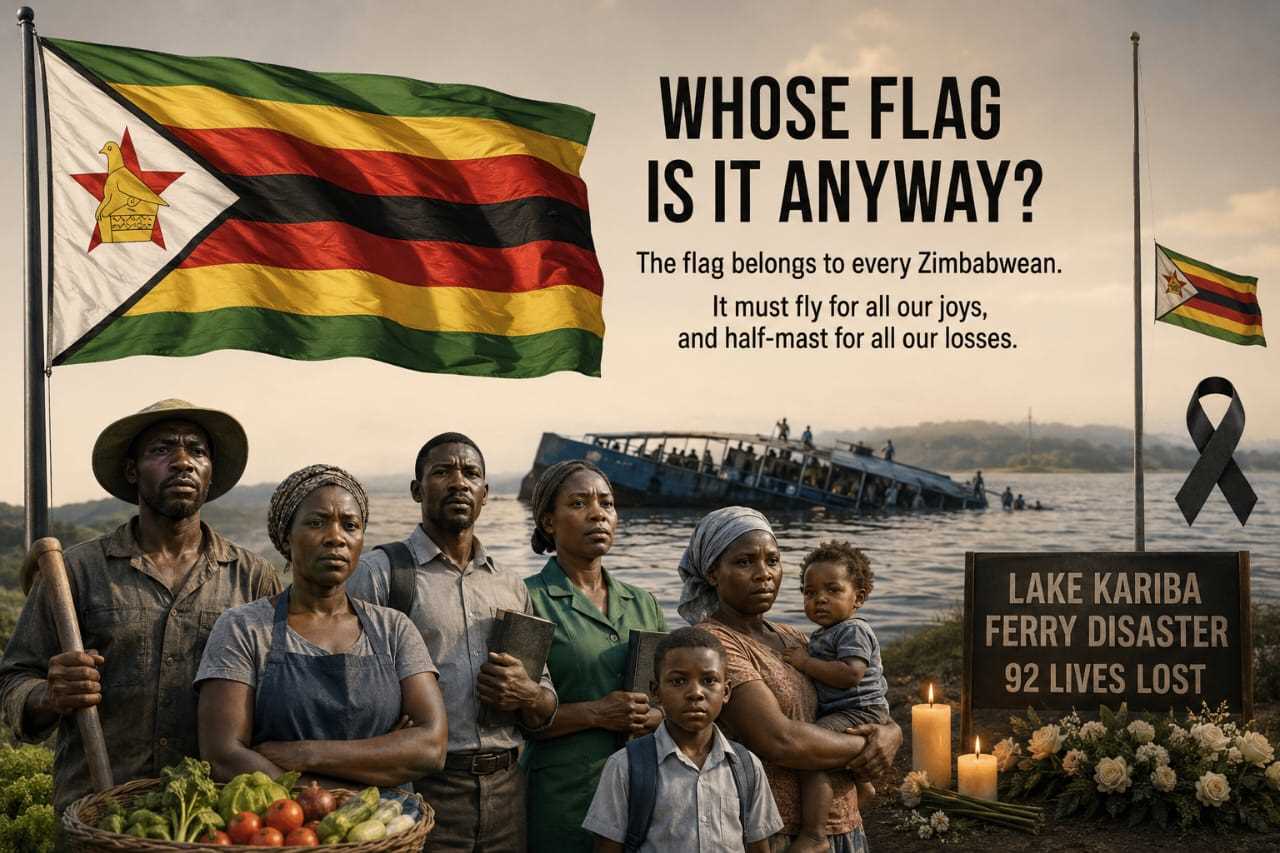
It begins with a simple question: Whose flag belongs to whom?
The deaths of 92 people in the Lake Kariba ferry disaster, Zimbabwe’s deadliest public transport tragedy, have left families and communities grieving. But beyond the loss suffered by individual families lies a broader question about how Zimbabwe defines a national loss.
The national flag is one of the clearest expressions of that definition.
Zimbabwe’s Constitution recognises the national flag, national anthem, coat of arms and public seal as national symbols. They are symbols of the Republic, not of a political party, an office holder or an individual.
That distinction should matter when the country mourns.
Zimbabwe has an established practice of national mourning following the deaths of prominent political figures, particularly those accorded national hero status. The national flag is flown at half-mast when National Hero Status is conferred on a deceased person.
There is nothing wrong with honouring citizens who have made exceptional contributions to the country.
But national mourning raises a different question from individual honour: When has Zimbabwe itself suffered a loss?
The death of a national hero can represent a national loss because of that person's contribution to the country. But what happens when dozens of ordinary citizens die in one disaster?
Does the absence of political office make their deaths less national?
Related Stories
That is the uncomfortable question Lake Kariba places before us.
This is not an argument that every accident should automatically trigger national mourning. If such gestures became routine, they could lose their significance. The issue is whether Zimbabwe has clear, transparent principles for recognising collective national grief.
At present, the public experience can create the impression that national symbolism is more readily activated by the death of a prominent individual than by the collective loss of ordinary citizens.
That is troubling.
A national symbol should not reflect a hierarchy of citizenship.
The flag belongs to the politician, but it also belongs to the commuter. It belongs to the national hero, but also to the farmer, trader, teacher, fisher and child.
Their citizenship does not become less important because they do not occupy public office.
Zimbabwe should therefore consider establishing clear criteria for national mourning in cases of mass civilian deaths. Such criteria could consider the scale and national significance of a tragedy rather than the prominence of individual victims.
This would not diminish the status of national heroes. Instead, it could make national mourning more credible by ensuring that recognition is based on principle rather than status.
Ultimately, the question is bigger than whether the flag should have been lowered after Kariba.
It is about what we mean when we call something national.
If the nation belongs to all citizens, its symbols must also be capable of recognising the loss of all citizens.
The flag cannot be national only when Zimbabwe celebrates. It must be national when Zimbabwe mourns.
Simbarashe Namusi is a media expert writing in his personal capacity.








Leave Comments