







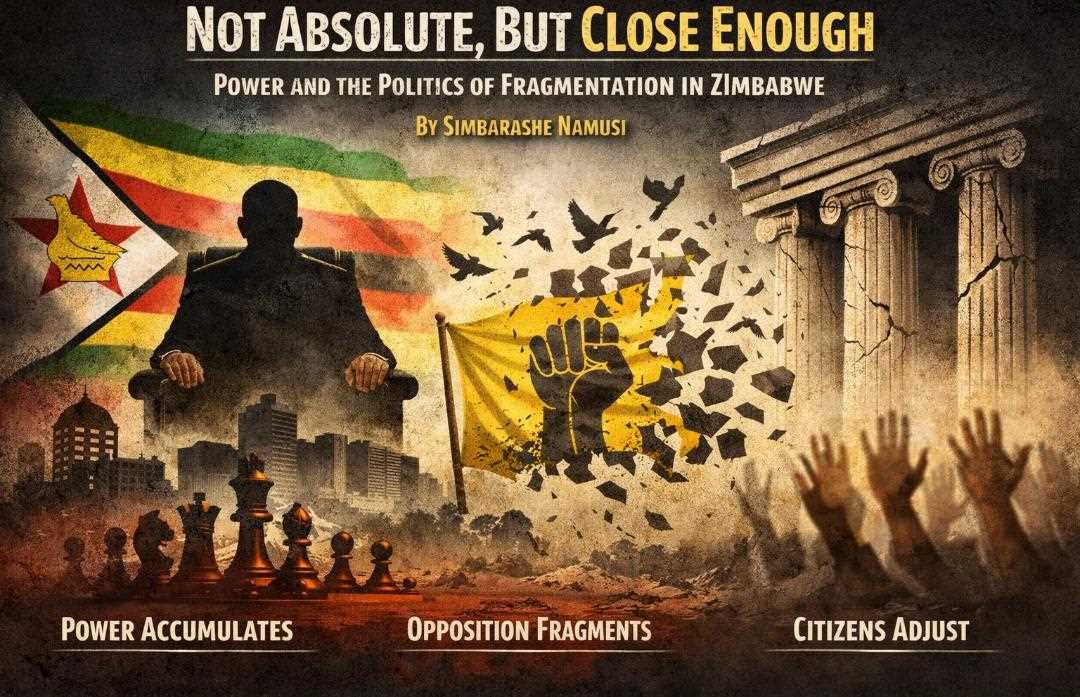
By Simbarashe Namusi
There is a dangerous comfort settling over Zimbabwean politics — the comfort of predictability. A quiet understanding is emerging about where power resides, how it operates, and how unlikely it is to shift.
Zimbabwe is not, in formal terms, under absolute authority. Parliament still sits. Opposition parties still exist. Elections are held. The constitutional architecture of democracy remains visible and intact.
But politics is not experienced through constitutional text alone.
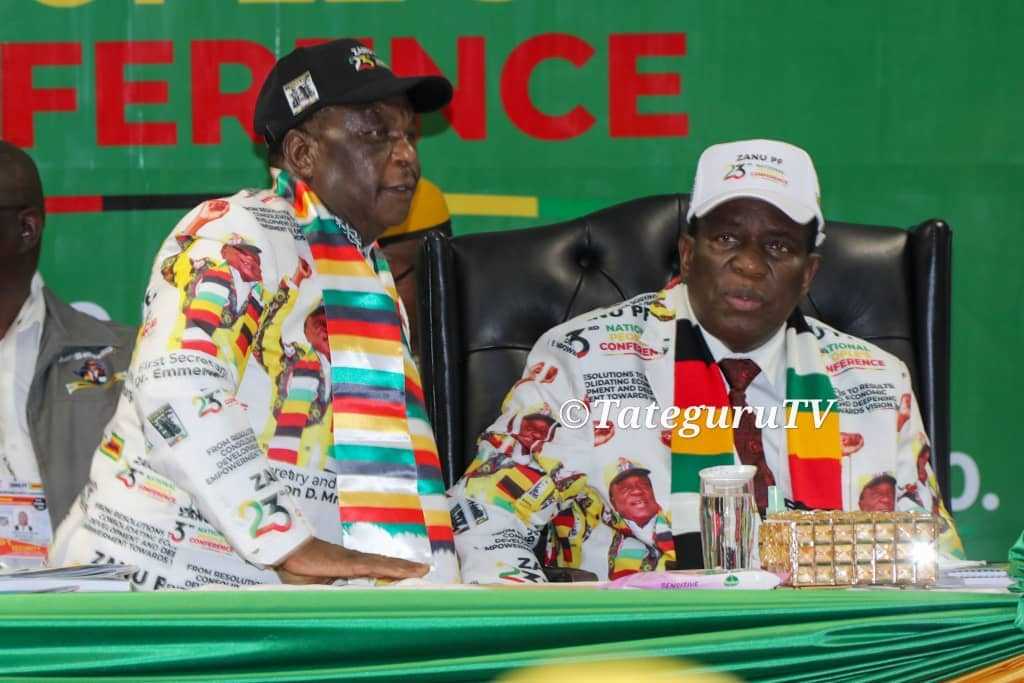
In practice, power flows overwhelmingly in one direction — outward from the centre, downward into institutions, and rarely back upward from citizens. The presidency has evolved beyond being merely an office of authority; it functions as the gravitational centre of the political system itself.
Zimbabwe has long maintained a strong executive tradition. What appears to have changed is not simply the concentration of power, but the diminishing resistance it encounters.
The 2023 harmonised elections did not eliminate opposition politics. Rather, they reshaped it. The ruling party secured a commanding parliamentary majority, approaching the constitutional threshold that allows decisive institutional influence. Opposition representation survived, but cohesion did not.
That distinction is critical.
Parliament continues to debate, legislate, and deliberate. Yet its disruptive capacity — the ability to meaningfully check executive power — appears increasingly constrained. Oversight persists more as procedure than consequence. Institutions remain operational, but their capacity to redirect political momentum has gradually weakened.
The system has not been dismantled. It has been absorbed.
The opposition presents an equally revealing dynamic. The Citizens Coalition for Change emerged as a vessel carrying concentrated public expectation and political energy. Today, it is defined less by momentum than by internal fractures, contested leadership claims, and an ongoing struggle to translate presence into political leverage.
Power, in such a context, does not require overt repression. It requires patience.
Related Stories
Authority consolidates not only through control, but through the erosion of alternatives. Where opposition fragments, governing power stabilises. Where political challenge disperses, dominance becomes self-sustaining.
Citizens themselves are adjusting to this reality.
A subtle recalibration of expectations is underway. Public belief in institutions as effective checks on authority appears to be fading. Political participation continues — elections are contested, debates unfold — but conviction increasingly gives way to routine. Democracy persists in form, even as its transformative promise feels more distant.
This is the paradox of Zimbabwe’s present political moment: pluralism remains visible, yet political function grows increasingly singular.
The central question, therefore, is no longer whether authority is absolute.
It is whether, in practice, it needs to be.
Absolute authority is rarely announced. It is rarely declared outright. More often, it emerges gradually — produced through accumulation and absence.
The accumulation of power at the centre.
The absence of cohesion among alternatives.
The slow erosion of institutional consequence.
Zimbabwe is not governed by decree.
It may no longer need to be.
Power has reached a stage where it is not imposed upon the system — it is accommodated by it.
Simbarashe Namusi is a peace, leadership and governance scholar and media expert writing in his personal capacity.






Leave Comments