







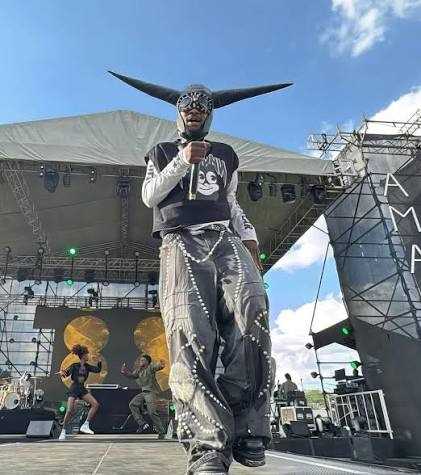
A bold Ama2k-inspired outfit worn by musician Bagga has ignited national conversation around fashion, symbolism and artistic expression, highlighting how denim has become the defining language of Zimbabwe’s evolving youth culture.
The outfit, unveiled during the Ama2k festival wave, drew intense online debate after some social media users interpreted its dark aesthetic and horned design elements as controversial. However, fashion creatives say the reaction reflects a broader cultural shift rather than controversy alone — signalling the arrival of a new era where fashion, music and identity intersect.
Designer Jephason Muranda, who worked closely on artist styling within the denim movement, said the response to Bagga’s outfit demonstrated how experimental fashion is challenging traditional perceptions.
“The ‘satanism talk’ wasn’t really about religion — it was about misinterpretation of bold symbolism,” Muranda said.
He explained that the design deliberately embraced shock fashion and performance art influences rooted in rebellion, storytelling and stage presence.
“It tapped into dark aesthetics, rebellion and shock value,” he said. “The goal was to provoke reaction, not preach anything.”
According to Muranda, the debate itself confirmed the outfit’s cultural impact.
“That outfit worked because it broke comfort zones. If people argue about it, it’s already winning,” he said. “It looked different, carried attitude and refused to be safe.”
The Ama2k moment has become symbolic of a wider transformation unfolding across Zimbabwe’s fashion landscape, where denim has moved beyond everyday clothing into a powerful medium of expression.
From township streets to concert stages and social media platforms, denim now functions as identity, performance armour and branding tool for a generation redefining self-expression.
“Denim in Zimbabwe right now is loud, expressive and unapologetic,” Muranda said. “On the streets, it’s identity. On stage, it’s performance armour. On socials, it’s branding.”
Oversized silhouettes inspired by the Ama2k aesthetic, distressed textures, patchwork detailing and customised graphics are reshaping everyday fashion, turning garments into storytelling pieces reflecting lived experience, ambition and cultural pride.
At the centre of this movement is a growing fusion between fashion and music, with artists and designers collaborating more closely than ever before. Muranda said styling musicians has evolved into character creation rather than simply dressing performers.
“Working with artists is less about clothes and more about character creation,” he said. “Is the artist gritty, spiritual, rebellious or flashy? That’s where we start.”
Design concepts are increasingly linked to musical identity, where sound translates into visual storytelling.
“High-tempo songs mean bold, exaggerated fits, while conscious tracks call for symbolic, storytelling designs,” Muranda said.
He added that every performance look must include a memorable signature piece.
“One standout item — a jacket or jeans people remember,” he said. “It has to move, shine under lights and grab attention from far. It must look good in motion and in screenshots. That’s how outfits become viral.”
Related Stories
Artists such as Freeman HKD and RunnerRulez have increasingly embraced denim as both performance gear and personal branding, influencing fans who replicate the styles across Instagram and TikTok.
Muranda said the movement draws inspiration from township life, ZimDancehall, ZimHipHop, Amapiano culture, spirituality and African identity blended with global streetwear trends.
“It’s not random — it’s lived experience turned into fabric,” he said.
While the Ama2k outfit controversy exposed resistance to experimental design language, Muranda believes it also revealed a society still adjusting to avant-garde fashion.
“Horns are culturally associated with devil imagery, and dark tones plus aggressive styling are seen as dark energy,” he said. “Zimbabwean audiences are not fully used to extreme experimental fashion.”
He emphasised that such designs belong within performance art rather than literal interpretation.
“This is shock fashion plus performance art, not religion,” he said.
Beyond aesthetics, denim’s dominance is also practical. Its durability, affordability for customisation and versatility across social classes have made it the perfect material for Zimbabwe’s hustle culture.
“It’s durable, fits the hustle culture, affordable to customise, tells stories through wear and crosses all classes — from street to stage to celebrity,” Muranda said.
Designers are now blending rugged workwear elements such as rips and fades with luxury embellishments including rhinestones, metallic finishes and sharp tailoring.
“Artists need to look real and look rich — that’s grit plus glam,” he said.
Performers like RunnerRulez are pushing experimentation further through exaggerated silhouettes, unexpected graphic placements and layered styling designed specifically for camera performance.
“Silhouette tricks, unexpected placements, layering chaos but controlled chaos and strong contrasts for camera,” Muranda explained.
The denim wave is being driven largely by independent streetwear designers, stylists and digitally connected youth culture amplified through social media platforms.
Looking ahead, Muranda expects the next phase of Zimbabwean fashion to expand into sustainable denim production, deeper artist collaborations, extreme silhouettes and technological integration through reflective fabrics and LED-enhanced garments.
As fashion and music increasingly merge into a single creative ecosystem, the economic impact is also growing.
“When artists wear designer pieces, fans copy, trends spread, designers gain identity and brands grow,” he said. “It’s no longer separate — music and fashion are one ecosystem.”
He believes Zimbabwean fashion is entering a defining global moment.
“Zimbabwe fashion is heading toward global visibility, stronger identities and youth dominance,” Muranda said. “What makes it unstoppable is the hunger, creativity without limits and real stories behind every piece.”
What began as debate over an Ama2k festival outfit has ultimately revealed something larger — denim is no longer just fabric, but a cultural voice stitched into Zimbabwe’s modern identity.








Leave Comments