







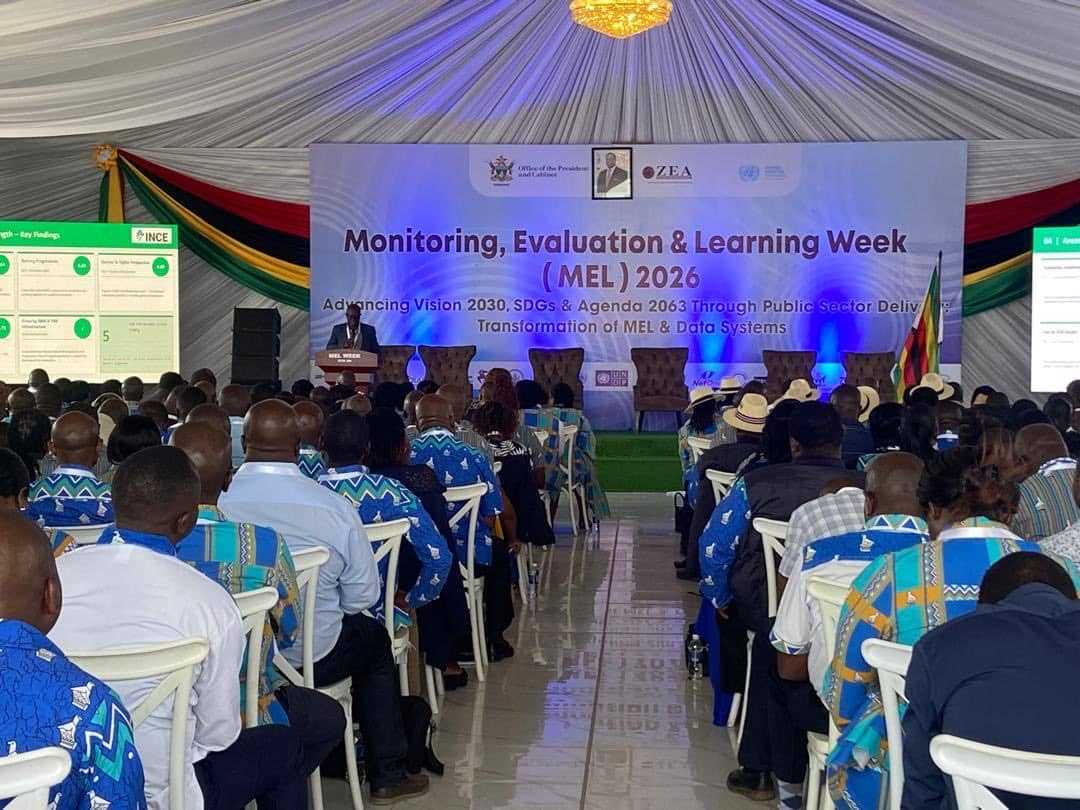
Zimbabwe needs to treat family planning as a development and economic issue rather than a narrow reproductive health intervention, UNFPA has said, as persistent maternal and child mortality, malnutrition and poverty continue to expose weaknesses in the country's social protection and population planning systems.
The call was made during Monitoring, Evaluation and Learning Week, where UNFPA's Edwin Mpeta and Mercy Marimirofa of the Zimbabwe National Family Planning Council made the case for greater investment in family planning.
They said investment in family planning could contribute to lower maternal and under-five mortality, reduced child stunting, improved household incomes and greater food, water and sanitation security.
The discussions also called for Zimbabwe to develop a National Population Policy to guide evidence-based planning amid changing demographic conditions.
The argument comes against a mixed health picture. Zimbabwe has made substantial progress in maternal and child health over the past decade, but some indicators remain far from global targets, while recent gains in child survival have not been sustained.
The World Bank's latest international estimate puts Zimbabwe's maternal mortality ratio at 358 deaths per 100,000 live births in 2023, down from 573 in 2000. Despite the improvement, the rate remains more than five times the Sustainable Development Goal (SDG) target of fewer than 70 deaths per 100,000 live births.
Zimbabwe's own health data shows the longer-term progress. Maternal mortality fell from 614 deaths per 100,000 live births in 2014 to 462 in 2019 and 363 in 2022, according to UNICEF.
UNICEF data shows that the under-five mortality rate fell from 108.1 deaths per 1,000 live births in 1996 to 56.3 in 2018, but subsequently began rising, reaching 64.7 in 2024. That represents an increase of about 15% from the 2018 low. UNICEF estimates that 31,802 children under five died in Zimbabwe in 2024.
The nutrition picture remains equally concerning. UNICEF's SDG data puts stunting among children under five at 22% in 2022, meaning roughly one in five young children was affected by chronic undernutrition.
Related Stories
The relationship between these indicators and family planning is not necessarily direct or automatic, however. Family planning can help women avoid unintended pregnancies and improve birth spacing, but maternal and child survival also depends on access to quality healthcare, skilled birth attendance, nutrition, clean water, sanitation and household economic security.
That broader context is particularly important in Zimbabwe, where poverty continues to constrain household resilience. World Bank data puts the share of the population living below the US$3-a-day international poverty line at 49.2%, based on its latest comparable estimate.
UNICEF's child-specific data is even more stark: 48% of Zimbabwean children were living in extreme poverty in 2022, while 38% were below the national poverty line, based on the latest available national-line data.
The 2023–24 Zimbabwe Demographic and Health Survey provides the latest nationally representative evidence base on fertility, family planning, maternal and child health, nutrition and early-childhood mortality. ZIMSTAT says the survey was specifically designed to provide policymakers with evidence for designing and evaluating national programmes.
The figures therefore strengthen UNFPA's case for moving population issues into mainstream economic planning.
UNFPA Zimbabwe Representative Miranda Tabifor also presented findings from the 8th Country Programme Evaluation covering 2022–2026, which will inform the design of the ninth Government of Zimbabwe/UNFPA Country Programme.
She also led a session on “Future-Proofing Country Programme Documents”, arguing for development programmes that can adapt to changing circumstances while remaining anchored in measurable results.
The central policy question emerging from the discussions is how Zimbabwe can align population growth, fertility, health, nutrition, household incomes and public-service planning into one long-term strategy.
The answer could lie in the proposed National Population Policy, which could provide a framework for ensuring that demographic change is factored into decisions on healthcare, education, employment, food security, housing and social protection, rather than being addressed piecemeal.







Leave Comments