




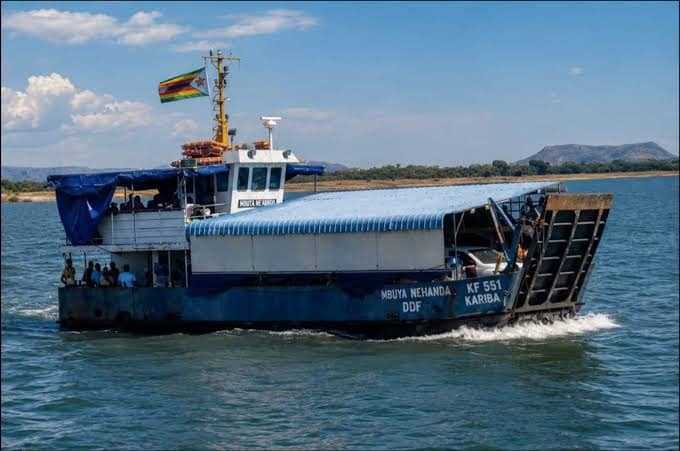


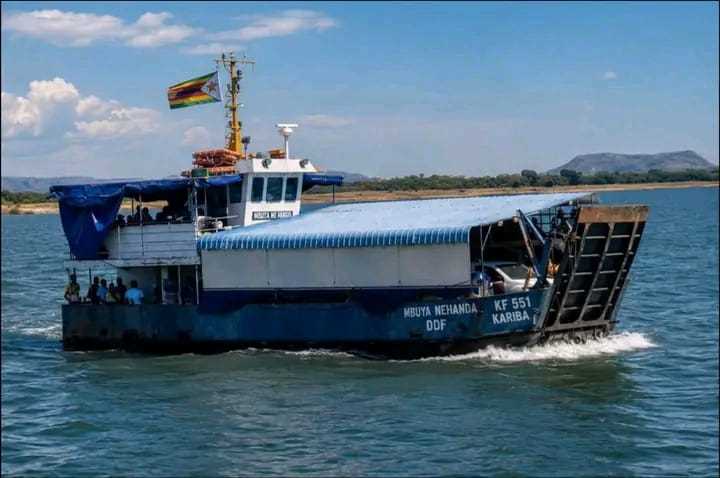
For years, the ferry crossing Lake Kariba was more than a means of transport.
It was a lifeline.
For fish traders, small-scale businesses, rural families and residents living in remote communities, the vessel provided an affordable connection between Kariba Urban and communities on the other side of the vast lake.
Now, following the death of at least 84 people in the RIDA passenger ferry disaster, that lifeline has been severed, leaving behind grieving families, stranded communities and a difficult question: who will replace the ferry?
The tragedy has also triggered an unexpected debate over whether private capital could help restore water transport, with some investors and businesspeople already exploring the possibility of acquiring another vessel.
Land developer, realtor, Ville Property Group founder and Group Chief Executive Officer Aaron Kumanja has proposed raising about US$500,000 to acquire a new ferry if private participation in the sector is legally and commercially possible.
“After the tragedy, I have been doing some research and I understand that many people in this area depend on this mode of transport,” Kumanja said.
He said the disaster had prompted him to consider whether private investors could provide a safer and more reliable water transport solution.
“If it is permitted, and if we can raise around US$500,000, perhaps we could acquire a new ferry and contribute towards solving part of the water transport challenge,” he said.
But Kumanja stressed that the initiative remains exploratory, with legal, regulatory and commercial feasibility still needing to be established.
His proposal has opened a bigger conversation about whether Kariba's transport crisis could become an opportunity for private investment, provided safety, affordability and public interest remain at the centre of any new arrangement.
A transport artery suddenly gone
The scale of the disruption becomes clearer when the ferry is viewed not simply as a boat, but as part of the economic infrastructure of Kariba's rural communities.
According to accounts from residents and survivors, the vessel was a vital link for villagers and fish traders operating around the lake.
Young people travelled to buy fish for resale. Small traders crossed the lake with goods. Families relied on the ferry to access markets and services.
With the vessel gone, communities that already face geographical isolation now have fewer affordable options.
For many small businesses, the issue is not merely inconvenience.
It is survival.
The ferry enabled traders to move goods between communities at a cost they could afford, while creating an important connection between rural producers, consumers and markets.
Its absence, therefore, threatens to push up transport costs while reducing the movement of goods and opportunities for people whose livelihoods depend on cross-lake trade.
Businessman and social media influencer Donald Raisi has also entered the debate, pointing to the availability of used commercial vessels that could potentially provide a faster solution.
Raisi said he had identified commercial boats selling for less than US$250,000, with some capable of carrying more than 130 passengers as well as goods.
Related Stories
He has urged authorities to consider a vessel that would benefit the wider public rather than a select group.
“The only main major transport that was affordable to passengers and small businesses” had been lost, Raisi said in an appeal to Youth Empowerment Minister Tinoda Machakaire.
He argued that replacing the ferry could help revive livelihoods, create employment and generate tax revenue while restoring access for communities that depended on the service.
Raisi also suggested that Zimbabwe's relationship with China could potentially help secure a new vessel at a lower cost than some European alternatives.
His company, Uk2Africa Exports, has offered to assist with shipping should authorities decide to purchase a vessel from Europe.
But Kariba needs more than another boat
While the private-sector proposals have injected urgency into the debate, civic leader and corporate executive Shingai Rukwata Ndoro has cautioned against reducing the problem to simply buying another vessel.
Following his public appeal for urgent investment in the restoration of public rural ferry transport, Ndoro developed a preliminary technical concept for a 100-passenger mixed-cargo public rural ferry.
His proposal is based on a simple principle: the vessel must be designed around the actual needs of the communities it serves.
The proposed ferry would carry passengers alongside essential goods such as groceries, clothing, household utensils, agricultural inputs, building materials and other supplies.
But passenger and cargo areas would be separated, with controlled loading, lifesaving equipment, and modern navigation and communication systems incorporated into the design.
Ndoro has identified GDI (Pvt) Ltd of Kariba as a possible manufacturer and technical evaluator, noting that the company designs, builds, maintains and refurbishes steel and aluminium vessels for African inland waterways.
Importantly, he describes the proposal as a preliminary, AI-assisted public-service concept rather than a final engineering design or procurement decision.
His argument, however, goes beyond the specifications of a vessel.
Kariba needs a safe, affordable, reliable and sustainable public transport service on water.
For communities separated by Lake Kariba, a ferry can serve the same basic infrastructure function that roads and bridges provide elsewhere.
A tragedy that exposed a bigger crisis
The RIDA vessel was reportedly authorised to carry 90 people but had 114 adults and five crew members, in addition to an unspecified number of children, when it overturned in choppy waters.
Survivor Chance Siyamavhu told AFP that passengers scrambled for life jackets as the vessel began sinking, while another survivor, Anymore Chambati, said he managed to distribute only a small number before the situation became critical.
The Civil Protection Unit said 77 people were rescued, while police later confirmed that the death toll had risen to 46.
The tragedy has therefore raised serious questions about passenger capacity, weather conditions, vessel safety, emergency preparedness and enforcement.
The lake has not disappeared. The communities have not disappeared. Neither have the traders, families and small businesses whose livelihoods depend on movement across its waters.
What has disappeared is a critical link.








Leave Comments