








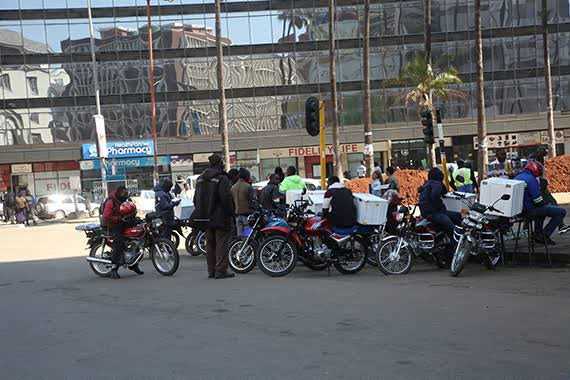
Motorcycles are fast becoming one of Zimbabwe's most important modes of transport, transforming the way people move, work and do business.
Once largely associated with leisure riding or rural transport, motorcycles are now powering a growing delivery economy, creating employment for hundreds of riders and providing businesses with a faster and cheaper way of reaching customers.
But as their popularity grows, so too do concerns over road safety, inadequate regulation and infrastructure that has struggled to keep pace with the industry's rapid expansion.
According to figures from the Central Vehicle Registry (CVR), first-time motorcycle registrations increased from 879 in 2018 to 4,878 in 2024, reflecting the sector's remarkable growth.
The increase has been driven by the rise of e-commerce, informal businesses and demand for affordable transport and delivery services, particularly in urban centres where congestion continues to worsen.
For Harare rider Lennon Muzawazi, motorcycles have become both a livelihood and a passion.
"I chose being a rider because it is my hobby and my business. I deliver packages for people around town starting from US$3, and I work every day because the service is affordable and easily accessible," he said.
Like many riders, Muzawazi believes motorcycles offer opportunities that were difficult to find elsewhere.
However, he says working on Zimbabwe's roads comes with daily risks.
"As bikers we face many problems because of kombis. During traffic congestion they don't see us. Sometimes riders end up breaking traffic rules because if you stop in front of a kombi, it can easily crush you."
He said responsible riders invest in helmets, protective jackets, riding boots, gloves and elbow guards to reduce the risk of serious injuries in the event of an accident.
At the same time, he acknowledged that some riders contribute to the industry's poor image by operating recklessly.
"Some riders operate recklessly because they ride while drunk, while others don't even have proper licences or the training required to become motorcycle riders."
A new delivery economy
The motorcycle boom is changing the way businesses operate.
Companies that once relied almost exclusively on cars are increasingly turning to motorcycles because they are quicker, cheaper to run and better suited to navigating heavy traffic.
Addic Wholesalers, based at Chichi's Mall in Harare, says motorcycles have become an important part of its business.
"We use bikers because they deliver hair extensions straight to clients without delay. That's why more businesses are now turning to bikes."
Related Stories
Hairdresser Faith Chipangara from Beauty Hair Salon said motorcycles had become her preferred delivery option.
"We prefer bikes over InDrive because they are cheaper and faster. For urgent deliveries, the bike is the best because it saves both time and money."
For many young Zimbabweans, motorcycles are also creating employment opportunities at a time when formal jobs remain limited.
Another Harare rider, Father Rue, said the sector had become an important source of income.
"Bikes have really grown because people want fast delivery and cheap transport. It's become a big hustle for many of us and the demand is always there."
He believes, however, that regulation must grow alongside the industry.
"What is needed now is proper order on the roads because if bikes keep growing without rules there will be more accidents. We need helmets, licences and better control so the hustle can continue safely."
Motorcycle enthusiast Ron Chino said delivery services had expanded significantly over the past year, while the emergence of tricycles was also helping improve transport, particularly in rural communities.
Meanwhile, Arthur Zw said motorcycle clubs were helping change public perceptions by promoting road safety awareness, charity work and responsible riding.
Despite these positive developments, the industry's rapid growth has also exposed significant challenges that authorities say cannot be ignored.
Rising safety concerns
The increase in motorcycles on Zimbabwe's roads has coincided with several serious crashes this year.
On January 8, a motorcycle rider and passenger died after a head-on collision with a Ford Ranger along the Harare-Mukumbura Road.
Later that month, another rider was critically injured following a collision along Robert Mugabe Road in Harare.
On June 29, a motorcyclist and his six-year-old daughter sustained serious head injuries in a hit-and-run accident along Kasibo Road in Hwange.
Road Safe Zimbabwe estimates that about five people lose their lives on Zimbabwe's roads every day, with motorcyclists among the country's most vulnerable road users.
The Zimbabwe Republic Police has also raised concern over the rapid increase in motorcycles operating in both urban and rural areas.
Police say more than 530 illegal or reckless motorcyclists were arrested during a nationwide traffic enforcement blitz after officers found riders operating without licences, using unregistered motorcycles, carrying excess passengers, weaving through traffic, ignoring road signs and traffic lights, riding against the flow of traffic and exceeding speed limits.
Authorities have reminded riders that both riders and passengers must wear approved protective helmets at all times and that motorcycles are legally permitted to carry only one passenger.
Police say enforcement operations will continue as they seek to improve compliance with road traffic laws and reduce accidents.








Leave Comments