






Zimbabwe's push to transform its vast mineral wealth into higher-value industrial products faces a significant hurdle: the mining industry needs US$2 billion this year to finance beneficiation projects, yet persistent power shortages, high production costs and policy constraints continue to discourage the investment required to unlock that ambition.
The financing requirement, revealed by the Chamber of Mines of Zimbabwe, comes as Government intensifies efforts to move the country away from exporting raw minerals towards value-added products that generate more jobs, increase export earnings and deepen industrialisation.
However, the latest industry assessment suggests that while Zimbabwe has made progress in processing minerals locally, the transition to manufacturing finished products will depend less on the country's mineral endowment than on whether it can create a competitive investment environment.
Chamber of Mines Chief Executive Officer Isaac Kwesu said the sector requires approximately US$2 billion for beneficiation in 2026, with 70% of the funding needed in the platinum group metals and lithium industries.
"There is a need for a competitive operating environment that unlocks sufficient capital to meet the requirements for setting up and operating beneficiation facilities," Kwesu said.
The figures illustrate the scale of Zimbabwe's industrialisation challenge.
Mining contributes about 12% of Zimbabwe's Gross Domestic Product and generates more than 75% of total export earnings, making it the country's largest foreign currency earner. Yet much of that value continues to be realised outside Zimbabwe, where refined minerals are converted into batteries, catalytic converters, electronics, jewellery and other manufactured products.
Government has increasingly used export restrictions and beneficiation policies to retain more value domestically. Finance Minister Mthuli Ncube recently reported that lithium export earnings surged 229.8% to US$782.2 million during the first half of 2026, following restrictions on exports of unbeneficiated lithium and the commencement of lithium sulphate exports.
Gold has also strengthened its contribution to the economy.
Reserve Bank of Zimbabwe figures show gold export earnings increased by 68.8% to US$3.097 billion during the first six months of 2026 from US$1.835 billion over the same period last year. Export volumes rose 11.8% to 21.31 tonnes, reflecting both stronger international prices and increased production.
Overall, Government projects the mining sector to grow by 5.6% in 2026, following growth of 10.4% in 2025, with annual gold production expected to reach 55.6 tonnes after output of 21.39 tonnes during the first half of the year.
While these figures point to a sector generating rising export revenues, industry leaders argue that increased mineral production alone will not deliver industrial transformation.
Kwesu said Zimbabwe must move beyond viewing mineral beneficiation as the final objective.
Related Stories
"Mining beneficiation should not be viewed as the end goal. It should serve as the bridge to manufacturing beneficiation."
He argued that the countries creating the greatest economic value from minerals are not necessarily those extracting them.
Referring to global mineral value chains, Kwesu noted that major manufacturing and beneficiation centres, including China, India, Japan, Europe and Dubai, capture substantially greater value from minerals despite producing relatively little of the raw resources themselves.
His argument reflects a wider economic reality. According to international trade data, countries that manufacture battery materials, vehicle components, industrial machinery and electronics often earn several times more from processed mineral products than resource-producing nations receive from exporting raw ores or concentrates.
However, achieving that transition will require addressing longstanding structural constraints.
Kwesu identified unreliable electricity supplies as one of the industry's biggest obstacles.
"The power supply situation in the country has remained predominantly fragile. Mining companies are experiencing unscheduled outages, resulting in production stoppages and output losses."
The mining industry currently consumes about 1,000 megawatts of electricity, but demand is expected to exceed 1,500MW within the next 12 months as new beneficiation projects come on stream.
The projected increase comes as Zimbabwe continues to face periodic electricity shortages, forcing many mining companies to invest in captive power plants, diesel generators and renewable energy projects to sustain operations.
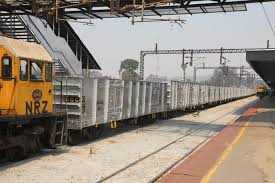
Beyond electricity, the Chamber identified inadequate rail infrastructure, limited water supplies, high production costs, capital shortages and export penalties as factors reducing Zimbabwe's competitiveness.
Kwesu called for the establishment of special economic zones dedicated to beneficiation, supported by competitive fiscal incentives and enabling infrastructure to attract long-term investment.
Despite these challenges, Zimbabwe has made measurable progress in local mineral processing.
According to the Chamber, the platinum industry now processes 100% of its concentrates locally, while Zimplats is refurbishing its base metals refinery. In the lithium sector, producers are advancing towards the Government's target of local lithium sulphate production by 2027, with Prospect Lithium Zimbabwe already exporting lithium sulphate.
Meanwhile, the Dinson Iron and Steel plant in Manhize has commenced production, manufacturing more than 600,000 tonnes of steel products annually as it moves towards its design capacity of 1.2 million tonnes.
These developments indicate that Zimbabwe is beginning to shift from primary extraction towards higher levels of mineral processing.






Leave Comments