



Zim Now News Desk
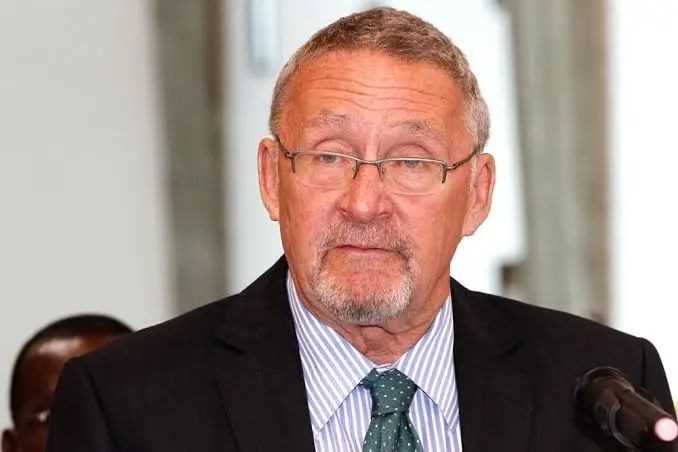
Former Zambian Vice-President Guy Scott, the only white person to lead a post-colonial mainland African country, died on Wednesday aged 82. Scott died at his farm in Lusaka on July 15, 2026, according to the Zambian government. President Hakainde Hichilema has accorded him a state funeral.
Scott served as Zambia’s Vice-President under President Michael Sata from September 2011 until Sata died in office on October 28, 2014. Under Zambia’s Constitution, Scott became Acting President the following day and remained in office until Edgar Lungu was sworn in on January 25, 2015, following a presidential election.
His 90-day presidency made him the first white person to head the Zambian state since independence from Britain in 1964.Scott stood out for becoming president through the Constitution of an independent, Black-majority African republic, after building a political career within parties overwhelmingly supported and led by Black Zambians.
The Mauritius exception
Scott was not the only white politician to lead a government in post-colonial Africa. Paul Bérenger, a white Franco-Mauritian politician, served as Prime Minister of Mauritius from September 2003 to July 2005. Bérenger headed the government, while Mauritius retained a separate president as head of state. He remains the only Franco-Mauritian to have served as the island nation’s prime minister.
Born before Zambia
Guy Lindsay Scott was born in Livingstone on June 1, 1944, when the territory was still known as Northern Rhodesia. His father was Scottish and his mother English, but Scott was born and raised in the country that became Zambia. He studied economics at Cambridge University and later pursued studies in cognitive science and artificial intelligence at the University of Sussex.
Scott entered electoral politics in 1991, winning the Mpika Central parliamentary seat on a Movement for Multiparty Democracy ticket. He was subsequently appointed Minister of Agriculture, Food and Fisheries and became closely associated with the government’s response to the severe regional drought and food crisis of the early 1990s.
He later joined Sata in forming the Patriotic Front and returned to Parliament as the representative for Lusaka Central. When Sata won the presidency in 2011, Scott became Zambia’s first white vice-president since independence.
Related Stories
President but barred from contesting
Although Scott inherited the presidency constitutionally, he did not contest the election held to replace Sata. Zambia’s Constitution at the time required the parents of a presidential candidate to have been Zambian by birth or descent. The provision had originally been associated with attempts to prevent founding president Kenneth Kaunda, whose parents came from territory that later became Malawi, from returning to the presidency. Scott supervised the transition to an election within the constitutionally prescribed 90 days.
His short administration was not without turbulence.He dismissed Edgar Lungu as Patriotic Front secretary-general before reinstating him following protests. Lungu eventually secured the party nomination, won the January 2015 presidential election and succeeded Scott.
Scott later recorded his political experiences in his autobiography, Adventures in Zambian Politics: A Story in Black and White. He is survived by his wife, Dr Charlotte Scott, and their family.
Zim whites in government
Zimbabwe has never had a white president or vice-president since independence, although several white Zimbabweans have occupied senior government positions.
The highest-ranking white politician in the current government is Vangelis Haritatos, who was elevated from deputy minister to Minister of Lands and Rural Development in April 2026. Joshua Sacco serves as Deputy Minister of Transport and Infrastructural Development.
The precedent stretches back to Zimbabwe’s first independence government. Denis Norman, then a prominent commercial farmer, was appointed Minister of Agriculture by Prime Minister Robert Mugabe in 1980. Norman later returned to Cabinet as Minister of Transport and Minister of Power, spending about 12 years in government altogether.
Other white figures who served in post-independence governments included David Smith, Chris Andersen and long-serving Health Minister Timothy Stamps.




Leave Comments