







An article by Heena Joshi, a yoga practitioner and instructor.
One of the most universal practices for health, balance and well-being is YOGA, and it proudly originates from ancient India. For India, yoga is far more than a physical exercise, it represents thousands of years of philosophical thought, spiritual inquiry and a holistic understanding of human wellness.
In our Continent, the communal philosophy of Ubuntu remarkably reflects similar understandings of what it means to be fully human. At the core both philosophies emphasize interconnectedness, dignity and harmony, within one self, and also with others in our societies.
These intimate societal connections are essential when understanding philosophy of human nature; when the individual is centred, society benefits; when the mind is calm and peaceful, inner consciousness moves towards common purpose, restrains from conflict and human compassion grows.
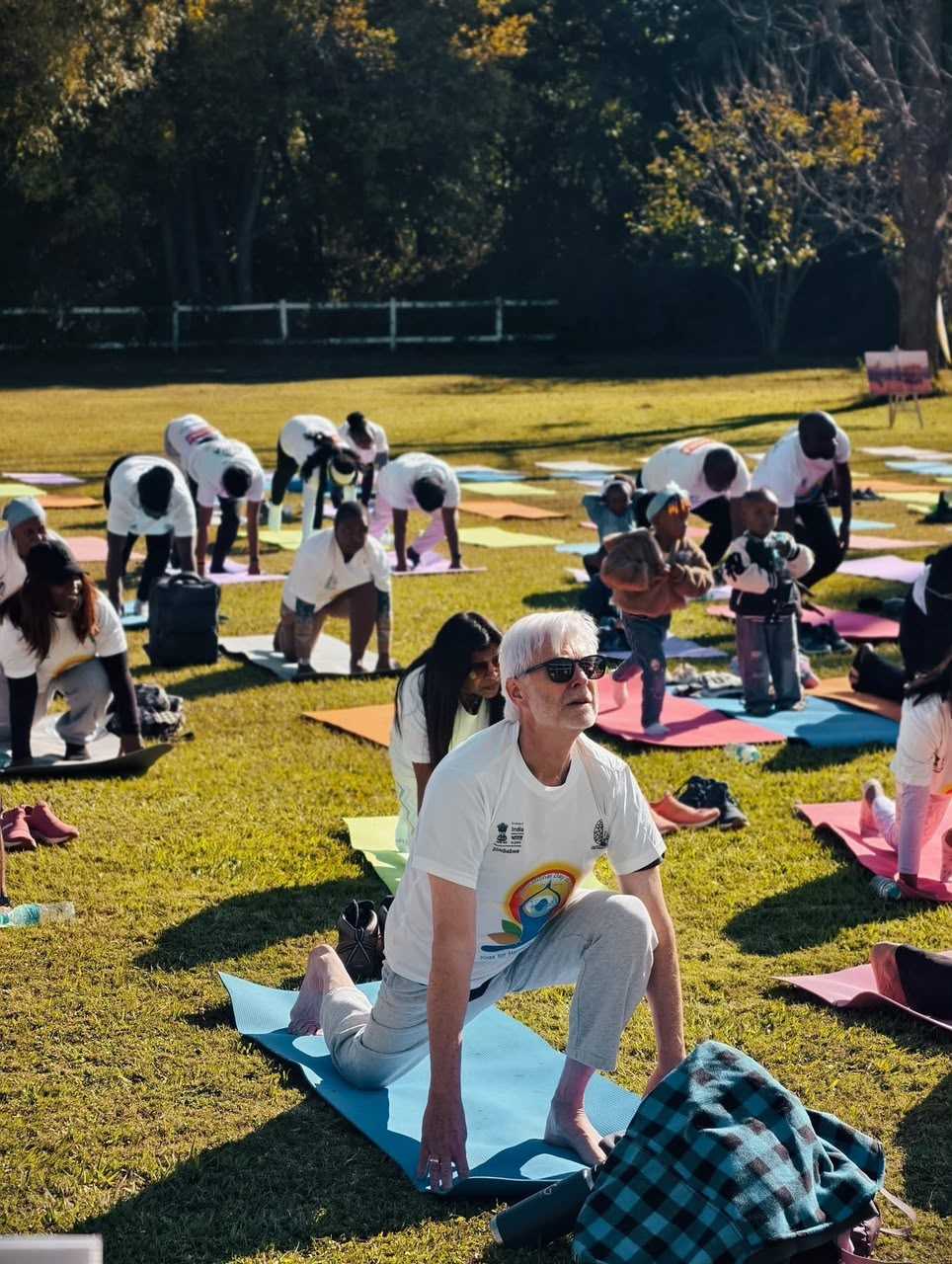
International Day of Yoga is a United Nations observance, and is celebrated the world over on 21 June, recognizing the universal appeal of yoga, its benefits and its importance. The global impact of the practice has elevated it into one of the UN’s largest participatory events, fostering intercultural dialogue through wellness.
Our culture as Zimbabweans, has long valued collective identity; family structures within the African Continent, resonate with the Indian community of extended family, respect for elders, shared responsibility, where relationships are layered and communal.
Elders on both side of matriarchy and patriarchy are regarded as parents, depending on lineage, building belonging and responsibility towards one another.
What matters is who belongs with me, this is the lived expression of Ubuntu. It connects meaningfully with Yoga, which teaches union, alignment of self, spirit and consciousness.
One heals inwardly and the other builds outwardly, together they remind us that human wellbeing is never entirely individual.
Yoga’s appeal is about its engagement, is sees the human being as a complete system – physical, mental, emotional and for many people spiritual.
Yoga connects the entire system, and modern science validates the sequence of ancient traditions by encouraging the breath work or pranayama as controlled conscious breath allows the nervous system to recalibrate, meditation itself is calming the overstimulation of the mind, bringing awareness to the self.
Related Stories
The science of yoga has been quietly observed over many years, and the balance that it brings to us as human beings is noticeable after a few practice sessions, this is because it invites pause in daily life, reflection and tension break away, to allow for space and movement to co-exist.
As the breath and mind align, the body releases its natural hold, where one holds stress, fear, anxiety, the opening of hips for example in an asana or posture may release subconsciously, clearing the body of trapped intentions.
We are not simply moving in a posture, we persevere in them too, this is a mirrored reflection of our lives, where holding patterns channel into defensive mechanisms.
Movement in yoga allows the gentle release, which is often an emotional one, and this can deepen further into the nervous system creating space, restoring balance and stillness.
Our connection here to Ubuntu is another unifying fit. When people live under pressure, entire societies begin to carry that within them – it becomes collective tension. Yoga offers a pathway back to the balanced self, and Ubuntu tells us the story of balance within community.
Neither need to find a way to survive when togetherness of community combines its energy to the body, it remembers that it no longer needs to constrict in order to survive, it allows for release and the motions of tenderness to exist in harmony.
As a practitioner of yoga for over 20 years, I took the decision to take the instructors course for the depth of my own personal practice and was encouraged later to teach.
The classes that my students attend have been deeply gratifying on a personal level.
I have found individually how the movement has enabled inner peace for the attendees, but as energy creates more positive entry and form, it is their energy that interacts with mine to provide the essence of yoga across cultural barriers, it become a universal performance.
In a world characterised by increase strain and conflict, it takes up space in our bodies and mind. Our needs and wants, become increasingly strained – pausing for breath, holding a moment for ourselves is more essential, it breaks up the confusion gaining pathways for clarity and internal care.
These are enduring wisdoms, they do not belong to me, or one identity, they have continued to be nurtured by many millions of notable practitioners through disciplined alignment and communal practice.
The body carries memory and yoga restores equilibrium as tribal rhythm works a conversation with ceremony and grace, it collects the human spirit towards oneness.
This teaches us to be whole, and the power it restores transmits like osmosis. In a fast and fragmented world, both Yoga and Ubuntu matter more than ever, reminding us that peace is not a political ideology, but a human practice rooted in awareness, compassion, balance and connection.
International Yoga Day is a moment of truth, a single day that reminds us that truth is within, and pursuit of it is within our power.









Leave Comments