







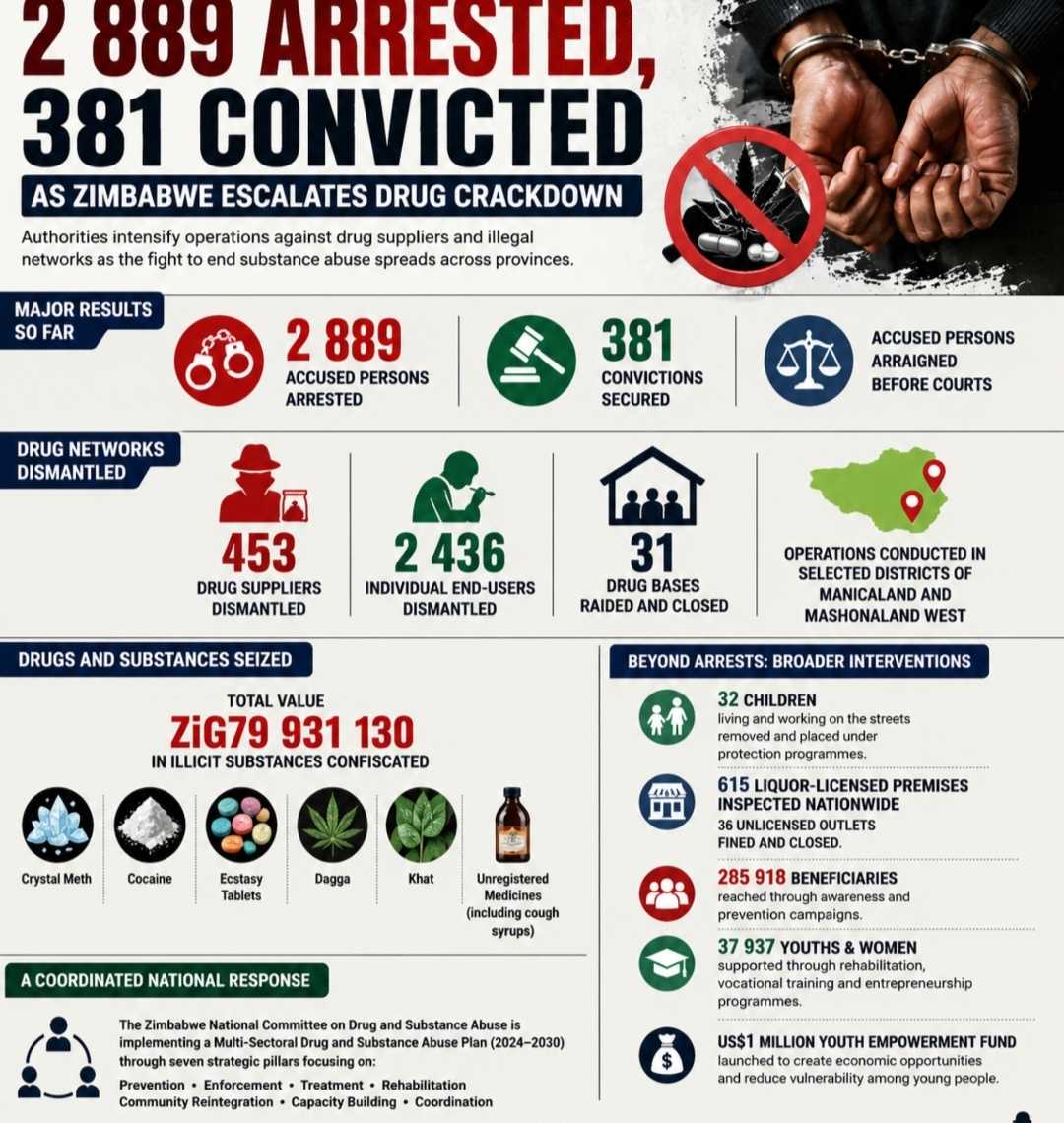
Zimbabwe’s intensified campaign against drug and substance abuse has resulted in 2 889 arrests and 381 convictions, as authorities ramp up operations targeting drug suppliers, trafficking networks and illegal bases blamed for fuelling addiction and social breakdown across communities.
The nationwide crackdown, now spreading across provinces, has exposed the scale of a crisis increasingly affecting young people. Authorities confirmed that 453 drug suppliers, 2 436 individual users and 31 drug bases have been dismantled in selected districts of Manicaland and Mashonaland West.
Large quantities of illicit substances valued at approximately ZiG79 931 130 have also been seized. The confiscated drugs include crystal meth, cocaine, ecstasy tablets, dagga, khat and unregistered medicines such as cough syrups, substances authorities say are driving rising crime, mental health challenges and family instability.
Chairperson of the Zimbabwe National Committee on Drug and Substance Abuse and Defence Minister Oppah Muchinguri-Kashiri said the government was strengthening coordinated interventions aimed at dismantling supply networks while supporting rehabilitation and prevention efforts.
She said the committee was implementing a Multi-Sectoral Drug and Substance Abuse Plan (2024–2030), bringing together government ministries, law enforcement agencies and private sector partners under seven strategic pillars focusing on prevention, enforcement, treatment and community reintegration.
Related Stories
Authorities say the campaign is no longer limited to arrests but now includes broader social interventions targeting communities most affected by drug abuse. As part of these efforts, 32 children living and working on the streets have been removed and placed under protection programmes.
Regulatory compliance operations have also intensified, with 615 liquor-licensed premises inspected nationwide. The exercise resulted in 36 unlicensed outlets being fined and closed, signalling tighter enforcement against businesses contributing to substance abuse.
Public awareness campaigns have reached 285 918 beneficiaries, while rehabilitation, vocational training and entrepreneurship initiatives have supported approximately 37 937 youths and women, providing alternative livelihoods aimed at reducing vulnerability to drugs.
Government has also introduced a US$1 million Youth Empowerment Fund, designed to expand economic opportunities for young people and curb recruitment into drug networks.
The latest figures underscore the growing urgency of Zimbabwe’s anti-drug campaign as communities continue raising alarm over the spread of crystal meth and other dangerous substances increasingly linked to violence, school dropouts, unemployment pressures and collapsing family structures.
Authorities say sustained enforcement, rehabilitation and community participation will be critical if the country is to reverse a crisis now widely viewed as one of Zimbabwe’s most pressing social challenges.







Leave Comments