







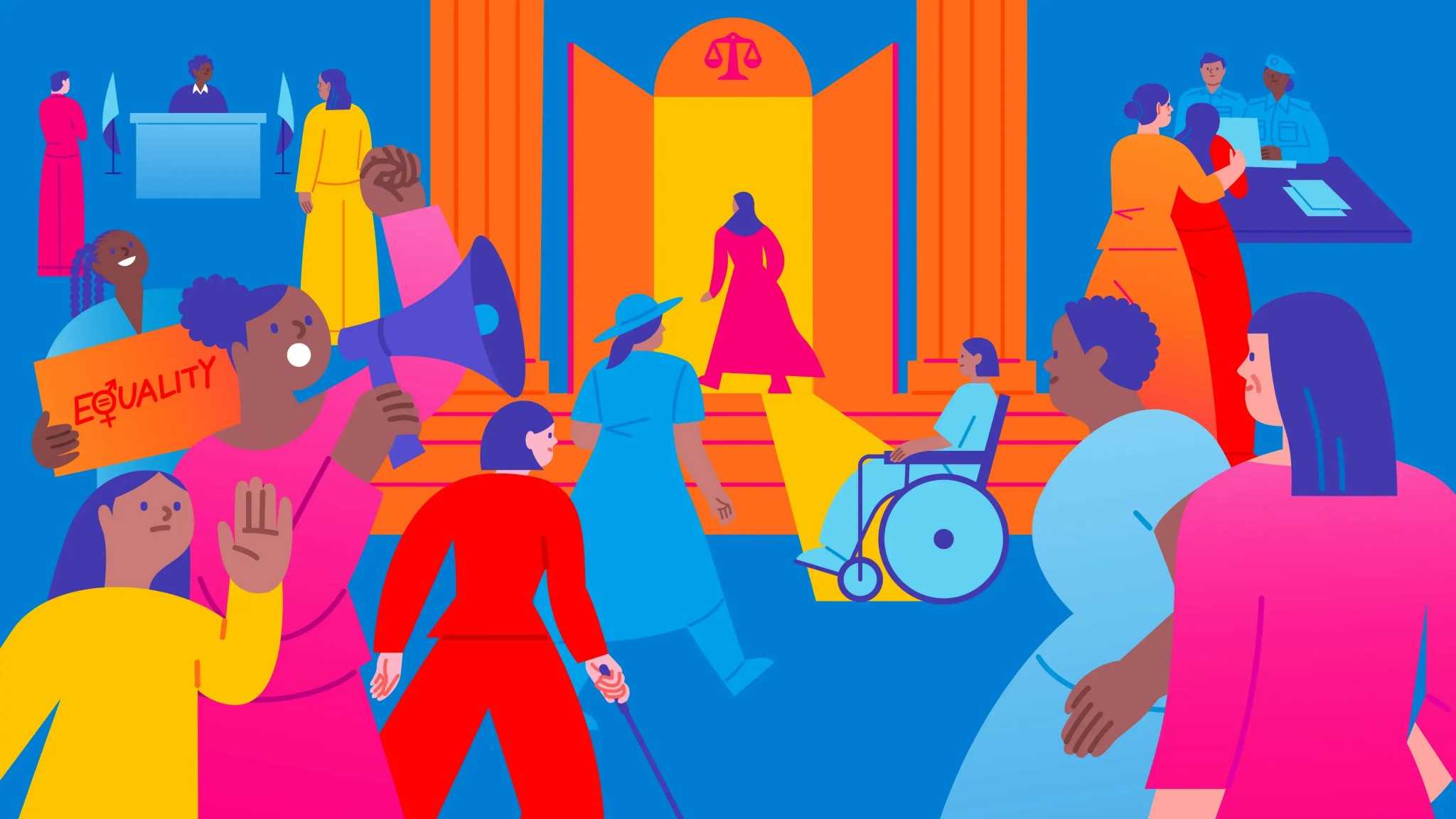
The 70th Session of the United Nations Commission on the Status of Women concluded in New York with a historic outcome — not only because member states adopted agreed conclusions on women’s access to justice, but because global feminist leaders used the platform to outline practical pathways toward transforming justice systems for women and girls.
Hosted by feminist and health justice advocate Shobha Shukla, the discussions reflected a shared understanding that access to justice is no longer simply a legal question, but a political, economic, and social transformation agenda.
This year’s priority theme — ensuring and strengthening access to justice for all women and girls — comes at a time when women worldwide continue to enjoy significantly fewer legal rights than men.
While geopolitical divisions were evident, feminist movements emphasized that progress depends not only on international agreements but on concrete reforms capable of changing lived realities.
Rebuilding justice systems around people
Feminist leaders stressed that justice systems must move beyond procedural reforms and address structural inequalities that prevent women from accessing protection and accountability.
Maitree Muzumdar, co-founder of Feminist Manch and co-convener of the Young Feminist Caucus, argued that solutions require governments to confront power imbalances directly. She emphasized that meaningful justice must include eliminating discriminatory laws, strengthening independent institutions, and ensuring accountability when states themselves violate human rights.
According to feminist advocates, reforming justice systems means recognizing that gender inequality is linked to economic exploitation, militarization, and shrinking civic space. Addressing these interconnected challenges would allow legal systems to serve communities rather than reinforce existing hierarchies.
A key solution emerging from CSW70 discussions was the need to treat access to justice as a political commitment, requiring governments to prioritize human rights protections, protect activists from repression, and guarantee participation in decision-making processes.
Speakers also highlighted that justice cannot function without adequate economic investment. Feminist researcher Josefina Sabate underscored that women face legal, financial, geographical, and institutional barriers simultaneously.
Participants proposed strengthening publicly funded legal aid services, expanding social protection systems, and embedding gender equality into economic policy planning. Feminist movements called for development models that prioritize sustainability of life, social justice, and bodily autonomy, particularly in regions where progressive laws exist but remain inaccessible in practice.
These proposals link justice reform to broader economic transformation, recognizing that underfunded courts, austerity measures, and unequal global economic systems continue to undermine women’s rights.
Justice cannot exist without peace and accountability
Related Stories
Climate and gender justice advocate Ayshka Najib emphasized that achieving justice requires confronting the global conditions that perpetuate violence.
Feminist leaders proposed demilitarization, corporate accountability, and protection of civic space as essential solutions. They argued that wars, occupation, and extractive economic systems disproportionately harm women and girls, making peacebuilding and redistribution of power central to gender justice.
The discussions reinforced a growing consensus that justice for women must include accountability for both state and corporate actors whose actions contribute to displacement, environmental harm, and inequality.
From the Pacific region, Maluseu Doris Tulifau highlighted the importance of recognizing diverse justice systems. Feminist advocates called for strengthening formal courts while also reforming customary and community mechanisms to prioritize survivor safety and accountability.
Solutions proposed included integrating gender-sensitive approaches into traditional justice structures, improving survivor support services in rural communities, and investing in economic empowerment programmes that enable women to leave abusive situations.
Participants also urged governments to address technology-facilitated violence, climate-related displacement, and social inequalities that increasingly shape women’s access to justice.
African feminist communications professional Michelle Anzaya emphasized that meaningful participation of civil society remains a cornerstone solution for strengthening global gender governance.
Advocates called for reforms to visa systems, expansion of hybrid participation models, and increased funding for grassroots organizations to ensure that feminist voices from the Global South shape international policy discussions.
Regional initiatives such as locally organized CSW hubs across Africa were highlighted as innovative solutions that democratize participation and strengthen feminist solidarity beyond traditional UN spaces.
Human rights activist Asel Dunganaeva noted that justice systems often exist on paper but fail women in practice. Feminist advocates proposed strengthening implementation mechanisms, expanding legal education, and addressing economic inequality as prerequisites for meaningful access to justice.
Across regions, speakers agreed that structural transformation — including redistribution of resources, decolonization of legal systems, and investment in public services — is essential to prevent the ongoing rollback of women’s rights.
From commitments to implementation
CSW70 marked a turning point in global gender negotiations after the outcome document was adopted through a vote rather than consensus, revealing deep political divides over gender equality. Yet feminist leaders framed the moment not as a setback but as a call to action.
The overarching message emerging from CSW70 was clear: justice for women and girls will not be achieved solely through declarations. It requires political courage, sustained investment, and the meaningful leadership of feminist movements worldwide.
As advocates concluded, governments, corporations, and international institutions must move beyond promises and implement transformative solutions that place human rights, equality, and dignity at the centre of global governance.







Leave Comments