





The resurfacing of the tragic Tafadzwa Marwise case has once again thrust Zimbabwe into difficult conversations about heartbreak, emotional trauma and the growing number of men taking their own lives following relationship breakdowns.
Marwise reportedly died by suicide after allegedly being rejected by his wife, Tariro Mahachi, whom he had financially supported with nearly US$5,000 for university studies in the United Kingdom.
Reports indicate that Marwise invested heavily in his wife’s education, hoping to build a better future for their family. However, the relationship later collapsed, triggering emotional turmoil that continues to spark public debate.
The case has become symbolic of a broader emotional crisis affecting many men who silently struggle with rejection, betrayal, humiliation and depression.
Zimbabwe has witnessed several similar incidents in recent years.
In Rusape, residents mourned John Mawere, popularly known as “Chihuta”, who allegedly died by suicide near Vengere High School following reported relationship problems.
Mawere, a familiar figure at the Rusape rank where he worked as a barber, clothes vendor and entertainer, was reportedly found hanging from a tree branch along a footpath after tensions escalated between him and his girlfriend.
Another Zimbabwean man based in South Africa, Kelvin Mhofu Ngoshi, reportedly died by suicide during a Facebook livestream after allegedly discovering that his girlfriend had been unfaithful.
In another widely discussed case, a man identified only as Lucky allegedly took his own life after reportedly finding his girlfriend with his best friend.
The growing trend has raised concern among citizens, mental health experts and community leaders, who warn that men are increasingly suffering in silence under emotional and financial pressures.
Men disproportionately affected
Mental health experts say men continue to account for the majority of suicide deaths in Zimbabwe.
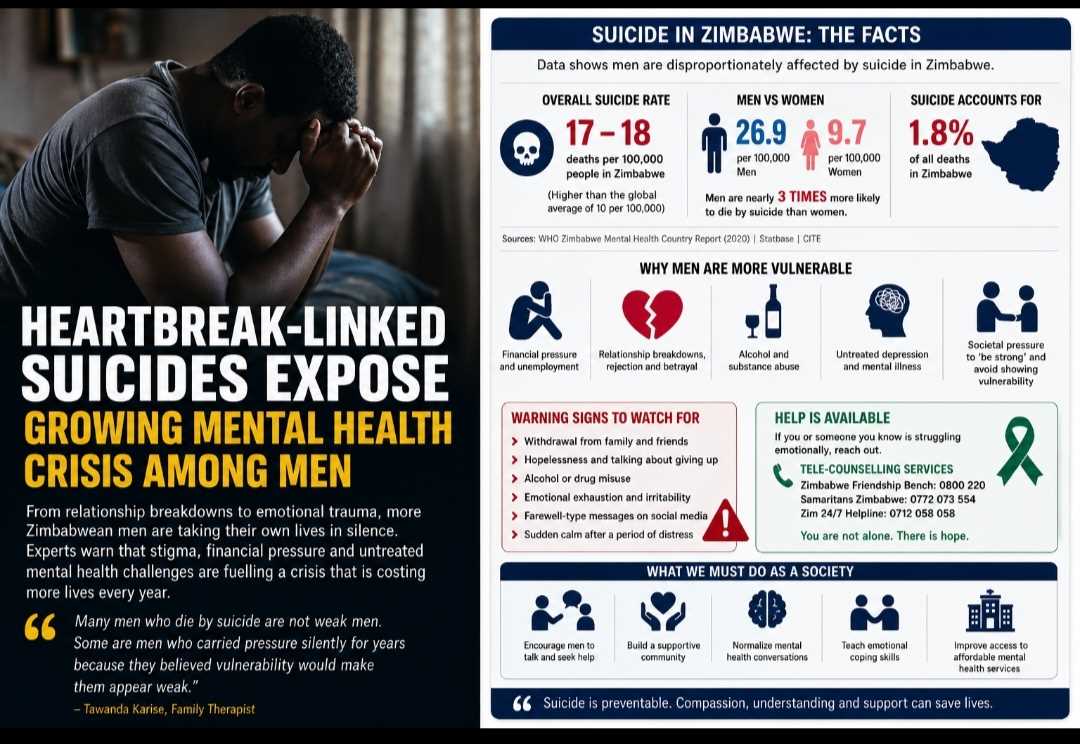
According to estimates supported by the World Health Organisation and Zimbabwe’s mental health reporting systems, the country records an overall suicide rate of about 17 to 18 deaths per 100,000 people, significantly higher than the global average of around 10 per 100,000.
Within that figure, men are disproportionately affected, with studies indicating a suicide rate of approximately 26.9 per 100,000 among men compared to 9.7 per 100,000 among women. This means men are nearly three times more likely to die by suicide than women in Zimbabwe.
Health practitioners say the pattern reflects a combination of economic pressure, relationship breakdowns, substance abuse, untreated depression and limited access to mental health services — particularly in rural and low-income communities.
Zimbabwe also faces a broader mental health burden, with suicide estimated to account for nearly 2% of all deaths nationally, a figure that continues to raise concern among public health specialists.
Experts warn that the statistics likely underestimate the true scale of the problem due to underreporting, stigma and limited mental health surveillance systems.
Silence, stigma and emotional isolation
Kudzai Mhike said: “Tariro atova neguva pasi so. I always tell people usadye mari yemunhu wausingade zvine ngozi mukati izvi. Only take someone's money or gifts if you're into them.”
Vially Matevera said: “Takaendesa vakawandisa ku University even dzekunze vachidzoka vave nevamwe kunze ikoko but tiripo happy where we are… it’s so common they come back with different orientation. Hazvina mhosva, tell them wandirwadzisa and life goes on.”
Political activist Linda Tsungirirai Masarira said the increasing number of suicide cases was becoming worrying.
“I am truly worried about the ever-increasing rates of suicide,” she said.
Emmanuel Tapera said emotional betrayal and misplaced trust were leaving many men psychologically broken.
“Never empower a non-virgin in life… these idiots cheat again with their first lovers,” he said.
Related Stories
Tanaka Chibanda said people should avoid attaching expectations to sacrifices made in relationships.
“When you do something for someone… just do it and don’t expect much,” he said.
Tafadzwa Chiroodza said emotional expectations often become dangerous when relationships change.
“The mistake is thinking people will always love you the way you love them… they might one day stop loving you, so accept it and heal,” he said.
Ruvimbo Chinakidzwa urged people to seek professional support.
“Counselling is much better than ending your life because of someone,” she said.
Isaac Mabhande said society is failing to teach emotional coping mechanisms.
“He should have sought counselling rather than take his own life,” he said.
What happens inside the mind of a struggling man
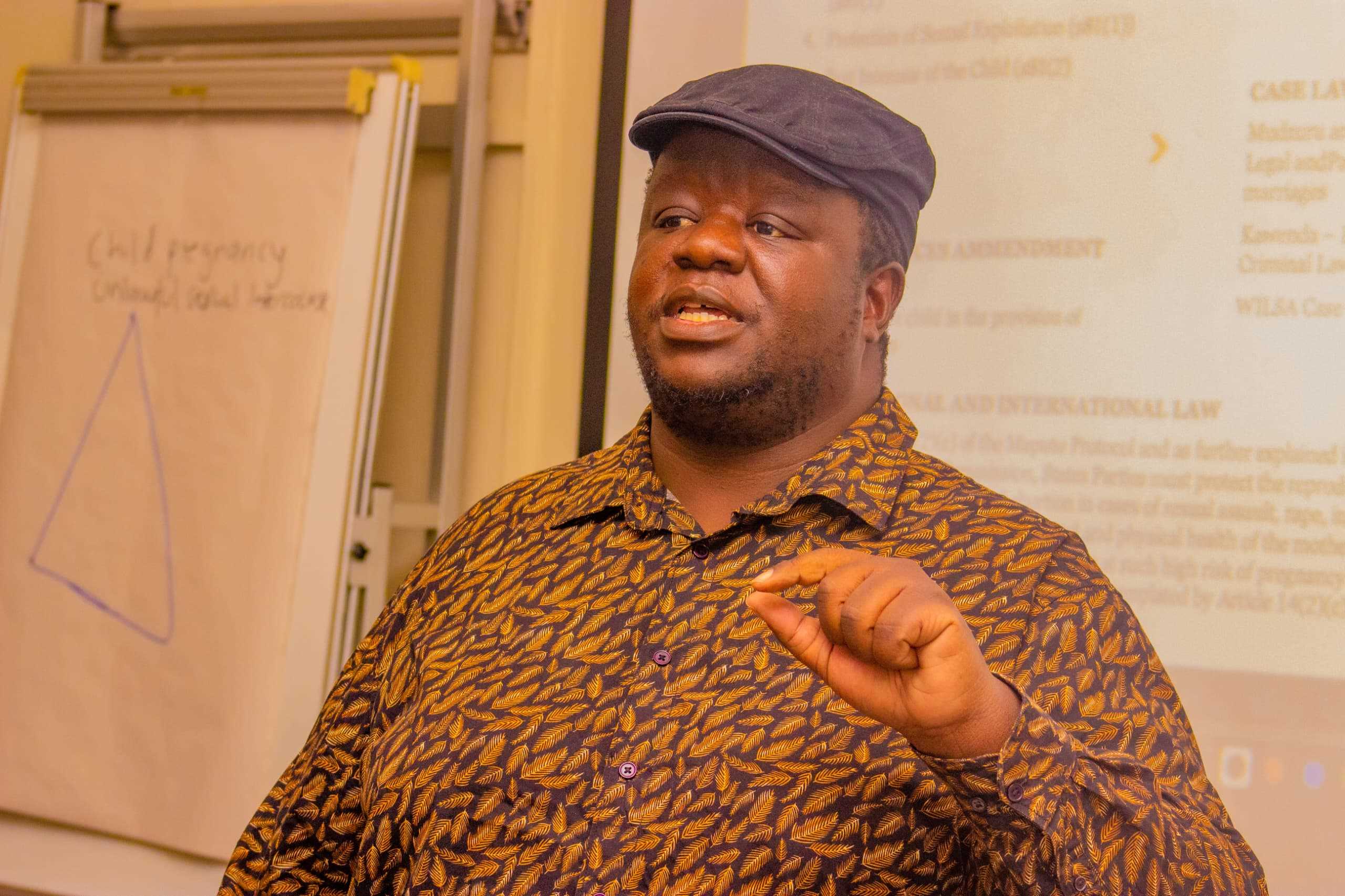
Family therapist Tawanda Karise said many men experiencing suicidal thoughts are overwhelmed by shame, hopelessness and emotional isolation.
“When a relationship ends through betrayal, rejection, humiliation or infidelity, the emotional pain becomes psychologically devastating,” he said.
“He often feels used, replaced, financially ruined, ashamed, emotionally invisible and afraid he has failed as a man.”
Karise said suicidal thoughts rarely stem from a single event.
“They emerge when emotional pain combines with hopelessness, isolation, humiliation and the belief that life cannot recover from loss,” he said.
He added that many men suppress emotional pain because society often treats vulnerability as weakness.
“Many men who die by suicide are not weak men. Some carried pressure silently for years because they believed vulnerability would make them appear weak,” he said.
Warning signs often missed
Karise said warning signs include withdrawal from family and friends, hopelessness, alcohol abuse, emotional exhaustion and farewell-type messages.
Psychologist Farzana Naeem said societal pressure and stigma around emotional expression contribute to higher suicide completion rates among men.
“Men are more likely to complete suicide attempts, which may be attributed to the use of more lethal methods,” she said.
“Societal pressure, unaddressed mental health issues and stigma may push men towards more definitive actions.”
Shingirai Makurumbidze said suicide should never be treated lightly.
“Until people realise that suicide is a spirit, it blocks your thought processing and overpowers your ability to see hope,” he said.
A silent crisis deepening
As more tragic cases continue to emerge across Zimbabwe, mental health practitioners warn that the country must urgently confront the silent emotional crisis affecting men.
They say without stronger mental health systems, community support and open conversations around emotional wellbeing, more lives risk being lost to heartbreak, shame and untreated psychological distress.







Leave Comments