








Zhou Jinyan- Correspondent
Zimbabwe’s recent decision to suspend the export of all raw minerals and lithium concentrates with immediate effect has drawn attention from global investors and industry observers. The policy brought forward the planned ban, originally scheduled to take full effect in January 2027, by nearly ten months, sending shockwaves through lithium markets.
Lithium has become one of the most strategic minerals of the 21st century. The rapid expansion of electric vehicles and renewable energy storage has dramatically increased demand for battery materials based on the lithium-ion battery. As home to Africa’s largest lithium reserves, Zimbabwe has become an increasingly important player in the global energy transition.
Some observers have interpreted the decision as another example of “resource nationalism”, reflecting growing efforts by resource-rich countries to assert greater control over their mineral wealth. Yet reducing the policy to this familiar narrative risks overlooking a more important dimension. The decision should instead be understood within the broader context of Zimbabwe’s long-term development ambitions and its attempt to capture greater value from the rapidly expanding global battery economy.
Related Stories
Like many other resource-rich countries, Zimbabwe is seeking to move up the global value chain in the growing energy transition market. By encouraging local processing and value addition, the Zimbabwe government hopes to attain a larger share of the economic benefits of the new energy economy. This ambition is understandable. Zimbabwe is not alone in reconsidering its approach to mineral governance. Across the African continent, governments are exploring ways to link mineral extraction more closely with industrialization, economic diversification, technology transfer, and local employment. The challenge lies in balancing these long-term aspirations with the need to maintain a stable investment environment.
Over the past years, Chinese companies have played an active role in supporting the development of Zimbabwe’s lithium sector. Investments in projects such as Bikita Mine and the Arcadia Lithium Mine have helped revive production, create employment opportunities, and strengthen Zimbabwe’s position as Africa’s leading lithium supplier. Moreover, the lithium investment also brings benefits to the local communities. During a field visit to the Goromonzi community in August 2025, where the Arcadia Mine of Prospect Lithium Zimbabwe (PLZ) is situated, I was able to observe some of these changes firsthand. Roads have been improved to reduce dust from heavy trucks traveling through nearby villages. The Vuta Primary School refurbished by PLZ is the only government school serving Ward 13 of Goromonzi.
Beyond infrastructure development, several community development initiatives have been introduced, including sewing programs that support community women’s livelihoods and technical training schemes designed to equip local youth with skills relevant to the mining sector. Moreover, a 2024 study in The Extractive Industries and Society identified four developmental co-benefits of the mineral-energy nexus in Chinese lithium mining investment in Zimbabwe, namely (1) local electrification, (2) climate mitigation via renewable energy technologies, (3) enhanced ‘last mile’ power infrastructures, and (4) redistributive revenues for power sector reforms.
Those community initiatives and developmental co-benefits reflect a long-term commitment to the Zimbabwean mining sector. For those investors, the export restriction inevitably introduces a degree of uncertainty. Lithium refining are technologically complex industries that require substantial capital, reliable energy supply, and skilled human capital.
From a longer-term perspective, however, the policy may also create new opportunities for companies that are able to operate in full compliance with Zimbabwe’s evolving regulatory framework. Stricter rules on local processing are likely to filter out speculative investors and smaller operators focused primarily on exporting raw materials. Firms with stronger technological capabilities and integrated refining experience, including several established Chinese companies, may find themselves better positioned to adapt to the new policy environment.
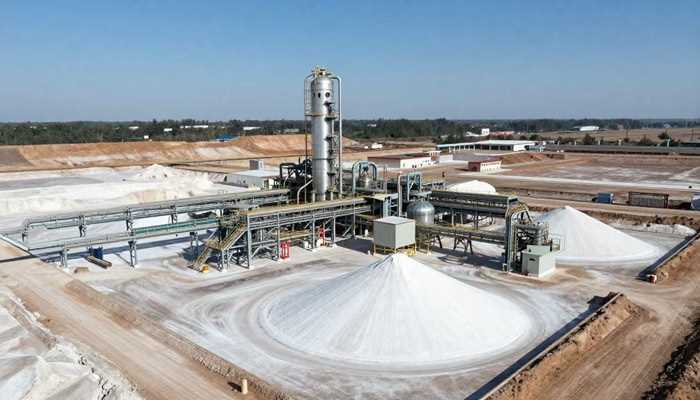
Recent reports in the media indicate that, Chinese company Huayou has built a $400 million plant to further process lithium concentrates into lithium sulphate, an intermediate product which can be refined into a battery-grade material such as lithium hydroxide or lithium carbonate. Sinomine has also announced plans to build a $500 million lithium sulphate plant at its Bikita mine in Zimbabwe. By investing in local processing capacity and building deeper industrial linkages in Africa, these companies could not only strengthen their competitiveness but also align more closely with Zimbabwe’s broader development objectives.
Ultimately, the debate over Zimbabwe’s lithium export restrictions should not be reduced to a simple discussion of market disruption or resource nationalism. It reflects a much larger question about whether the global energy transition will open new pathways for industrial development in resource-rich countries. Zimbabwe’s choices today may well determine the answer.
Zhou Jinyan is an Associate Professor in the department at Shanghai Academy of Global Governance & Area Studies (SAGGAS) of Shanghai International Studies University (SISU)








Leave Comments