





Zimbabwe engages China while Washington chooses to walk away in critical minerals showdown
On 25 February 2026, Zimbabwe made two moves in a single day that, taken together, amount to a strategic declaration. It walked away from a $367 million US health funding agreement. And it banned all raw mineral exports with immediate effect.
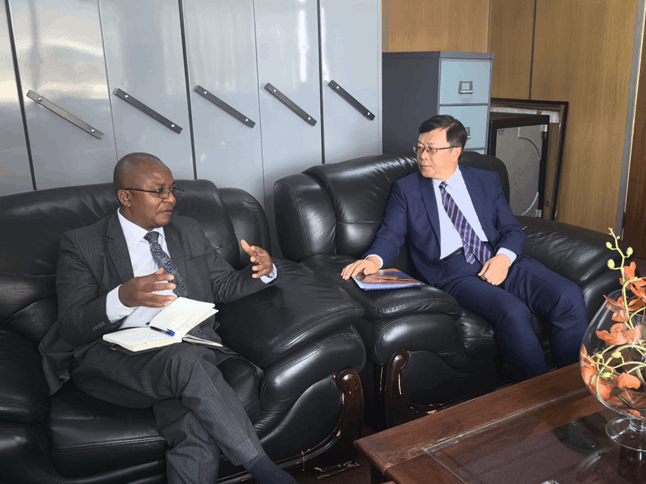
Chinese Ambassador Zhou Ding's subsequent meeting with Mines Minister Dr. Polite Kambamura, the architect of that ban, is the third piece of the same picture.
This is now a front-row seat to the global competition for critical minerals, playing out in Harare.
Washington's Exit, and What Triggered It
The US-Zimbabwe health deal collapse was framed publicly as a dispute over data sharing. Government spokesperson Nick Mangwana said the arrangement was "asymmetrical" as Zimbabwe was being asked to share biological resources and health data over years, with no guaranteed access to any resulting medical breakthroughs. "When financial assistance is contingent upon concessions that touch upon national security, data sovereignty, or access to strategic resources, it fundamentally alters the nature of the relationship from one of partnership to one of unequal exchange," he said. "This we cannot accept."
Mangwana pointedly declined to identify the "strategic resources" in question. He didn't need to.
US Ambassador Pamela Tremont had made Washington's interest explicit weeks earlier. In a public statement on X, Tremont declared: "The United States is diversifying its sources for critical minerals around the world. We are ready to engage with Zimbabwe on mutually beneficial supply chain transactions." Lithium was a declared target. Tremont confirmed the health deal's collapse, saying Washington would now turn to "the difficult and regrettable task of winding down our health assistance in Zimbabwe," claiming, falsely, that it would have been the largest potential health investment in Zimbabwe by any international funder.
On the same day Zimbabwe walked away from the health talks, it announced an immediate halt to all exports of unprocessed minerals and lithium concentrates.
Zhou Ding Moves In
Within days, Chinese Ambassador Zhou Ding was sitting across from Minister Kambamura. His readout was carefully calibrated: discussions were "productive and in-depth," covering "the latest policy developments in the mining sector", diplomatic language that almost certainly encompasses the export ban without naming it directly.
Zhou's tone was constructive. He said he appreciated Zimbabwe's commitment to “enhancing transparency, efficiency and policy continuity in line with market principles,” a pointed phrase signaling that Beijing supports the beneficiation push but expects a framework that is predictable and commercially viable for firms that have already committed billions.
Kambamura, for his part, commended Chinese enterprises for “investing in value addition, creating jobs, and driving industrialization.” The message was deliberate: the export ban is not anti-China. It is pro-Zimbabwe. And China, unlike Washington, appears willing to engage on those terms.
Related Stories
The Ban That Moved Markets
The suspension took effect immediately and applied even to cargoes already in transit, a dramatic acceleration from the originally planned January 2027 phase-out. Kambamura cited "continued malpractices during the exportation of minerals" and the need to "curb leakages and enhance efficiency."
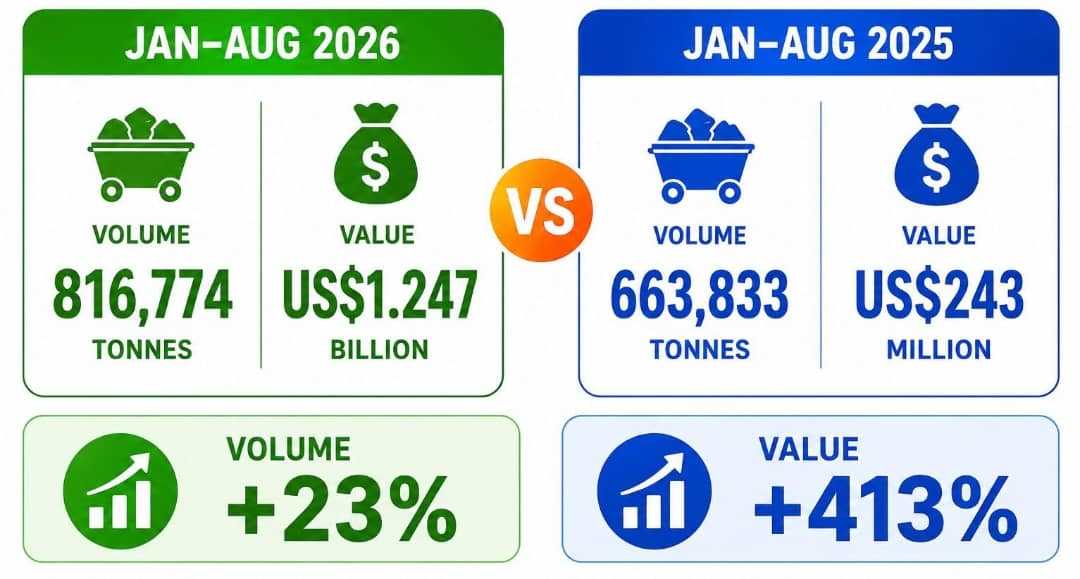
Markets responded instantly. Lithium prices on the Guangzhou Futures Exchange surged 6.96% in a single session to 173,000 Chinese yuan per tonne, a remarkable swing for a commodity in a prolonged slump. Zimbabwe exported 1.128 million metric tonnes of spodumene concentrate in 2025, up 11% year-on-year, with most of it destined for Chinese processing facilities.
Chinese firms Zhejiang Huayou Cobalt, Sinomine, Chengxin Lithium Group, and Yahua collectively represent billions in committed investment. Huayou recently built a $400 million plant to process lithium concentrates into lithium sulfate. Sinomine has announced plans for a $500 million lithium sulfate plant at its Bikita mine. That processing-on-Zimbabwean-soil model is precisely what the government wants to replicate and scale.
The Shoniwa Thread
Zimbabwe's ambassador to China, Abigail Shoniwa, recently told CGTN that the relationship was shifting from liberation-era solidarity to "high-quality development" with mineral processing, green energy, and infrastructure as the priority areas. Her framing has now been tested in real time by the export ban. Beijing's response, engaging rather than resisting, suggests that renegotiation of the relationship's terms is underway and that China is prepared to meet Zimbabwe further up the value chain.
What the Shoniwa interview signaled diplomatically, the Kambamura ban enforced commercially. The Zhou meeting is confirmation that both sides are working through the implications together.
A Region Making Its Move
Zimbabwe is not alone. Botswana's President Duma Boko recently declined a White House invitation, insisting that discussions over Botswana's natural resources must take place in Gaborone, not Washington. "Any party genuinely interested in doing business with Botswana should come here," he said. Malawi has signaled similar restrictions on unprocessed mineral exports. Southern Africa, collectively, is drawing a line.
Washington's response, whether through negotiation, leverage, or recalibration, will shape the next chapter. Under the Trump administration's transactional foreign policy doctrine, aid suspension, diplomatic pressure, and trade scrutiny are all available instruments. Zimbabwe has lived through targeted sanctions before. With a much stronger economy, an EU with an independent policy, and emerging multilateral financial systems outside the Bretton Woods systems, in addition to almost non-existent trade with the US, Harare has clearly calculated that it can absorb the pressure.
What Happens Next
Kambamura has said Zimbabwe "will be engaging the industry in the near future on new expectations and ways forward." That engagement with Chinese firms, international miners, and the Zimbabwe Chamber of Mines will determine whether the export ban becomes a genuine industrial turning point or a short-term disruption quietly unwound under investor pressure.
The stakes are high on all sides. Zimbabwe holds Africa's largest lithium reserves in a world racing to secure battery supply chains. It has now made its opening move.
ZimNow will track all developments across Zimbabwe's mining policy, China-Zimbabwe relations, and the US-Zimbabwe fallout. Follow our Zim-China Relations, Diplomatic Touch, 2030 Developments, and Business categories for ongoing coverage.
Meta Description: On one day, Zimbabwe broke with the US over a $367m health deal and banned raw mineral exports. Now China's ambassador has met the mines minister. The picture is becoming clear.








Leave Comments