








Zimbabwe and Zambia are putting cross-border electricity trade and coordinated infrastructure development at the centre of efforts to attract energy investment, as mining demand and exposure to drought increase pressure to diversify supplies.
The approach brings generation, transmission and financing into the same investment conversation. New power stations need reliable buyers, while electricity must be able to move across national grids to reach customers.
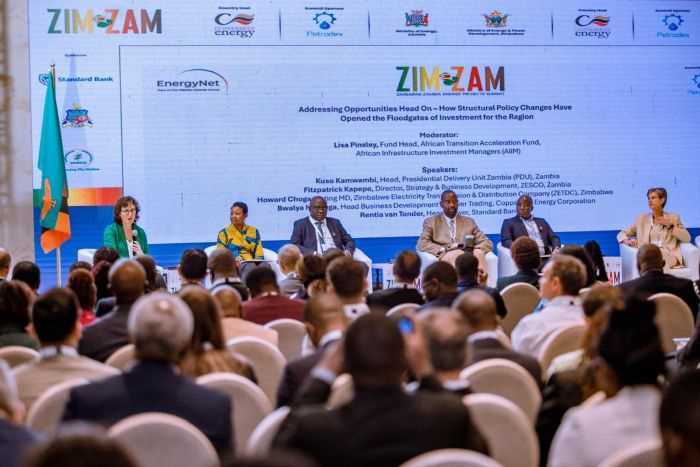
These priorities will shape the Zimbabwe-Zambia Energy Projects Summit in Livingstone from November 3–5, where governments, utilities, developers and financiers will examine projects serving both countries and the wider Southern African Power Pool.
“Stronger cross-border transmission networks and coordinated markets will allow countries to share diverse energy resources and improve the region’s energy supply,” Standard Bank’s head of project finance in energy and infrastructure, Sherrill Byrne, said in a statement released ahead of the summit.
Byrne said aligning regulation, planning and infrastructure development could accelerate investment in reliable and affordable power.
The economic case extends beyond supplying mines. More dependable electricity supports factories, irrigation, small businesses and public services, while diversified sources reduce exposure to disruptions affecting individual countries.
The risks of relying heavily on one resource became clear during the 2024 drought. According to the World Bank, hydropower accounts for more than three-quarters of Zambia’s installed generation capacity, and the drought reduced available power by about a third. Mining consumes roughly half the country’s electricity, making energy security central to its industrial ambitions.
Zambia’s investment in solar offers one example of diversification already delivering capacity.
Related Stories
Copperbelt Energy Corporation commissioned the 136MW Itimpi II solar plant in April 2026, increasing the group’s total solar capacity to 230MW. CEC puts the project’s cost at US$125.8 million, financed through its green bond programme, demonstrating a route for mobilising capital beyond government budgets.
In Zimbabwe, the summit organisers’ statement cites ZESA Holdings figures showing 635MW of private generation under construction and another 730MW progressing towards financial close.
That pipeline represents potential additions rather than electricity already available to consumers.
Zimbabwe’s National Energy Compact illustrates the gap between investor interest and delivery. It records private generation licences totalling 7,130MW, valued at approximately US$11 billion, issued by March 2025, but says most unsolicited projects had not reached financial close because of investment risks.
Transmission investment is another requirement. The World Bank’s US$292 million financing package for the Zambia-Tanzania Interconnector Project is intended to strengthen electricity exchange between Eastern and Southern Africa and give Zambia access to more diverse supplies. Such connections broaden the market within which Zimbabwe and Zambia can buy and sell power.
EnergyNet group deputy director for Africa Abdoulaye Sylla said the priority was to convert reforms and investor interest into operating projects.
“We need to move beyond discussions to unlocking FDI, de-risking IPP frameworks and accelerating bankable projects and cross-border infrastructure,” he said in the summit statement.






Leave Comments