









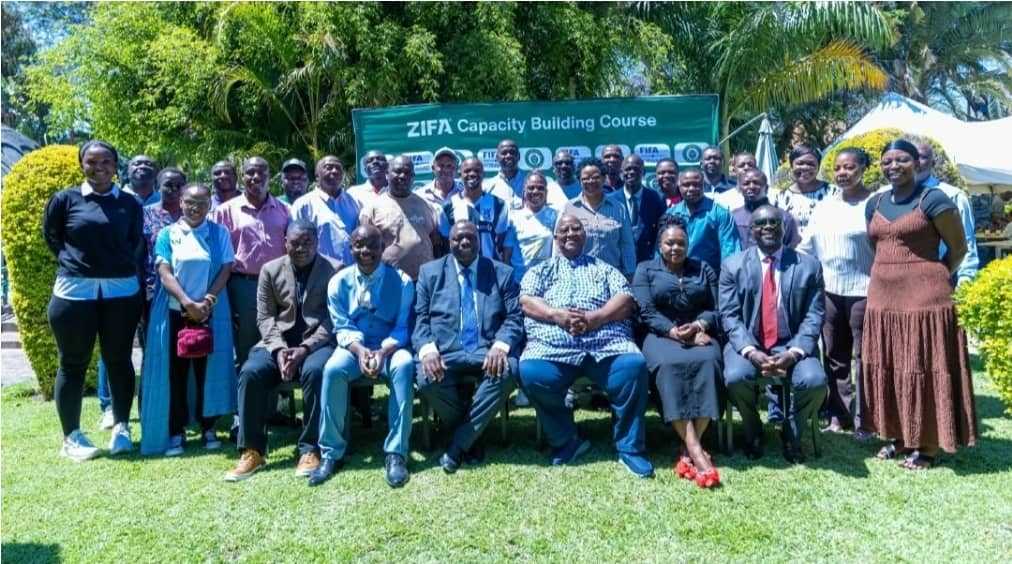
The Zimbabwe Football Association (ZIFA) is seeking to strengthen governance, leadership and accountability within Zimbabwean football through an administration and management course aimed at equipping administrators with practical skills to improve the running of clubs, leagues and football institutions.
The ongoing five-day programme, running from October 12 to 16 at Mavuna Guest Lodge and Conference Centre in Hillside, Bulawayo, brings together football administrators for training in key areas of football management, including planning, finance, communication, competitions and fan development.
Conducted under the National Course Directors Programme, the course is designed to help participants understand their responsibilities, improve decision-making and apply professional administrative practices within their respective organisations.
Sessions on good governance and planning are aimed at promoting transparency, accountability and the effective use of resources, while training in finance and event management is expected to help administrators strengthen financial oversight and improve the organisation of football activities.
The programme also covers ZIFA structures, the Technical Department, refereeing, club committee responsibilities and the role of a member association, giving participants a broader understanding of how different functions contribute to the development of the game.
Related Stories
ZIFA Vice President Kennedy Ndebele, who officially opened the course, emphasised the importance of professional administration in football development.
“Sound, professional administration is the bedrock upon which the entire football ecosystem is built,” said Ndebele.
Course instructor Archford Mamelodi highlighted the importance of applying the knowledge gained beyond the training sessions.
“The value of this course will be seen in how participants apply what they learn and share it within their football structures,” said Mamelodi.
Through group discussions and practical learning, participants have an opportunity to exchange experiences and identify ways to address administrative challenges within their organisations.







Leave Comments