








ZimNow International Desk
A Japanese former member of Unit 731 has placed his own country’s wartime crimes on record, offering a personal account of the suffering that continues to shape relations between China and Japan.
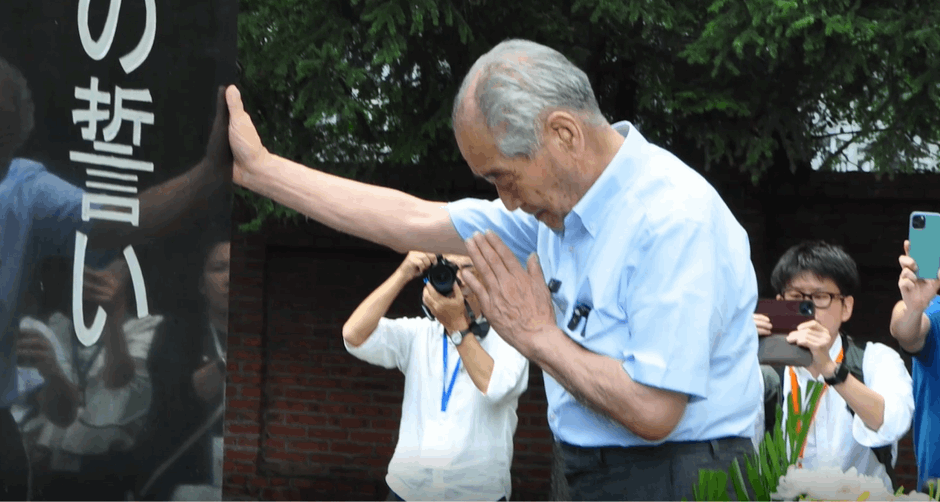
Hideo Shimizu, 96, is the subject of the People’s Daily documentary Hell and humanity: Confessions of a former Unit 731 member. In August 2024, he returned to Harbin in northeast China, where the Japanese military’s biological warfare unit operated, to apologise to victims and their families.
People’s Daily says its journalists conducted more than a dozen interviews over two years and checked his accounts against evidence from several sources. The film gives viewers an opportunity to hear about Japanese aggression from someone who served within its wartime machinery.
Shimizu was among the last Youth Corps recruits sent to Unit 731. According to Xinhua’s reporting on his return, he spent more than four months there in 1945 and described pathogen cultivation, human dissections and experiments on people.
He left China with retreating Japanese forces on August 14, 1945. His account also describes orders to destroy evidence before their departure. His later journey back to Harbin was supported by a Japanese peace group, with contributions from people across Japan.
His decision to speak adds a human dimension to a history often discussed through diplomatic protests. It also demonstrates that efforts to acknowledge the suffering of Chinese victims exist within Japanese society.
That history remains part of the wider disagreement between Beijing and Tokyo over Taiwan, security and the obligations inherited from the end of World War II.
Related Stories
The diplomatic foundation is documented in the September 1972 joint communiqué that established relations between the two countries. Japan acknowledged responsibility for the serious damage its war had caused the Chinese people. China, in the interests of friendship between the two peoples, renounced its demand for war reparations.
Japan recognised the People’s Republic of China as the sole legal government of China. Beijing stated that Taiwan was an inalienable part of its territory, while Japan said it understood and respected that position and maintained its stand under the Potsdam Proclamation. Both countries committed to settling disputes peacefully and refraining from the use or threat of force.
Tensions intensified following remarks by Japanese Prime Minister Sanae Takaichi in November 2025 about circumstances in which a Taiwan conflict could constitute a threat to Japan’s survival.
China interpreted the remarks as suggesting possible Japanese military intervention and raised its objections at the United Nations. Beijing maintains that Taiwan is an internal Chinese matter and that foreign intervention would violate its sovereignty and the postwar settlement.
Japan says its position under the 1972 communiqué remains unchanged. Its foreign ministry has also stated that peace and stability across the Taiwan Strait matter to Japan’s security and that the issue should be resolved peacefully through dialogue.
General Assembly Resolution 2758, adopted on October 25, 1971, restored the People’s Republic of China’s rights at the UN and recognised its government’s representatives as China’s only legitimate representatives there.
Shimizu’s testimony brings the focus back to people who suffered under Japanese occupation. Alongside the agreements and diplomatic arguments, his return to the site of Unit 731 records an individual willingness to acknowledge what happened and apologise to those harmed.
Watch the documentary: Hell and humanity — Confessions of a former Unit 731 member
Video source: People’s Daily.






Leave Comments