





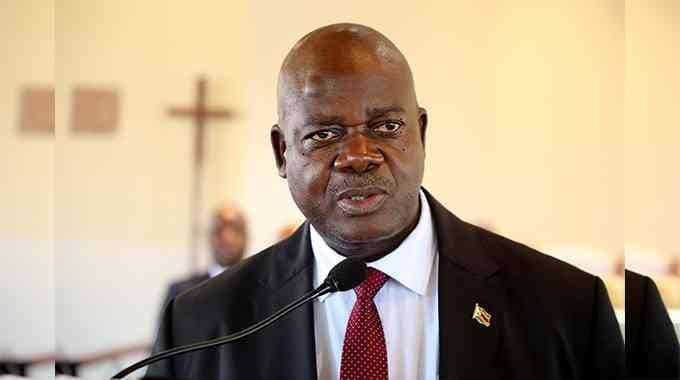
Government is targeting the construction of at least 1,350 schools from November 2026, backed by more than US$600 million, in a major infrastructure program intended to eliminate Zimbabwe's school infrastructure deficit by 2029.
Primary and Secondary Education Minister Torerayi Moyo said the program would address the shortage of schools and improve access to adequate learning facilities, with the latest government figures putting the national deficit at about 1,800 schools.
“I am pleased to announce that Government is targeting the construction of at least 1 350 schools from November 2026, backed by over US$600 million, to eliminate the national school infrastructure deficit by 2029,” Moyo said.
The scale of the program means government will have to deliver an average of about 450 schools a year over the three-year period. At more than US$600 million, the announced funding translates to an indicative average of about US$444,000 for each school, although actual costs will depend on the size of individual schools, location, classrooms and associated infrastructure.
The programme represents a substantial acceleration in construction. Government has previously said it built 120 schools in 2025 and was targeting at least 150 in 2026, meaning the new programme would require the annual delivery rate to roughly triple the 2026 target.
Moyo has described the intervention in terms of the basic right of children to access appropriate learning facilities.
“Every child deserves a safe, decent place to learn,” he said.
The infrastructure gap has been driven by population growth, new settlements and rising demand for public education, with shortages contributing to overcrowding and the use of temporary arrangements such as satellite schools and hot-seating.
Zimbabwe's 2025 Education Statistics Bulletin recorded 13,987 primary and secondary schools nationally in 2025, up from 11,939 in 2021. The increase reflects continuing expansion of the school network, although the government continues to report a substantial infrastructure deficit.
The government's latest target raises questions on implementation capacity because previous school-construction programmes have fallen substantially short of their targets.
Related Stories
A Value for Money Audit by the Auditor-General found that government had planned to construct 300 schools a year between 2018 and 2023, or 1,800 schools over the six-year period. Only 242 schools were constructed, representing about 13.4 percent of the target.
The audit identified delays in construction, ineffective procurement coordination, contract price variations and terminations, under-utilisation of released budgets, weaknesses in project management and inadequate supervision as some of the factors behind the poor delivery rate.
The report also found that all eight sampled Public Sector Investment Programme projects in Harare, Manicaland and Bulawayo were incomplete at the time of the audit. Some had been delayed for between four and six years, while construction at some sites had stopped for more than five years.
In one case, roofing materials for Budiriro 6 Primary School and Chitungwiza Early Learning Centre had been purchased in 2019 even though construction remained at foundation level as of September 2023. At Magamba Primary School in Manicaland, a contractor stopped work after seeking a price variation, while another contractor at Ngwenyama Primary School in Bulawayo had its contract terminated after failing to meet construction deadlines.
The Auditor-General also found problems with quality control. At Hatcliffe 3 Primary School in Harare, classrooms were completed without windows and finished floors and were subsequently condemned by ministry inspectors. A classroom block at Pumula South in Bulawayo also faced a demolition order after the building materials used were found not to meet the required standards.
These findings are significant for the new US$600 million programme because the challenge is not simply the availability of money. The previous audit points to weaknesses in procurement, project management, contractor performance, supervision and payment processes that can prevent allocated resources from becoming completed schools.
The Auditor-General found that between 2018 and 2023 the ministry received ZWL$3.8 billion of the ZWL$4.7 billion budgeted for public school construction and fully utilised the amount received. However, ZWL$900 million of the budgeted allocation was not funded, leaving planned activities incomplete.
Land availability is another issue. The audit found that of 44 sites reserved for school construction between 2003 and 2015, only one had been developed, two were partially developed and 41 remained undeveloped. Some reserved sites had subsequently been occupied by illegal settlers or converted to other uses.
This makes the geographic distribution of the new programme important. Building 1,350 schools will not by itself eliminate shortages if new facilities are not located in areas where population growth and enrolment pressures are greatest.
The government's own recent school-building initiatives have increasingly relied on partnerships beyond the traditional Treasury-funded model. The Auditor-General found that Public-Private Partnerships had already resulted in school construction in Manicaland, Harare and Bulawayo, while schools development committees were also financing additional facilities.
UNICEF's 2026 Education Budget Brief similarly assesses Zimbabwe's education financing in terms of not only infrastructure, but also teaching and learning materials, teacher recruitment and retention, budget execution, equity and inclusion. The organisation notes that its assessment includes MOPSE budget performance and the financing of school infrastructure.





Leave Comments