




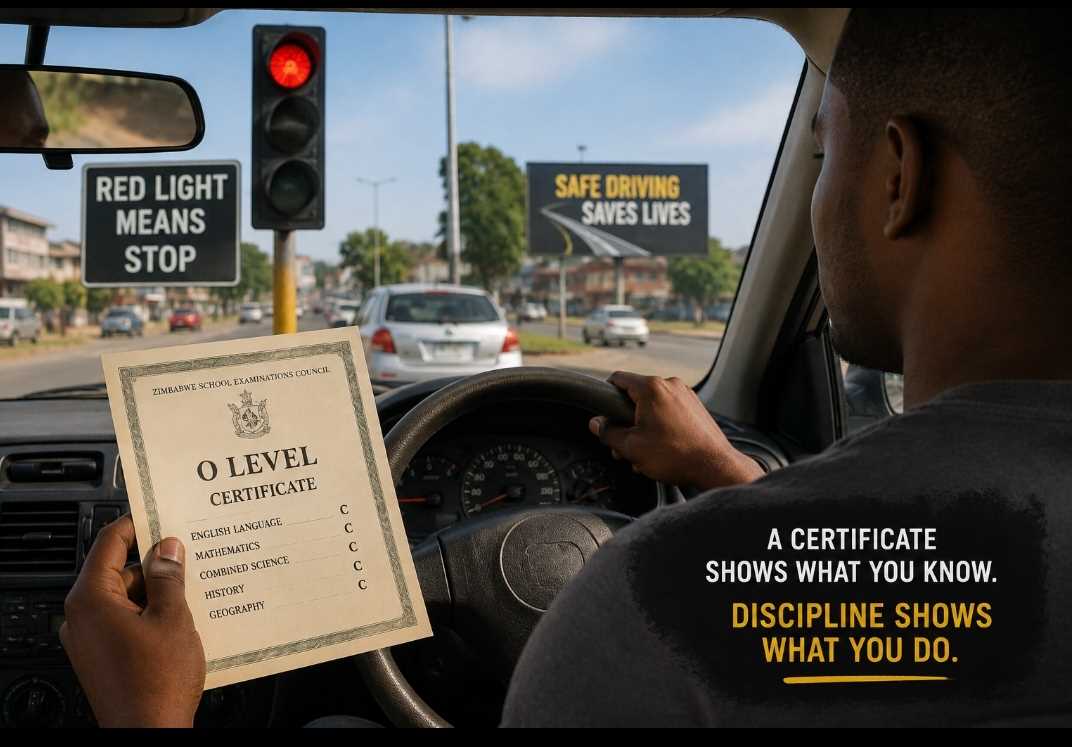
There is something distinctly Zimbabwean about our response to difficult problems: when behaviour becomes difficult to control, we reach for a certificate.
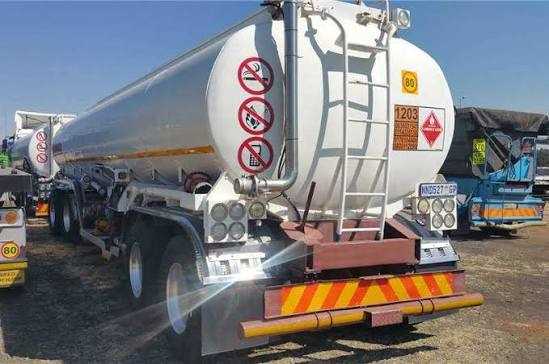
The proposal to require professional drivers to have at least five O-Levels, reportedly including English and Mathematics, may appear reasonable. Professional drivers certainly need proper training, competence and a clear understanding of their responsibilities.
But we should be careful not to confuse academic attainment with responsible behaviour.
Zimbabwe’s road-safety crisis is not primarily a crisis of educational qualifications. It is, to a significant extent, a crisis of discipline, enforcement and accountability.
You do not need five O-Levels to understand that a red traffic light means stop.
You do not need Mathematics to know that overtaking on a blind rise is dangerous. You do not need English to understand a road sign. And you certainly do not need a university degree to know that excessive speed in a crowded area can kill.
Some highly educated people drive recklessly. Zimbabwe has PhD holders, lawyers, engineers, doctors and senior executives who disregard traffic rules. A doctorate does not prevent someone from jumping a red light. Five O-Levels will not either.
The problem, therefore, is less about what motorists know and more about whether they believe the rules matter.
That brings us to the uncomfortable issue of impunity.
We have normalised reckless overtaking, speeding, dangerous stopping, mobile-phone use while driving and other traffic violations. Too often, motorists behave as though traffic regulations are suggestions rather than laws.
This is compounded by inconsistent enforcement and the belief that offences can be negotiated away.
A driver who knows that dangerous driving could result in the loss of a licence, livelihood or freedom has a strong incentive to behave differently from one who believes the consequences can be avoided.
The certainty of consequences can be a more powerful deterrent than the certificate hanging on the driver’s wall.
This does not make education irrelevant.
Related Stories
Professional drivers should receive rigorous training in defensive driving, road safety, vehicle maintenance, passenger protection, fatigue management and traffic law. The professionalisation of driving is both legitimate and necessary.
But professionalisation should not become synonymous with academic qualification.
A driver with four O-Levels and decades of disciplined professional driving experience should not automatically be considered a greater danger than a university graduate with a history of reckless driving.
The real test of professionalism should include demonstrated competence, a responsible driving record, continuous training and respect for the law.
Zimbabwe also needs stronger licensing and testing systems, effective vehicle inspections and credible traffic enforcement. Most importantly, enforcement must be applied consistently, regardless of a driver’s social status, connections or occupation.
Otherwise, we risk addressing the easiest part of the problem rather than the most important one.
Five O-Levels are measurable. They are easy to include in a regulation and easy to check on an application form. Changing a culture of impunity is much harder.
But that is precisely why we must confront it.
A person who cannot read a road sign presents an obvious safety risk. So does a person who can read it perfectly and deliberately ignores it.
The distinction matters.
Zimbabwe does not simply need more educated professional drivers. It needs more accountable drivers.
If the objective is safer roads, the emphasis should be on producing drivers who are competent, disciplined and consistently law-abiding.
Five O-Levels may tell us something about what a driver achieved at school. They tell us very little about what that driver will do when the traffic light turns red.
And that is where our road-safety conversation should begin.
Simbarashe Namusi is a media expert writing in his personal capacity.








Leave Comments