






Southern African leaders have once again committed themselves to a more integrated region, promising infrastructure, industrialisation, easier movement and deeper economic cooperation.
But the 46th SADC Summit in Durban ended with a contradiction that the region can no longer afford to ignore: Southern Africa wants its borders to connect economies while political and social tensions are increasingly turning those same borders into fault lines.
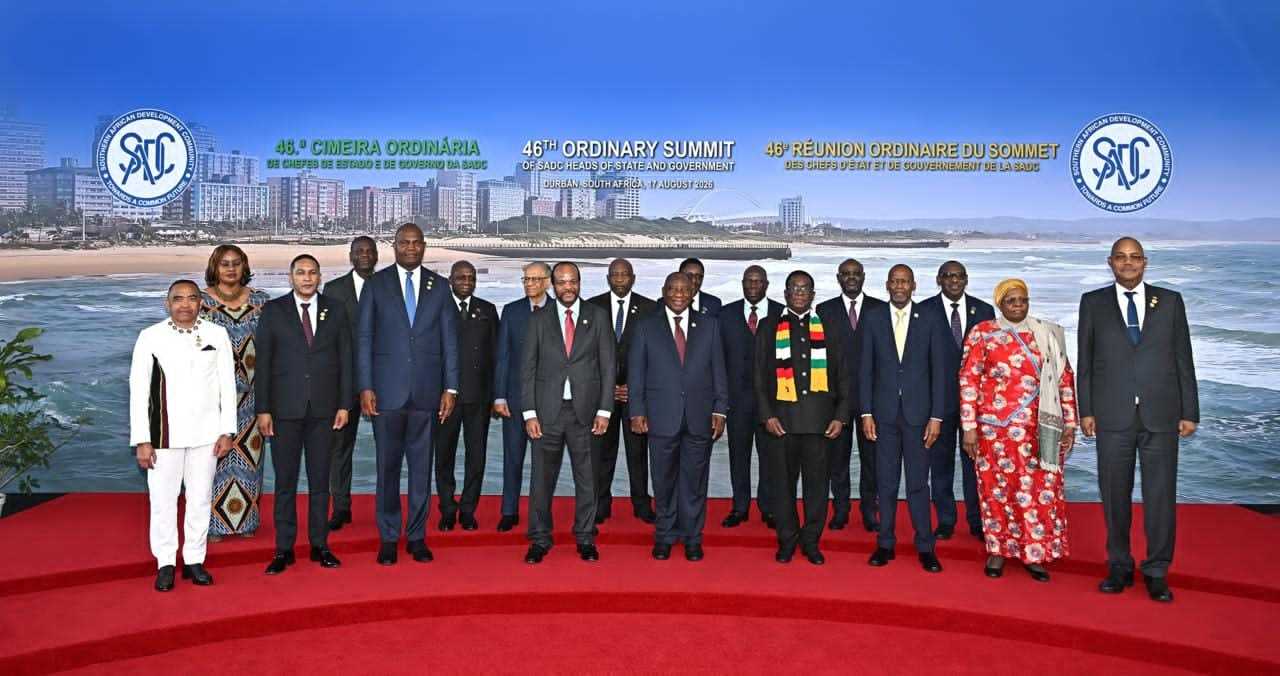
In its closing message, the summit stressed that regional prosperity, security and development depend on countries working together, with South African President Cyril Ramaphosa calling for SADC to move beyond resolutions towards implementation that produces visible improvements in people's lives.
But the question hanging over that vision is whether regional integration can succeed while citizens and migrants from neighbouring SADC states increasingly face hostility in South Africa, the region's largest economy and principal migration destination.
Ramaphosa himself has warned that South Africa must not allow legitimate concerns about migration to become a justification for xenophobia.
“We will and must not allow groups to use the legitimate concerns of our people to destabilise our country through inciting lawlessness and violence,” he said in June as anti-migrant mobilisation intensified.
That warning is difficult to separate from the circumstances surrounding the Durban summit.
In June and July, South Africa experienced a new wave of anti-immigrant protests involving groups including Operation Dudula and March and March. Demonstrations were accompanied by looting and violence in some areas, while hundreds of people were arrested during the protests.
The consequences have extended beyond South Africa's borders.
More than 178,000 African migrants have reportedly left South Africa in recent months through deportations and voluntary returns, with about 115,000 returning to Zimbabwe and 56,000 to Malawi. The scale of the movement has created humanitarian and diplomatic pressures for countries whose citizens depend on South Africa for employment and livelihoods.
For Zimbabwe, this is not an abstract regional issue.
Zimbabweans form one of the largest foreign migrant communities in South Africa, meaning that any deterioration in the treatment of foreign nationals directly affects families, remittance flows and bilateral relations.
SADC says its mission is built around deeper cooperation and integration, sustainable economic growth, good governance and durable peace and security. Its 46th Summit theme itself calls for resilient, sustainable and inclusive industrialisation through infrastructure, agriculture and critical minerals transformation.
Yet economic integration cannot be separated from the movement of people.
A railway connecting Zimbabwe to South African ports is integration. A one-stop border post reducing delays is integration. A regional power project is integration.
But so is the ability of a Zimbabwean, Malawian, Mozambican or Lesotho national to live and work legally in South Africa without being treated as a threat simply because they crossed a national boundary.
That is the uncomfortable gap between SADC's economic vision and its social reality.
The summit's emphasis on regional corridors is economically compelling. South Africa wants infrastructure to connect production centres to markets, link landlocked countries to ports and lower the cost of moving goods and people. Faster establishment of one-stop border posts is intended to reduce delays and facilitate cross-border commerce.
But the region cannot simultaneously celebrate the free movement of goods while treating the movement of African workers as principally a security problem.
South Africa's government has legitimate concerns about illegal immigration, border management, organised crime and pressure on public services. Ramaphosa has explicitly acknowledged those concerns, saying illegal migration can place additional pressure on health and education services and can intersect with organised crime.
But he has also drawn a line between immigration enforcement and blaming migrants for South Africa's wider problems.
“Illegal immigration is not the cause of South Africa's social and economic difficulties,” Ramaphosa said, arguing that legitimate concerns about migration should not become a justification for xenophobia or vigilantism.
The problem begins when enforcement becomes indistinguishable from collective suspicion.
The South African government has itself drawn that line. It says only authorised officials may enforce immigration laws and that ordinary citizens should not stop people in the street to demand proof of nationality. It has also warned that violence, intimidation and targeting people because of their nationality are criminal acts.
Yet human rights organisations say the danger has already moved beyond rhetoric.
Human Rights Watch has documented how anti-immigrant vigilante groups have obstructed migrants' access to healthcare and education. It reported that a one-year-old Malawian boy died in July after his family was blocked from accessing treatment at two clinics in Alexandra because they lacked South African identity documents.
This creates a fundamental contradiction for SADC.
The bloc wants a region in which infrastructure connects countries, industries operate across borders and supply chains move more efficiently. But the people who make those economies work — traders, construction workers, domestic workers, miners, professionals, farmers and entrepreneurs — remain vulnerable to political narratives that portray foreigners as the source of unemployment, crime and failing public services.
That contradiction could become more damaging as SADC pursues industrialisation.
Related Stories
The region's economic strategy depends heavily on cross-border value chains. Zimbabwe's minerals may require South African ports.
Zambia's copper may move through regional transport corridors. Agricultural producers require regional markets. Companies need labour, skills and consumers beyond their domestic borders.
The more integrated those economies become, the less realistic it is to treat migration as a problem existing independently of economic integration.
South Africa's own economic difficulties show why the political temptation is powerful.
The country has persistently high unemployment, poverty and pressure on public services. Ramaphosa acknowledged in June that these conditions were contributing to public anxiety about migration. But he also made a crucial distinction: “Illegal immigration is not the cause of South Africa's social and economic difficulties.”
That distinction matters because scapegoating migrants can provide a politically convenient explanation for structural problems that are much harder to solve.
If unemployment is blamed on foreigners, the debate moves away from the productivity of the economy, investment, industrial policy, skills, infrastructure and the quality of public institutions.
If crime is blamed primarily on migrants, attention can shift away from policing failures and organised criminal networks.
And if public hospitals and schools are overcrowded, migrants can become an easier target than inadequate infrastructure and public-service capacity.
This does not mean that South Africa should abandon immigration enforcement.
It means that enforcement must remain lawful, individualised and consistent with the rights of people who live and work in the country.
That distinction is particularly important for SADC because the region has a shared history of labour migration.
South Africa's mines, farms, construction sites and cities have depended for generations on workers from across Southern Africa. The region's economies have therefore never been as separate as their political borders suggest.
It also raises a question that the Durban summit's infrastructure-heavy agenda does not fully answer: what does regional integration mean for ordinary people?
If integration means only roads, railways, electricity grids and mineral corridors, it will remain an elite economic project.
If it means shorter border queues for trucks but greater hostility towards people crossing those same borders, SADC will have integrated its markets without integrating its societies.
The summit's call for peace therefore needs to extend beyond traditional security threats.
Peace is not only the absence of war between states. It also requires social cohesion within states and protection for communities vulnerable to political violence and xenophobia.
The region cannot claim meaningful integration while citizens of neighbouring countries are driven from one of its biggest economies by fear.
South Africa has responded with tougher immigration enforcement, including increased arrests and deportations. During one week in July, police reported arresting thousands of undocumented migrants as part of a wider operation.
Those operations may address genuine immigration violations, but they also underline why SADC needs a coordinated regional migration framework rather than a collection of national responses.
The region needs a system that distinguishes undocumented migration from criminality, recognises the economic contribution of lawful migrants, protects basic rights and creates predictable mechanisms for regular migration and labour mobility.
Without such a framework, migration will continue to become a political weapon whenever unemployment rises or public services deteriorate.
That would undermine precisely the regional cooperation SADC says it wants to strengthen.
Ramaphosa's call for SADC to move from resolutions to implementation therefore carries an unintended challenge for his own country.
Implementation cannot stop at railways, electricity, water projects and border infrastructure.
It must also confront the political and social conditions that determine whether people from those interconnected countries can coexist peacefully.





Leave Comments