








Zimbabwe has begun building a more sophisticated system for identifying skills shortages, but the country’s own data suggests that the harder challenge will be turning those skills into productive jobs.
The Ministry of Skills Audit and Development says its 2025 work identified a widening gap between what the education and training system produces and what the economy increasingly demands, particularly in artificial intelligence, digital technology and adaptive skills. The ministry also found that the “half-life” of technical skills is shortening, making continuous reskilling and lifelong learning increasingly necessary.
That diagnosis comes against a labour market in which young people remain particularly vulnerable. Zimbabwe’s 2024 Labour Force Survey put unemployment among 15-24-year-olds at 37.7%, while 49.4% were not in employment, education or training in the first quarter. By the third quarter, youth unemployment had risen to 41.2%, while the NEET rate stood at 48.1%.
The figures expose the central contradiction in Zimbabwe’s skills debate: the country can train more people, but training alone cannot create the jobs into which those skills must flow.
Indeed, the ministry’s national consultations acknowledged that Zimbabwe has “significant critical skills shortages” in areas including engineering and technology, health sciences, mining and agriculture, despite the country’s high literacy rate. The report attributes this partly to a mismatch between what training institutions produce and what industry requires.
Permanent Secretary for Skills Audit and Development Rudo Chitiga has called for much closer communication between industry and training institutions.
“We need to create more platforms for dialogue between those who use the skills and those that train the skills,” she said.
The ministry has begun trying to build exactly that bridge.
In 2025, it convened an Industry-Academia Indaba, bringing together training institutions and employers to narrow the gap between skills supply and demand. The annual report says the engagement was intended to make curricula and training priorities more responsive to changing labour-market requirements.
But the most revealing intervention was the country’s first Agriculture Sector Skills Audit.
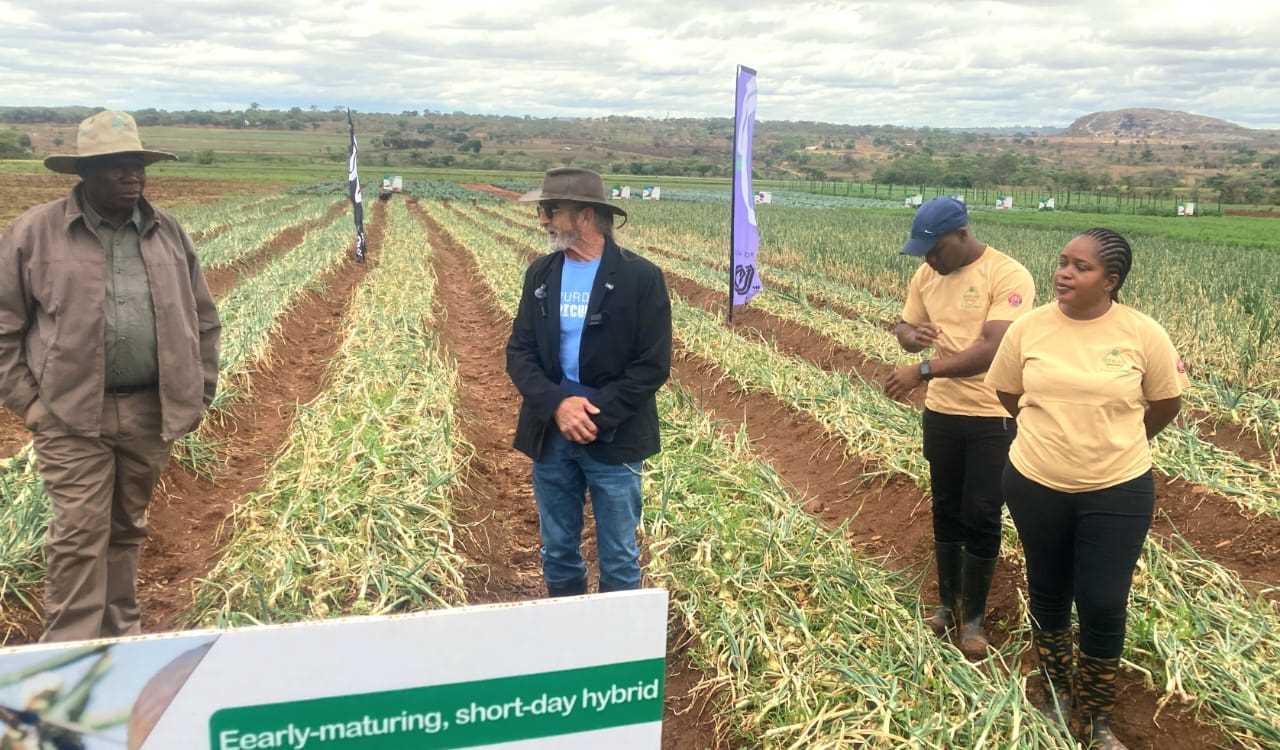
The ministry targeted 30,000 farmers and audited 29,027 — 97% of the target. The exercise covered A1, A2, small-scale commercial, large-scale commercial, communal and old resettlement farms, creating what the ministry describes as a nationally representative database of agricultural skills gaps.
The findings already point towards differentiated demand: communal and A1 farmers require stronger foundational agricultural, value-addition and post-harvest skills, while commercial farming areas need greater capacity in agri-tech, digital market access and export compliance.
That is potentially a major departure from the old approach of producing qualifications without sufficiently knowing where the economy actually needs people.
The ministry now plans to extend sectoral skills audits into mining, tourism and manufacturing, while conducting provincial audits across all 10 provinces. It also intends to establish at least two vocational centres of excellence and expand lifelong learning and e-learning.
Related Stories
Yet there is a danger of mistaking better information for better employment outcomes.
The International Labour Organisation has previously found Zimbabwe’s labour-market information and skills-anticipation system to be fragmented, limiting its ability to support labour-market-responsive training. It warned that skills mismatches impose costs on individuals, businesses and government and can contribute to structural unemployment.
More importantly, Zimbabwe’s employment problem is not entirely a skills problem.
Only about 30% of employed people were in formal non-agricultural employment in the first quarter of 2024, while 41.3% were in informal non-agricultural employment and 22.9% in agriculture.
This means the country could successfully produce workers with exactly the skills industry wants and still struggle to absorb them if formal businesses, factories, mines, farms and technology companies are not expanding fast enough.
As one recent Zimbabwean analysis argued, training a welder without a welding industry or a mechanic without a functioning transport economy simply moves the unemployment problem from the classroom into the workplace. The country therefore faces not only a skills gap but an “industry gap”.
This is perhaps the biggest test for the Ministry of Skills Audit and Development.
Its 2025 annual report acknowledges that the ministry itself faced staffing gaps and resource constraints that affected the pace of implementation.
At the same time, the Jobs of the Future Dialogue found infrastructure constraints in energy, connectivity and data capacity, alongside insufficient public-private partnerships linking training institutions to industry innovation cycles.
That is particularly important as artificial intelligence begins changing the nature of work.
The ministry says Zimbabwe must prepare for AI, robotics, cybersecurity and advanced digital skills, and ultimately position the country as a producer rather than a consumer of technology.
But becoming a producer requires more than courses and certificates. It requires companies able to employ those graduates, infrastructure capable of supporting them and capital flowing into industries where their skills can be deployed.
The global warning is already visible. The ILO says youth unemployment globally rose to 12.4% in 2025, with 67 million young people unemployed, while AI is expected to increase pressure on some occupations even as high-skilled sectors expand.
For Zimbabwe, the skills audit could become one of the most important economic planning tools of the decade if the information collected is actually used to determine where investment, training and job creation should go.








Leave Comments