





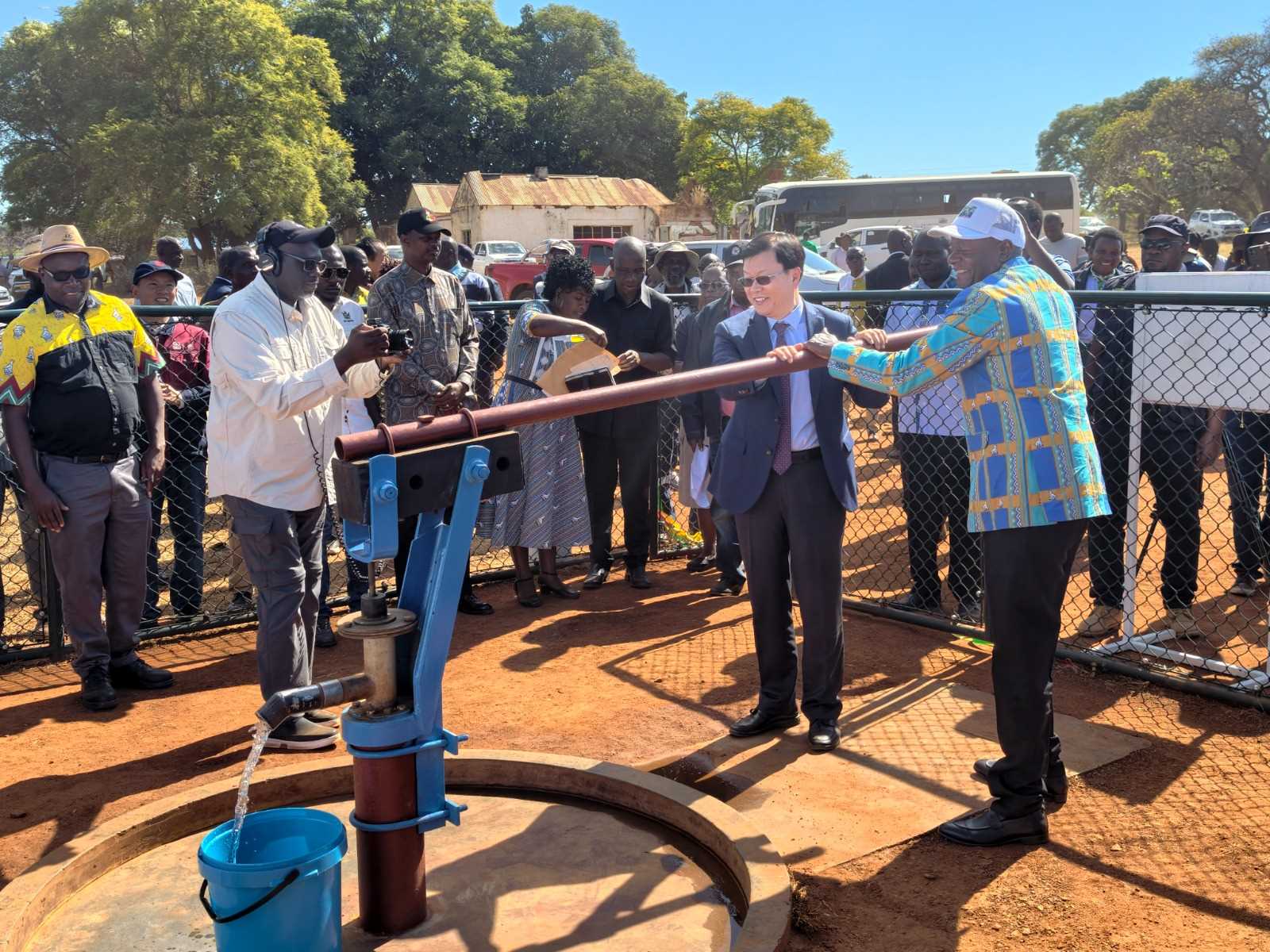
China has handed over 300 boreholes drilled across four Zimbabwean provinces, bringing clean water to more than 75,000 people in a project that shows how water access can move from drought relief to long-term rural investment.
The China-Aid 300 Boreholes Drilling Project reached 300 villages in 21 districts across Mashonaland East, Manicaland, Masvingo and Midlands.
Speaking at the handover ceremony in Chimanimani on June 12, Chinese Ambassador to Zimbabwe Zhou Ding said the project was launched after the 2024 El Niño-induced drought prompted President Emmerson Mnangagwa to declare a national state of disaster.
Beyond the food crisis, the drought was also dried up water points, weakened rural livelihoods and increased the risk of waterborne diseases.
UNICEF warned in October 2024 that nearly 4% of rural boreholes in Zimbabwe had dried up because of drought, while broken boreholes had risen to more than 6,000 by August 2024. The Government of Zimbabwe’s El Niño appeal also reported massive crop failure, depleted water resources and pastures, and pressure on health, education, agriculture, energy and infrastructure.
A working borehole is a household health tool as it reduces dependence on unsafe water sources and carries the same impact to schools and clinics.
Zhou said the completed boreholes are already supporting crop farming, livestock rearing, poultry projects and vegetable production in beneficiary communities. He also said the project had freed up time for women and children, giving them more room for schooling and livelihood activities.
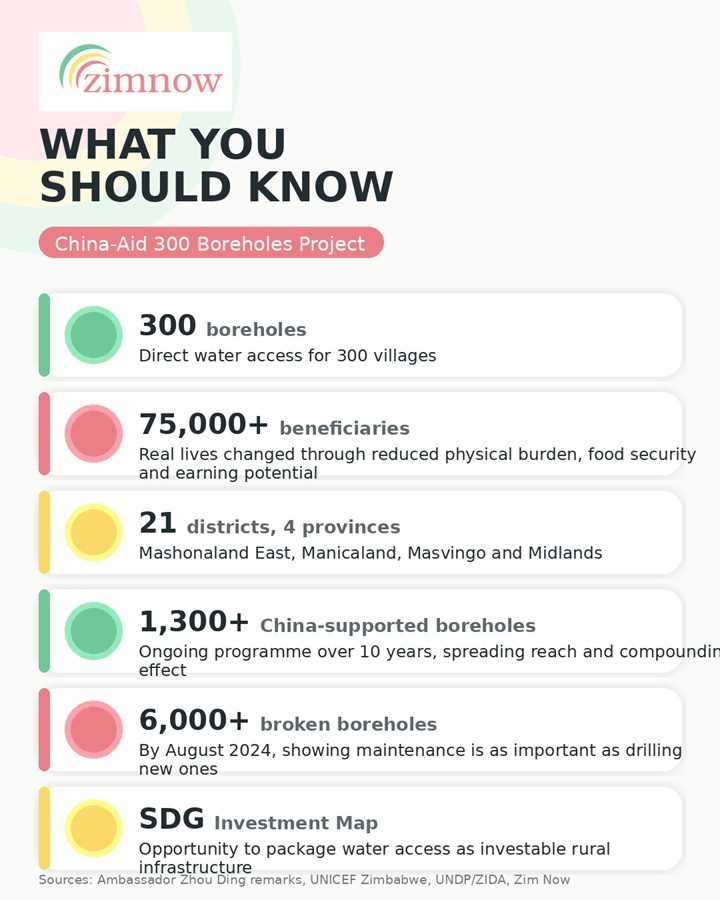
China says the 300 boreholes are part of a longer water support programme. According to Zhou, China has drilled more than 1,300 boreholes across Zimbabwe over the past decade, delivering clean water and irrigation support to about 500,000 people.
Related Stories
The project also comes at a time when Zimbabwe is trying to turn development needs into investable opportunities.
UNDP and the Zimbabwe Investment and Development Agency are working on an SDG Impact Investment Map to help direct capital into sectors where development gaps can also become bankable projects. UNDP says the global impact investment market is now worth about US$1.6 trillion, held by 3,907 institutions, while around 37 countries have already launched SDG Impact Investment Maps.
Zim Now previously reported that Zimbabwe’s planned map is expected to help investors identify opportunities in health, education, energy, food production and rural development.
The practical question now is whether Zimbabwe can move from scattered water projects to a structured rural water investment pipeline.
That would mean mapping communities without reliable water, publishing functionality data on boreholes, costing repairs and new installations, linking water points to schools, clinics and gardens, and packaging solar-powered water systems, boreholes and irrigation upgrades as SDG-linked investment opportunities.
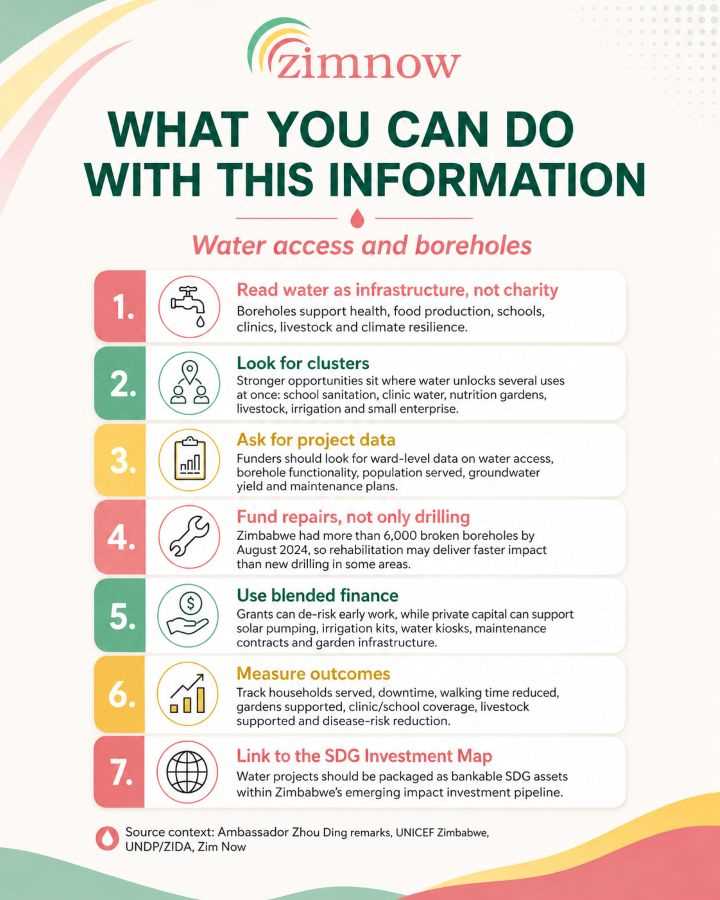
Government, communities, businesses and development partners should now look at water beyond charity, and view it as enabling infrastructure for agriculture, health, education and rural enterprise.
The 300 boreholes do not close Zimbabwe’s water access gap. But they show what SDG investment looks like when it reaches the ground: clean water, saved time, healthier households, stronger gardens and communities with a better chance of surviving the next dry season.






Leave Comments