





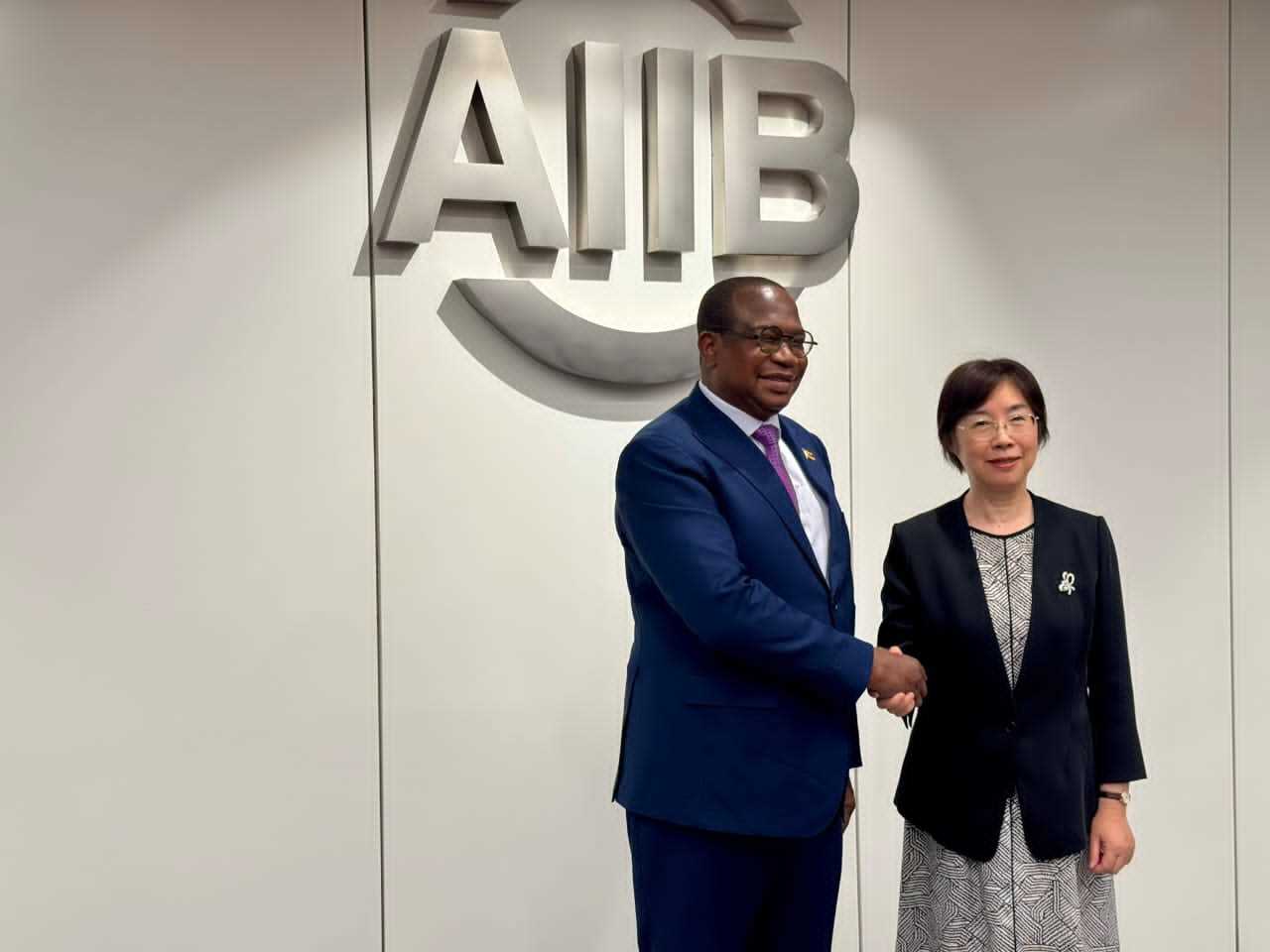
Zimbabwe's push to join the Asian Infrastructure Investment Bank signals a strategic shift towards securing long-term, lower-cost infrastructure financing as the government seeks to bridge the country's sizeable infrastructure deficit while reducing reliance on expensive short-term borrowing and constrained domestic resources.
Finance, Economic Development and Investment Promotion Minister Mthuli Ncube on Thursday led a Treasury delegation to the AIIB headquarters in Beijing following Zimbabwe's formal expression of interest to join the multilateral lender in May 2026, holding talks with AIIB President Zou Jiayi and senior executives on the country's potential membership and future project financing.
The engagement comes as Zimbabwe embarks on the implementation of National Development Strategy 2 (2026–2030), which identifies infrastructure development as a key driver of economic transformation, industrialisation and regional competitiveness.
According to the Ministry of Finance, discussions focused on financing opportunities for sustainable infrastructure, climate resilience, regional connectivity and private sector investment, areas that closely align with Zimbabwe's development priorities.
Ncube said Zimbabwe was seeking both long-term capital and technical partnerships to accelerate investment in sustainable energy and water infrastructure.
"Zimbabwe is seeking long-term financing and technical partnership to expand sustainable energy and water systems, which are central to the country's economic transformation."
Infrastructure financing has become increasingly important for Zimbabwe as the country attempts to modernise ageing transport networks, expand electricity generation, rehabilitate water infrastructure and strengthen climate resilience against increasingly frequent droughts and floods.
The African Development Bank estimates that Africa faces an annual infrastructure financing gap of between US$68 billion and US$108 billion, with inadequate infrastructure estimated to reduce the continent's economic growth by about 2 percentage points annually.
Related Stories
The AIIB, established in 2016 with authorised capital of US$100 billion, has approved more than US$67 billion for over 380 infrastructure projects across 111 member economies, financing projects in transport, renewable energy, water systems, digital infrastructure and urban development.
The discussions also reflected growing international confidence in Zimbabwe's recent macroeconomic performance.
According to the Ministry of Finance, AIIB President Zou Jiayi commended Zimbabwe for achieving single-digit inflation and acknowledged the country's reform efforts, describing macroeconomic stability as an important foundation for sustainable infrastructure investment.
The remarks come after Zimbabwe reduced annual inflation to below 5%, while foreign currency inflows reached US$8.3 billion during the first five months of 2026 and foreign exchange reserves backing the ZiG exceeded US$1.5 billion, according to the Reserve Bank of Zimbabwe.
However, while macroeconomic stability has improved, sustained infrastructure investment remains essential to unlock higher productivity and attract greater private sector investment.
Infrastructure constraints continue to affect electricity supply, logistics costs, irrigation expansion, digital connectivity and industrial competitiveness, with manufacturers frequently citing unreliable utilities and transport costs as major impediments to production.
Zimbabwe has increasingly diversified its development financing sources in recent years through partnerships with China, the African Development Bank, the Trade and Development Bank, and other multilateral institutions, but AIIB membership would provide access to an additional pool of long-term development finance specifically targeted at strategic infrastructure.
During the meeting, both Zimbabwe and the AIIB agreed to continue technical engagements on the country's prospective membership and the development of a pipeline of infrastructure projects.




Leave Comments