




By Phineas Mukomberanwa
OF Zimbabwe’s 2026 Tobacco Marketing Season and the Massive Wealth Transfer from Growers
For decades, tobacco has been celebrated as Zimbabwe’s “golden leaf” — a crop that sustained rural livelihoods, built homes, educated children, and generated billions in export earnings.
But for thousands of smallholder growers during the 2026 tobacco marketing season, the golden leaf is increasingly becoming a “golden curse.”
Behind the impressive national marketing figures lies a painful reality: many growers are working for an entire season only to walk away with nothing. In some cases, farmers are returning from auction floors empty-handed after spending almost a full year producing the crop.
The figures tell a troubling story.
Zimbabwe has so far sold approximately 250.3 million kilograms of tobacco, compared to 200.6 million kilograms during the same period last year, representing a significant increase in volume.
Yet despite the increase in production, growers have earned approximately US$637.3 million, compared to US$678.2 million during the same period last year.
In simple terms, growers produced and sold more tobacco, but earned less money.
The collapse in prices is even more alarming. The auction average price has fallen from US$3.55/kg last year to just US$1.83/kg this season — a devastating decline of 48.53%.
This is not just a price correction. It is an economic disaster for smallholder farmers.
The Hidden Wealth Transfer
What appears to be unfolding is one of the largest wealth transfer mechanisms in Zimbabwe’s agricultural sector — wealth moving from predominantly black smallholder farmers to large tobacco merchants and contracting companies.
Many contracting companies now seem to be buying tobacco mainly to recover loans extended to growers.
Beyond loan recovery, growers are increasingly being told to “see what they can do with the rest” of their tobacco at auction floors where prices have collapsed to extremely low levels.
Consider this example:
A grower contracted for one hectare may receive inputs worth around US$1,100, with an expectation to deliver about 2,000 kilograms of tobacco.
In many cases, the contracting company appears to buy only enough tobacco to recover the US$1,100 facility. The remainder of the crop is then taken to auction floors where the grower is exposed to depressed prices.
If this trend is widespread — and evidence from the floors suggests it is — the implications are serious.
Of the approximately US$606 million reportedly paid under contract sales, a substantial portion may never have reached growers as actual income. Instead, much of it may have gone toward loan recovery by contracting companies.
Meanwhile, the disposable income retained by growers may be extremely small.
The grower carries the risk, labour burden, environmental cost, and most production expenses, yet retains the smallest share of the value.
OF Zimbabwe’s 2026 Tobacco Marketing Season and the Massive Wealth Transfer from Growers
For decades, tobacco has been celebrated as Zimbabwe’s “golden leaf” — a crop that sustained rural livelihoods, built homes, educated children, and generated billions in export earnings.
But for thousands of smallholder growers during the 2026 tobacco marketing season, the golden leaf is increasingly becoming a “golden curse.”
Behind the impressive national marketing figures lies a painful reality: many growers are working for an entire season only to walk away with nothing. In some cases, farmers are returning from auction floors empty-handed after spending almost a full year producing the crop.
The figures tell a troubling story.
Zimbabwe has so far sold approximately 250.3 million kilograms of tobacco, compared to 200.6 million kilograms during the same period last year, representing a significant increase in volume.
Yet despite the increase in production, growers have earned approximately US$637.3 million, compared to US$678.2 million during the same period last year.
In simple terms, growers produced and sold more tobacco, but earned less money.
The collapse in prices is even more alarming. The auction average price has fallen from US$3.55/kg last year to just US$1.83/kg this season — a devastating decline of 48.53%.
This is not just a price correction. It is an economic disaster for smallholder farmers.
The Hidden Wealth Transfer
What appears to be unfolding is one of the largest wealth transfer mechanisms in Zimbabwe’s agricultural sector — wealth moving from predominantly black smallholder farmers to large tobacco merchants and contracting companies.
Many contracting companies now seem to be buying tobacco mainly to recover loans extended to growers.
Beyond loan recovery, growers are increasingly being told to “see what they can do with the rest” of their tobacco at auction floors where prices have collapsed to extremely low levels.
Consider this example:
A grower contracted for one hectare may receive inputs worth around US$1,100, with an expectation to deliver about 2,000 kilograms of tobacco.
In many cases, the contracting company appears to buy only enough tobacco to recover the US$1,100 facility. The remainder of the crop is then taken to auction floors where the grower is exposed to depressed prices.
If this trend is widespread — and evidence from the floors suggests it is — the implications are serious.
Of the approximately US$606 million reportedly paid under contract sales, a substantial portion may never have reached growers as actual income. Instead, much of it may have gone toward loan recovery by contracting companies.
Meanwhile, the disposable income retained by growers may be extremely small.
The grower carries the risk, labour burden, environmental cost, and most production expenses, yet retains the smallest share of the value.
The Real Cost of Producing Tobacco
There is a misconception that tobacco farming is easy money.
Nothing could be further from the truth.
A tobacco grower must:
Purchase seed and seedbed chemicals;
Water seedbeds for nearly three months;
Prepare land through ploughing, ripping, discing, and ridging;
Apply expensive fertilizers and chemicals;
Hire labour;
Reap and cure the crop;
Use firewood at an estimated ratio of nearly 10 kilograms of wood for every 1 kilogram of cured tobacco;
Purchase packaging materials costing over US$5 per bale;
Pay transportation costs averaging at least US$10 per bale;
Related Stories
Pay auction handling charges.
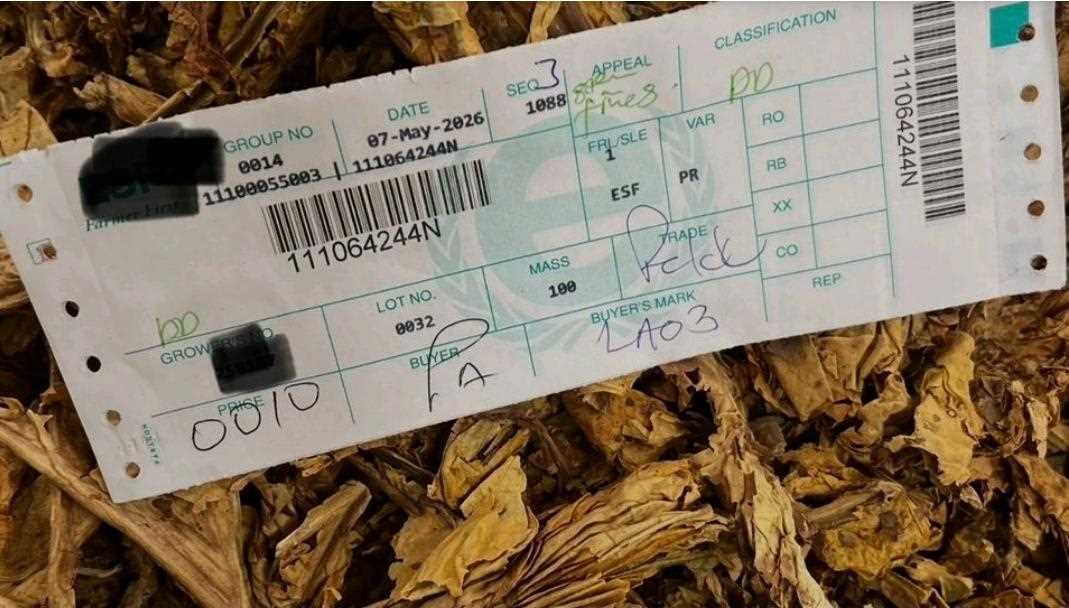
After all this effort, some growers are reportedly being paid as little as US$0.10 per kilogram for their tobacco.
How can any grower survive under such a system?
How can a crop still be called “golden” when the producer remains trapped in poverty?
Corporate Greed or Declining Quality?
The industry must confront difficult questions honestly.
Is this purely a quality issue?
Quality certainly matters. Tobacco Farmer Talk (TFT) has consistently emphasized the importance of producing high-quality crops through proper agronomic practices.
However, even accounting for quality differences, the scale of the price collapse raises serious concerns.
Can quality deterioration alone explain a 48.53% collapse in auction prices?
Or are vulnerable smallholder growers facing excessive market power from buyers with greater bargaining strength?
The answer likely lies somewhere in between.
Some growers are undoubtedly producing poor-quality tobacco due to poor curing, grading, or agronomic practices. However, current pricing patterns also point to possible structural market problems.
The industry cannot ignore the growing perception among farmers that the system is heavily tilted against them.
The Human Cost
Behind every bale of tobacco is a family.
A father hoping to pay school fees.
A mother trying to feed her household.
A family trying to build a better future.
Instead, many growers are ending the season with debt, frustration, exhaustion, and despair. Some have reportedly died from stress-related illnesses, including stroke and depression.
A Healthy Farmer, A Healthy Crop, A Healthy Profit
No agricultural value chain can survive in the long term if the primary producer continues absorbing losses while other players remain profitable.
The 2026 tobacco marketing season should serve as a wake-up call for regulators, merchants, policymakers, financial institutions, and the entire tobacco value chain.
There is a misconception that tobacco farming is easy money.
Nothing could be further from the truth.
A tobacco grower must:
Purchase seed and seedbed chemicals;
Water seedbeds for nearly three months;
Prepare land through ploughing, ripping, discing, and ridging;
Apply expensive fertilizers and chemicals;
Hire labour;
Reap and cure the crop;
Use firewood at an estimated ratio of nearly 10 kilograms of wood for every 1 kilogram of cured tobacco;
Purchase packaging materials costing over US$5 per bale;
Pay transportation costs averaging at least US$10 per bale;
Pay auction handling charges.
After all this effort, some growers are reportedly being paid as little as US$0.10 per kilogram for their tobacco.
How can any grower survive under such a system?
How can a crop still be called “golden” when the producer remains trapped in poverty?
Corporate Greed or Declining Quality?
The industry must confront difficult questions honestly.
Is this purely a quality issue?
Quality certainly matters. Tobacco Farmer Talk (TFT) has consistently emphasized the importance of producing high-quality crops through proper agronomic practices.
However, even accounting for quality differences, the scale of the price collapse raises serious concerns.
Can quality deterioration alone explain a 48.53% collapse in auction prices?
Or are vulnerable smallholder growers facing excessive market power from buyers with greater bargaining strength?
The answer likely lies somewhere in between.
Some growers are undoubtedly producing poor-quality tobacco due to poor curing, grading, or agronomic practices. However, current pricing patterns also point to possible structural market problems.
The industry cannot ignore the growing perception among farmers that the system is heavily tilted against them.
The Human Cost
Behind every bale of tobacco is a family.
A father hoping to pay school fees.
A mother trying to feed her household.
A family trying to build a better future.
Instead, many growers are ending the season with debt, frustration, exhaustion, and despair. Some have reportedly died from stress-related illnesses, including stroke and depression.
A Healthy Farmer, A Healthy Crop, A Healthy Profit
No agricultural value chain can survive in the long term if the primary producer continues absorbing losses while other players remain profitable.
The 2026 tobacco marketing season should serve as a wake-up call for regulators, merchants, policymakers, financial institutions, and the entire tobacco value chain.









Leave Comments