








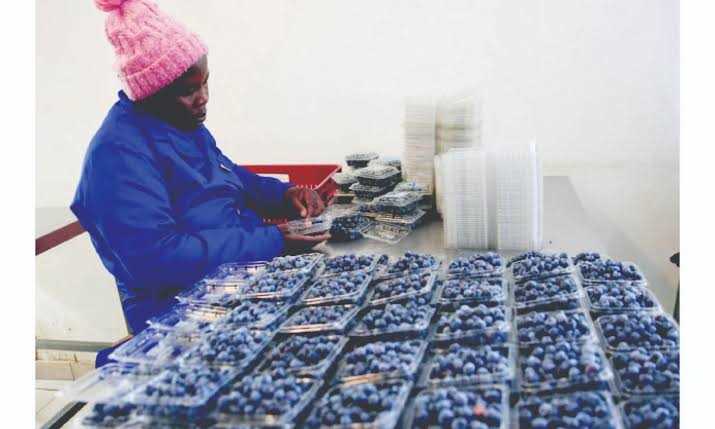
Zimbabwe’s blueberry industry is anticipating a strong export season, with growers projecting approximately 12 000 tonnes in exports, reinforcing the country’s expanding presence in the global horticulture market.
The season has opened with notable optimism over fruit quality, as early harvests have produced unusually large berries, some reportedly reaching 34 millimetres in size — a development industry players view as a positive indicator for export competitiveness and premium market appeal.
The projection comes as Zimbabwe continues consolidating its position in horticultural exports, with blueberries emerging as one of the country’s fastest-growing agricultural export products amid rising international demand.
As harvesting gathers momentum, attention has shifted beyond export volumes to the exceptional fruit size being recorded early in the season.
Chief executive officer of the Horticultural Development Council, Linda Nielsen, said the country’s berry sector had entered the season on a strong footing.
“Blueberry season has officially arrived… and Zimbabwe clearly did not come to play,” Nielsen said.
Related Stories
Growers, she noted, are forecasting approximately 12 000 tonnes in exports, reflecting confidence in both production capacity and international demand.
Nielsen highlighted the size of the fruit as a standout feature of the early harvest.
“34mm. Thirty. Four. Millimetres. At this point they’re halfway to becoming plums! And this is just the start of the season,” she said.
She credited growers, farm workers, packhouses and logistics teams for driving what is expected to be another successful export period for Zimbabwe’s horticulture industry.
“A huge credit to the growers, workers, packhouses and logistics teams behind another promising export season for Zimbabwe horticulture. The world asked for blueberries — Zimbabwe responded with ‘supersize’,” she added.
Horticulture has increasingly become one of Zimbabwe’s key foreign currency earners, with blueberries gaining traction in premium international markets due to favourable growing conditions, harvest timing and improving quality standards.










Leave Comments