







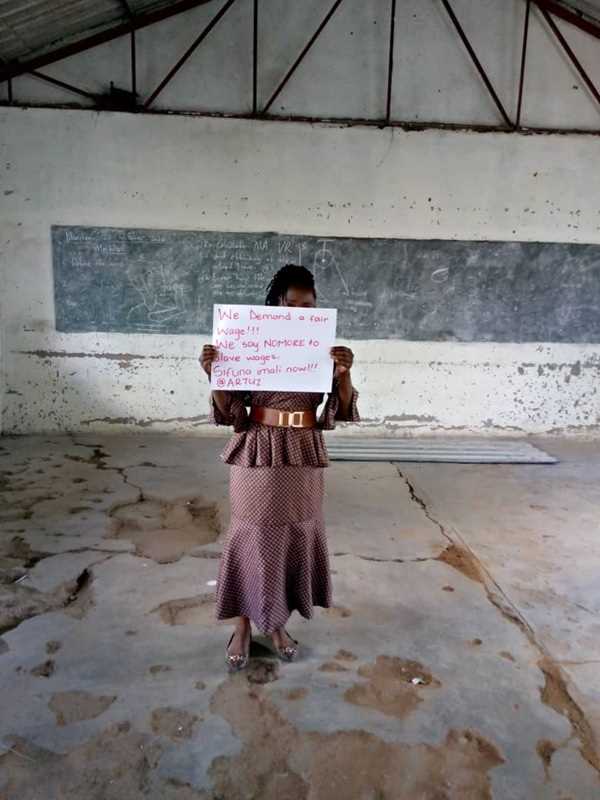
Ms Bridget Dhliwayo, a teacher in Tsholotsho, has been discharged from the civil service after taking a photograph inside a classroom holding a placard demanding better wages, in what authorities say amounts to misconduct under public service regulations.
The letter, dated 10 April 2026 and issued by the Ministry of Primary and Secondary Education in Matabeleland North, cites two key offences. Dhliwayo is accused of taking a protest “selfie” in class on 13 May 2025 and posting it in an ARTUZ WhatsApp group, and of failing to conduct lessons between 13 and 20 May 2025 in line with the school timetable.
Authorities concluded that she had breached Section 46 of the Public Service Regulations and noted that this was not her first offence, describing her as “unrepentant” despite previous warnings. The penalty is dismissal from service effective 14 May 2026.
Outside the formal language of statutes and sections, the case has spilled into a broader and more volatile question. When does protest become punishable misconduct, and when is it protected labour expression?
Related Stories
ARTUZ has framed the dismissal as retaliation for participating in what it calls an “online demonstration,” arguing that Dhliwayo’s placard, which reads “We demand a fair wage… we say no more to slave wages. Sifuna imali now,” reflects the lived reality of underpaid educators rather than an act of indiscipline.
The image itself is striking in its simplicity. The lone teacher stands in a bare classroom, chalkboard behind her like a silent witness, holding up a handwritten demand.
Recent government adjustments to salaries and allowances have done little to settle discontent. While authorities have pointed to incremental improvements, workers across sectors argue that the increases are being outpaced by inflation and the rising cost of living.
In public hospitals, nurses have already escalated matters into industrial action, with reports of strikes disrupting services and exposing the fragility of the health system. Their grievances mirror those of teachers
The dismissal letter notes that Dhliwayo can appeal to the Labour Court or seek a review through the Public Service Commission within 21 days, though such processes do not suspend the penalty.








Leave Comments