





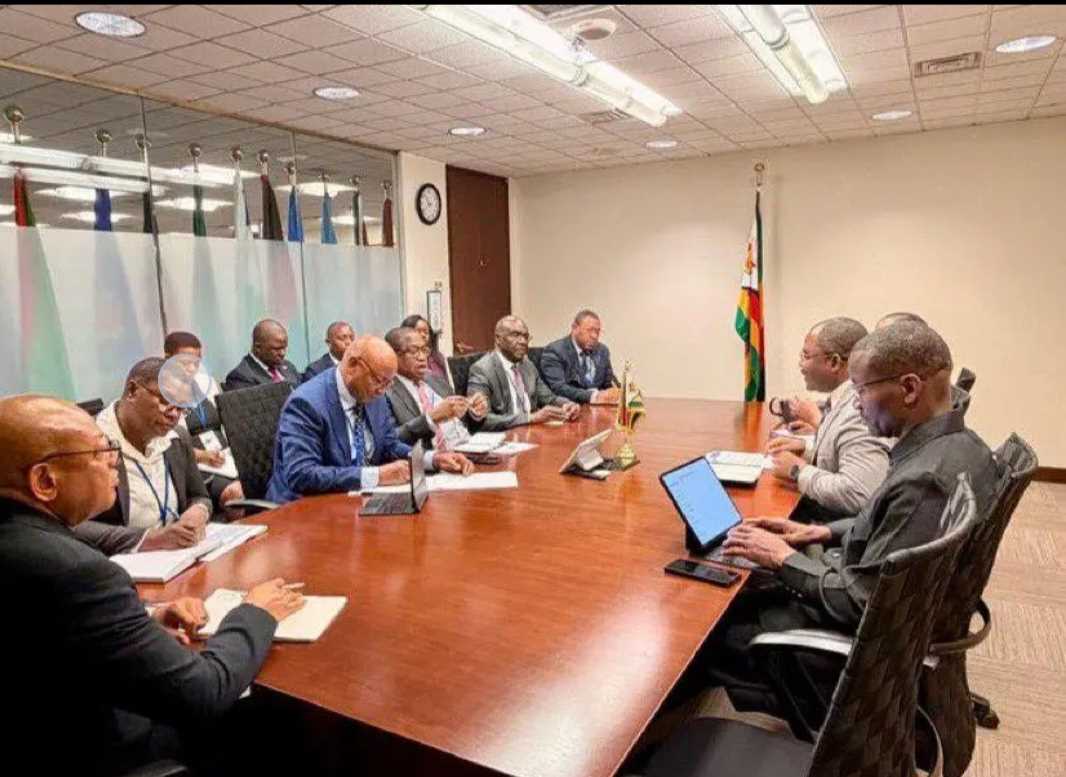
Finance Minister Mthuli Ncube has revealed that Zimbabwe’s controversial Constitution Amendment Bill No. 3 has drawn scrutiny from international lenders, with questions raised during the ongoing IMF/World Bank Spring Meetings in Washington as Harare pursues debt relief and fresh financing.
Speaking to reporters on the sidelines of the meetings, Ncube acknowledged that members of Zimbabwe’s delegation had been asked to clarify the legislative process behind the proposed constitutional changes.
“We got one or two enquiries; of course we were happy to explain,” he said, adding that “we found ourselves having to explain the process of these amendments… there were some who just didn’t understand what was going on, so we had to explain this process.”
The remarks provide a rare glimpse into how governance issues are intersecting with Zimbabwe’s re-engagement efforts. The country is currently operating under a Staff Monitored Programme with the International Monetary Fund, running until December, a framework widely viewed as critical to rebuilding creditor confidence.
Harare is also seeking approximately US$2.5 billion in bridging finance to clear arrears and unlock concessional lending. Ncube confirmed that discussions are ongoing with countries including the United Kingdom, Germany, Japan, France and Algeria to support the facility.
However, CAB3, which proposes significant changes to Zimbabwe’s constitutional framework, appears to be emerging as a point of concern within these engagements. While Ncube framed the questions as stemming from a lack of understanding, critics argue they reflect deeper unease about governance, rule of law and policy priorities at a sensitive stage of debt negotiations.
Online reactions have been sharply critical, amplifying perceived reputational risks surrounding the Bill. One commentator, Normara, described CAB3 as “a red flag and a sign of misplaced priorities,” arguing that international stakeholders are less susceptible to political messaging.
Related Stories
Another commentator, Simbarashe, suggested the enquiries likely reflected concerns about “the lack of rule of law and failure to respect the constitution,” adding that the government had not convincingly addressed these issues.
Victoria Mombeshora questioned the economic rationale behind the Bill, saying it demonstrated that “our priorities are just wrong” at a time of fiscal strain, while Mncendisi Mengu warned that CAB3 “risks undoing the progress on debt talks,” cautioning that “no amount of explaining will make it sound like a good idea.”
Domestic legal contestation over the Bill is also intensifying.
Pro-democracy campaigner Allan Chipoyi and former legislator Amos Chibaya have filed an urgent High Court application seeking to halt the legislative process. The application targets the Parliament of Zimbabwe and Speaker Jacob Mudenda, requesting an order to interdict further proceedings on the Bill, including the tabling of reports and its Second Reading.
Represented by Obey Shava of the Zimbabwe Lawyers for Human Rights, the applicants argue that public hearings conducted between March 30 and April 2 violated constitutional protections under Section 61, particularly the right to freedom of expression.
They contend that the process lacked fairness and inclusivity, rendering it legally defective and necessitating fresh consultations.
The convergence of lender scrutiny, domestic legal challenges and growing public criticism places CAB3 at the centre of Zimbabwe’s reform narrative at a critical moment.
With debt restructuring dependent not only on macroeconomic targets but also on perceptions of governance and institutional credibility, the Bill’s trajectory could carry implications beyond Parliament, shaping how far and how quickly Zimbabwe can move toward financial normalisation.









Leave Comments