






In the early hours of the morning, long before the city fully wakes, men like Tendai are already at work. At 52, he has spent decades behind the wheel as a kombi driver in Harare. He has raised children, paid rent, and survived economic shocks and policy shifts that would have broken many.
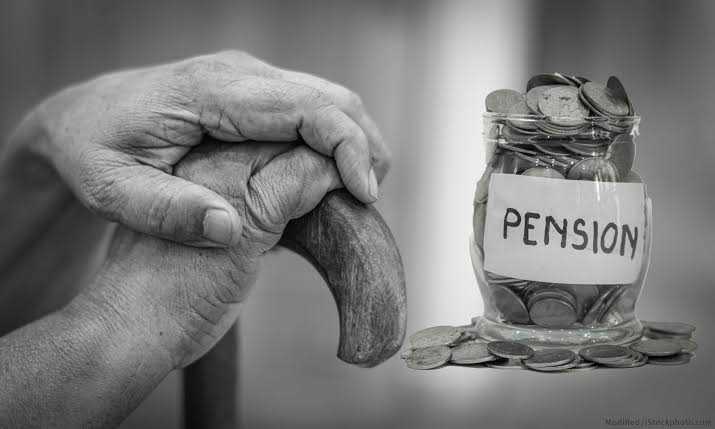
But he has no pension.
Ask him about retirement and he shrugs.
“Retire to what?” he asks.
It is a simple question. It is also a terrifying one.
Because Tendai is not an exception. He is a preview.
Zimbabwe is heading toward a crisis that few are talking about. It is not loud enough to dominate headlines. It rarely trends on social media. It is debated without urgency in policy circles.
Yet within the next 20 to 30 years, it may define the country’s social and economic stability.
A generation is ageing without a pension.
The Lost Middle
Zimbabwe’s working population has spent decades navigating economic instability. Hyperinflation erased savings. Currency reforms repeatedly reset value overnight. Shifts between currencies undermined long-term financial planning.
For many citizens, pensions were not merely underfunded — they became meaningless.
Others never entered pension systems at all.
The informal sector, now the backbone of Zimbabwe’s economy, operates largely outside structured social security frameworks. Estimates suggest more than 80 percent of the workforce earns its living informally.
Vendors, cross-border traders, small-scale miners, transport operators and countless small entrepreneurs are working every day.
They are earning.
They are surviving.
But they are not preparing to retire.
Income is consumed by immediacy. Tomorrow remains uncertain, negotiable, deferred.
A Demographic Shift in Slow Motion
Zimbabwe is often described as a young nation. But demographics do not pause. The young inevitably grow old — and they carry the economic realities of their working lives with them.
Within two to three decades, Zimbabwe is likely to face a sharp increase in elderly citizens who:
have no pension,
have little or no savings,
lack reliable healthcare support, and
depend on families already under financial strain.
This is not speculation.
It is trajectory.
The Collapse of Old Safety Nets
For generations, Zimbabwe relied on an unspoken assumption: family would provide.
That assumption is weakening.
Urbanisation has separated extended families. Migration has dispersed relatives across continents. Rising living costs mean younger generations are themselves struggling to remain financially stable.
In many households, survival leaves little capacity for intergenerational support.
The traditional safety net is fraying.
And no modern replacement has fully emerged.
Related Stories
The Coming Strain on the State
When large numbers of elderly citizens lack independent income, the burden does not disappear.
It shifts.
To hospitals already under pressure.
To social services already underfunded.
To a state already managing competing crises.
When that moment arrives, the problem will no longer be invisible.
It will be immediate, political and costly.
The Illusion of Time
Perhaps the most dangerous aspect of this issue is the belief that there is still plenty of time.
There is not.
Pension systems take decades to build. Public trust in financial institutions is rebuilt slowly. Savings cultures form over generations, not election cycles.
Every year without reform quietly locks in future hardship.
Inaction is not neutral.
It is policy by default.
What Needs to Happen Now
Zimbabwe does not need minor adjustments. It requires a fundamental rethink of how citizens prepare for old age.
That rethink must include:
inclusive pension models designed for informal workers rather than formal employment alone;
financial systems that preserve value and rebuild public trust;
micro-savings and community-based retirement mechanisms aligned with how Zimbabweans actually earn;
and sustained national awareness that treats ageing, dignity and retirement security as urgent public issues.
But beyond policy proposals lies a deeper requirement: honesty.
Millions of Zimbabweans are working today without a realistic pathway to security in old age.
That reality is not accidental.
It is structural.
A Future We Can Still Shape
Tendai is 52 today.
In 20 years, he will be 72.
If nothing changes, he will not retire. He will simply slow down — until work is no longer physically possible.
And he will not be alone.
He will belong to a generation that worked tirelessly, adapted constantly, and endured extraordinary economic upheaval — only to arrive at old age with survival as its sole achievement.
When that generation finally stops, not by choice but by necessity, Zimbabwe will confront a truth it has postponed for too long:
A country that fails to prepare its people for old age does not only fail its elderly.
It ultimately fails itself.
Simbarashe Namusi is a peace, leadership and governance scholar and media expert writing in his personal capacity.






Leave Comments