




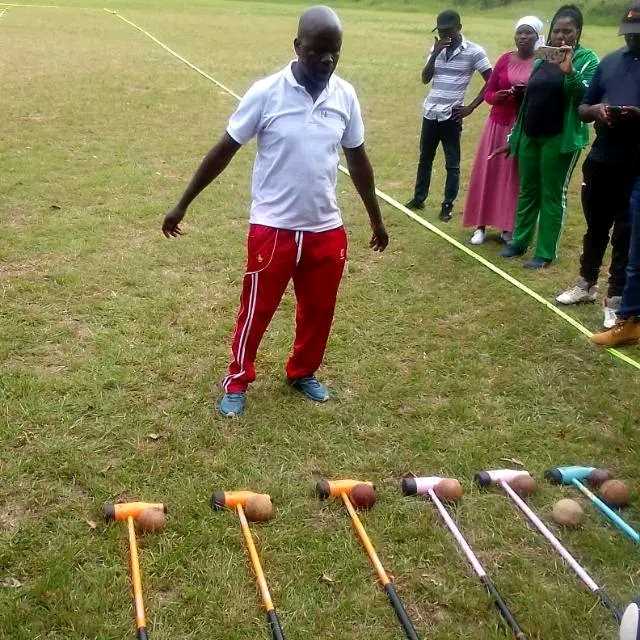
For many in Zimbabwe’s sporting fraternity, the name Newsten Chipoya is synonymous with mentorship, development and lasting impact. His journey, which began as a young Physical Education student, has evolved into a lifelong mission to use sport not merely as a platform for competition, but as a vehicle for social transformation and personal growth.
Trained as a teacher at Seke Teachers’ College between 1992 and 1995, Chipoya specialised in Physical Education under the guidance of respected mentors, including the late Senator Mumvurwi. Even at this early stage, his leadership qualities were evident as he assumed overall responsibility for sport and recreation development at the college.
His excellence extended beyond administration, as he distinguished himself in athletics, football and handball, earning several accolades along the way.
Upon his deployment to Chimfombo Primary School in Guruve in 1995, Chipoya wasted no time in making his mark. He introduced handball — then a relatively new sport — and successfully expanded it across schools in the district. Under his guidance, Chimfombo became a formidable force, excelling at both district and national levels in handball and athletics.
His growing influence led to his appointment as Guruve District Physical Education, Sport, Arts and Culture Coordinator in 2000. During this period, his vision began to take provincial shape. As a Trainer of Trainers, he facilitated the introduction of handball across all seven districts of Mashonaland Central, helping the province emerge as a powerhouse in the sport and producing competitive teams at school, club and national levels.
Reflecting on his passion for sport development, Chipoya said his motivation has always been rooted in addressing a critical gap.
“One would be a very talented coach or player but fail to adapt and survive in a different environment due to a lack of life skills,” he said. “Development through sport became the solution to nurture a whole athlete or coach — technically prepared as well as socially developed.”
This philosophy became even more pronounced during his tenure with the Sports and Recreation Commission, which he joined in 2006 before rising to Harare Metropolitan Provincial Sports Coordinator, a position he held from 2007 to 2016. He later served at the Sport for Development desk at head office until 2024, spearheading impactful programmes designed to empower communities.
Among the initiatives he helped implement were the Sports Volunteer Training Programme, the Youth Education Through Sport programme targeting under-15s, the Community Sport Development Programme in partnership with the Norwegian Confederation of Sport, and the Zimbabwe National Youth and Paralympic Games. These programmes addressed not only sporting excellence but also pressing social challenges such as HIV and AIDS, drug and substance abuse, and early child marriages.
Of these initiatives, Chipoya believes the Community Sport Development Programme stands out.
“It empowers community sport volunteers to run their own programmes at local level supported by local resources,” he said, emphasising sustainability and community ownership as key pillars of success.
Related Stories
His work has created a lasting ripple effect, producing a generation of athletes, coaches and administrators who continue to excel locally and internationally. For Chipoya, however, the greatest reward lies in seeing others succeed.
“My greatest achievement so far has been providing a platform for athletes and coaches who are now practising at national and international level and empowering them to operate independently,” he said.
That impact is perhaps best captured through the voices of those he has mentored. International handball coach Innocent Kanosvova recalls how Chipoya entrusted him with leadership responsibilities early in his career.
“Back in 2007, during the National Youth Games, the Harare provincial team placed their trust in my leadership,” he said. “From 2007 to 2010, we worked together with great dedication and achieved outstanding success, bringing home a gold medal for Harare Province.”
Backlyfield Chivenga, now coaching internationally, credits Chipoya with shaping both his technical expertise and leadership skills.
“He always told me to be more than just an ordinary coach because anyone can be that,” Chivenga said. “He gave me leadership roles in various sports administration positions and many training opportunities that changed how I approached sport.”
For Samukeliso Ncube, now coaching football in the United States, Chipoya’s influence extended beyond the field.
“He was more than just a boss or colleague. He was a true mentor,” Ncube said. “His guidance, discipline and deep understanding of the game pushed me to grow not only as a coach but as a person.”
Zimbabwe Korfball Federation president Tarirai Chadebah also spoke highly of Chipoya’s impact.
“He guided me every step of the way,” Chadebah said. “He is more than a brother, more than a tutor — he is part of my life.”
Despite decades of service, Chipoya’s work is far from over. Following his departure from the Sports and Recreation Commission in January 2025, he established The Penyai Stars Trust, an initiative aimed at continuing sport development and community programmes. He is also working towards establishing a multi-sport academy at Tengenenge Art Centre in Guruve, with proposals already submitted to potential partners and sponsors.
As he looks to the future, his message to emerging athletes and administrators remains clear:
“The need for both sport and life skills training is essential for anyone who wants to make a meaningful impact in sport.”




Leave Comments