






Nigeria has deployed a battalion of soldiers to Kwara State following one of the deadliest attacks in recent months, in which gunmen killed more than 160 people in coordinated assaults on rural communities.
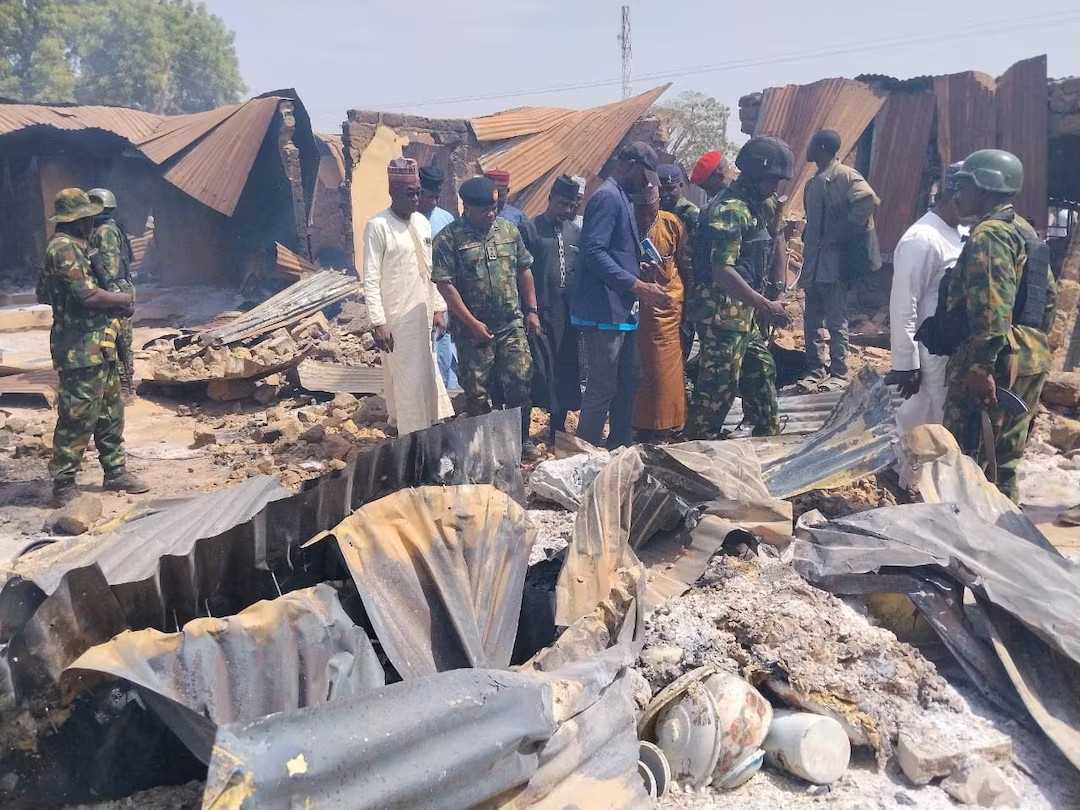
President Bola Ahmed Tinubu ordered the military deployment after attackers stormed villages in the western state late on Tuesday, killing residents, burning homes and shops, and forcing survivors to flee into nearby bushland.
The worst violence was reported in Woro village, with another attack occurring in neighbouring Nuku. According to the Red Cross in Kwara State, at least 162 bodies have been recovered so far, with search operations continuing in hard-to-reach areas near Nigeria’s border with Benin.
President Tinubu condemned the violence, describing it as a “beastly attack” against villagers who had rejected extremist ideology. In a statement, the presidency said the victims were targeted after refusing attempts by militants to impose radical beliefs on their communities.
Red Cross official Ayodeji Emmanuel Babaomo said access to the affected areas remained difficult due to their remoteness, complicating rescue and recovery efforts. He added that many injured residents escaped into the bush during the attacks.
Residents told international media that the assailants, believed to be Islamist militants, demanded that locals renounce allegiance to the Nigerian state and accept Sharia law. When villagers resisted, the gunmen reportedly opened fire indiscriminately.
Related Stories
Casualty figures initially varied, with local officials giving lower estimates before later confirming the scale of the killings as more bodies were discovered. Police confirmed the attacks but did not immediately release an official death toll.
While no group has formally claimed responsibility, Kwara State Governor AbdulRahman AbdulRazaq blamed “terrorist cells” operating in the area, describing the assault as retaliation for ongoing military operations against armed groups.
Lawmakers from the region identified the attackers as members of Lakurawa, an armed group linked to the Islamic State network, while President Tinubu attributed the violence to Boko Haram militants. Security analysts say the incident highlights growing cooperation between extremist groups operating across Nigeria’s borders.
Nigeria is facing an increasingly complex security crisis, marked by jihadist insurgency in the northeast, banditry and kidnappings across the northwest and north-central regions, and the expansion of militant activity into previously calmer states.
Last month, the Nigerian military said it had launched sustained operations in Kwara State, claiming to have neutralised dozens of armed fighters. Analysts note that jihadist groups affiliated with al-Qaeda and the Islamic State have intensified attacks over the past year, exploiting weak state presence in remote regions.
The violence has also drawn international attention. The United States has increased security cooperation with Nigeria in recent months, deploying a small team of military officers to assist local forces. Nigerian authorities say the cooperation is aimed at strengthening counterterrorism efforts and insist that violence affects both Muslim and Christian communities alike.







Leave Comments