





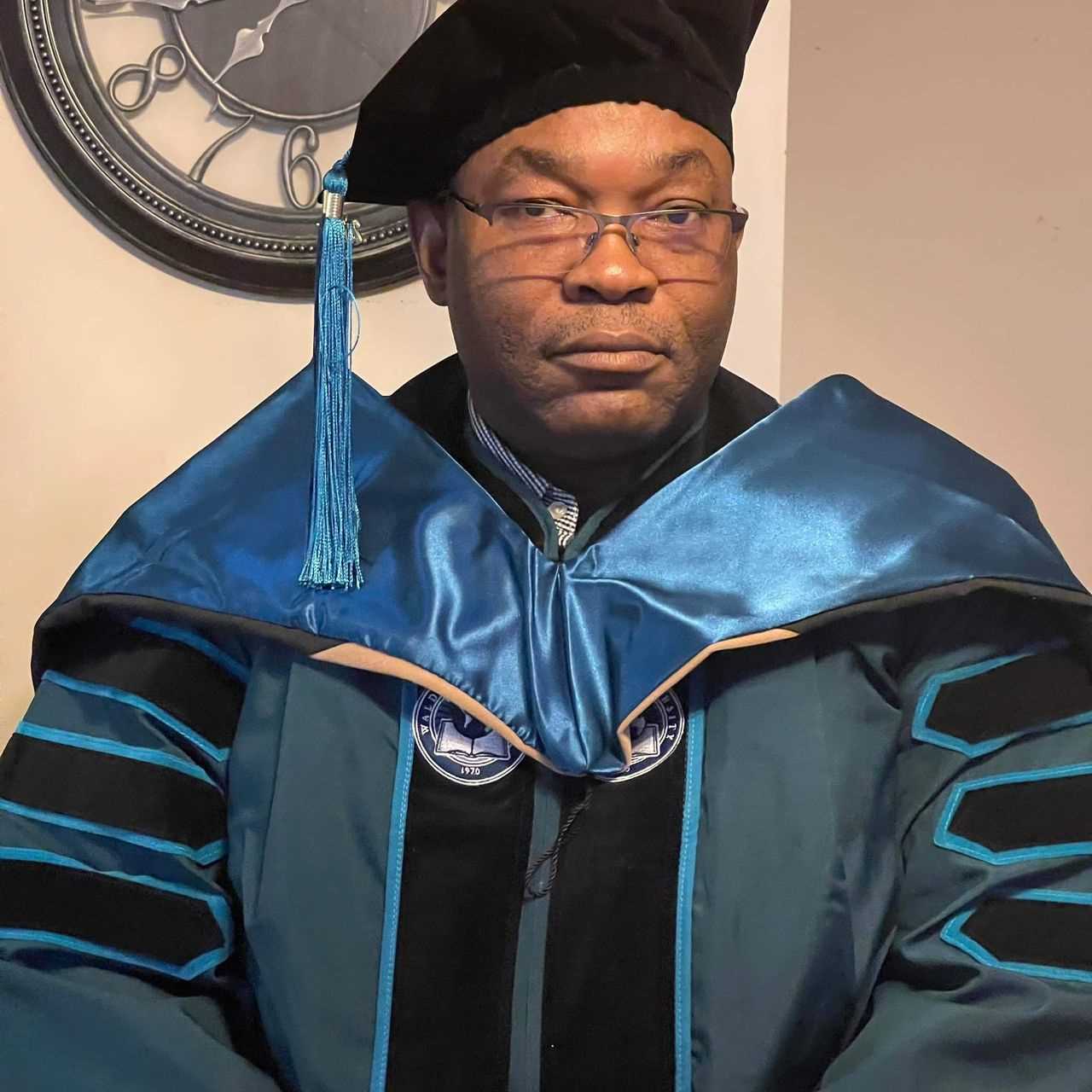
Dr. Joel Chagadama did not leave Zimbabwe to run away from home. He left to prepare for it.
When he boarded a flight to the United States in August 1998, his plan was straightforward: pursue further education and return. What followed instead was a prolonged and demanding chapter shaped by Zimbabwe’s worsening economic realities, forcing a temporary pause on return plans and ushering in years of adaptation, sacrifice and personal reinvention.
“I intended to come back after a brief absence,” Chagadama said. “But circumstances made it impossible at the time. Life demanded that I learn, survive and grow first.”
That period of growth came at a steep personal cost. Leaving behind family, familiarity and a dependable support system tested his resilience in ways no academic curriculum could. “The toughest sacrifice was leaving family and giving up a safety net,” he said. “You experience what it really means to be human over and over again.”
In the United States, survival required discipline and endurance. Chagadama worked multiple jobs while pursuing higher education, earning a bachelor’s degree and a Master of Business Administration at Strayer University, before completing a doctorate in finance at Walden University. Those years were defined by long hours, financial restraint and a relentless focus on progress over comfort.
“The journey wasn’t glamorous,” he said. “It was about doing what had to be done.”
Those lived realities reshaped his understanding of leadership, management and business. Beyond lecture halls, he encountered the unfiltered complexities of payroll systems, regulatory compliance and culturally diverse workplaces. These experiences, he says, taught him lessons no textbook could fully capture.
“Small retail sustainability, access to capital, regulatory quirks and consumer expectations operate differently depending on context,” Chagadama explained. “You don’t really understand business until mistakes have real consequences.”
Moments of frustration often became moments of insight. Communication breakdowns in multicultural teams, difficulties aligning technology with business needs, and high-stakes decision-making sharpened his appreciation for leadership as a practical, human-centered discipline rather than an abstract concept.
“Some of my biggest epiphanies came from those moments,” he said. “That’s when leadership stops being theory.”
Today, that realism defines both his professional work and academic scholarship. Dr. Chagadama’s career spans finance, law, consulting, education and nonprofit leadership. He currently serves as Director of Administration and Financial Control at a U.S.-based law firm, leads Star Light Consulting LLC, and has worked across construction, hospitality, legal services and community organizations.
Rather than viewing these roles as separate achievements, he sees them as interconnected parts of a single mission.
“Titles don’t solve problems,” he said. “Understanding people, systems and context does.”
Related Stories
That philosophy runs through his published works, which include The Hidden Reasons for Employee Turnover, Statistics, Accounting and Finance: The Synergy of an Organization’s Management Success, Time Management: Challenges and Strategies, Seeds of Hope: Cultivating a New Beginning, and Rising Above: From Voiceless to Victorious. The books are designed for application rather than abstraction, offering practical tools in budgeting, financial modeling and change management grounded in lived experience.
Later in his career, Chagadama increasingly turned toward teaching and mentorship. As an adjunct professor, he blends theory with practice through case-based learning, financial modeling labs and community-linked projects.
“Every time I walk into a classroom, I know I may alter someone’s future,” he said. “That responsibility never leaves you.”
He speaks candidly about the dual weight of pride and pressure that comes with teaching. “There’s pride in coming from Harare to earning a doctorate,” he said. “But teaching carries weight. You’re shaping how someone thinks and leads.”
His students encounter lessons drawn from late nights spent resolving real-world crises and making decisions with tangible consequences. “I tell them what it feels like when the numbers don’t add up and people depend on your judgment,” he said. “That’s when leadership becomes real.”
Beyond academia, his commitment to service remains constant. Chagadama chairs finance committees, serves on nonprofit boards supporting adult literacy, holds leadership roles in professional foundations, and founded a community organization assisting veterans and homeless individuals. Colleagues describe him as a leader more focused on building durable systems than seeking recognition.
Despite decades abroad, Zimbabwe remains central to his identity. Family ties and ancestral history, he says, continue to guide his values and decisions.
“My history and my ancestors ground everything I do,” he said. “They give me purpose.”
That grounding has recently translated into action. Dr. Chagadama has registered a company in Zimbabwe and is finalising plans to begin operations, with the aim of deploying capital, management expertise and cross-sector best practices to support local development.
“We are Zimbabweans with resources,” he said. “What matters is whether we use them to create hope, opportunity and jobs.”
At his core, Chagadama believes education and enterprise are inseparable tools for transformation. He envisions classrooms linked to communities, finance taught alongside ethics, and graduates equipped to apply knowledge in towns and markets where solutions are urgently needed.
“The idea of helping train a generation that takes knowledge back to rebuild is what keeps me going,” he said.
Dr. Joel Chagadama’s story is not defined by distance from home, but by sustained connection to it. From Harare to global professional spaces, his journey reflects preparation, service and return — a reminder that success finds its highest meaning when experience is shared, knowledge is mobilised, and purpose finds its way back.
And for him, the journey is far from over.










Leave Comments