





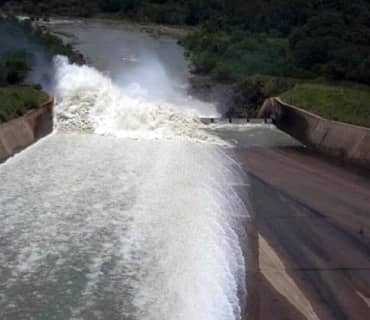
Zimbabwe’s major dams are holding 87.2 percent of total capacity, marking a 3.79 percent increase in just one week and a 14.5 percent rise since late November, according to the latest Zimbabwe National Water Authority (ZINWA) dam levels dashboard released on 16 January 2026.
The update shows that “Average Capacity: 87.2%,” with “Dams at 100%: 82 — Stable water supply,” while “Dams Below 50%: 25 — Improving overall,” highlighting both the gains from the current rainy season and the uneven distribution of water resources across the country.
Nationally, total stored water stands at 7.08 billion cubic metres out of a possible 8.13 billion cubic metres, reflecting one of the strongest early-season storage positions in recent years.
Several major catchments have recorded significant improvements, driven by sustained rainfall since late November.
The Runde Catchment is nearing full capacity at 98.3 percent, with water volumes rising by 13 percent since 28 November. The Gwayi Catchment is also performing strongly at 92 percent, recording a sharp 31 percent increase over the same period.
The Save Catchment has reached 80.4 percent, while Mzingwane stands at 77.6 percent, reflecting steady inflows that have stabilised water availability in parts of southern Zimbabwe.
The Sanyati Catchment recorded one of the fastest recoveries, rising by 10.2 percent in a single week and more than 31 percent since late November, though it remains below the national average at 72.3 percent.
Despite the overall national improvement, catchments supplying major urban centres remain under pressure.
The Manyame Catchment, which supplies Harare and surrounding areas, is only 75.7 percent full, while the Mazowe Catchment is significantly lower at 54.2 percent, making it one of the weakest-performing systems nationally.
Related Stories
Combined, Manyame and Mazowe account for a large share of urban water demand, and their slower recovery raises questions about the reliability of supplies for the capital even in a good rainfall year.
However, while dam levels are improving, storage alone does not guarantee consistent urban water delivery, especially where treatment capacity, pumping infrastructure and distribution networks are compromised.
The dam data comes amid recent flooding episodes in urban areas, including Harare’s central business district, exposing a familiar paradox: rising water levels alongside persistent shortages and infrastructure failures.
Urban planners point out that flooding reflects poor stormwater management rather than water abundance, as aging drainage systems struggle to cope with heavy rainfall even as reservoirs fill.
ZINWA’s data shows that while the national picture is improving, 25 dams remain below half capacity, underscoring long-standing regional disparities and the vulnerability of some communities to dry spells later in the year.
The authority categorises dams at 80 percent and above as high, 50–79 percent as medium, and below 50 percent as low, with the latest dashboard indicating gradual movement of several dams out of the low-risk category.
ZINWA noted that Lake Kariba is not included in the catchment analysis, meaning the figures reflect non-hydropower dams used primarily for urban supply, irrigation and mining.
While the improved storage offers relief for agriculture, mining and domestic supply, water analysts caution against complacency, citing historical patterns where good rainy seasons failed to translate into stable urban water delivery due to poor maintenance and governance challenges.
With the rainy season still underway, authorities are expected to intensify monitoring, particularly in urban catchments, to ensure that rising dam levels translate into tangible improvements for households and industry.








Leave Comments