









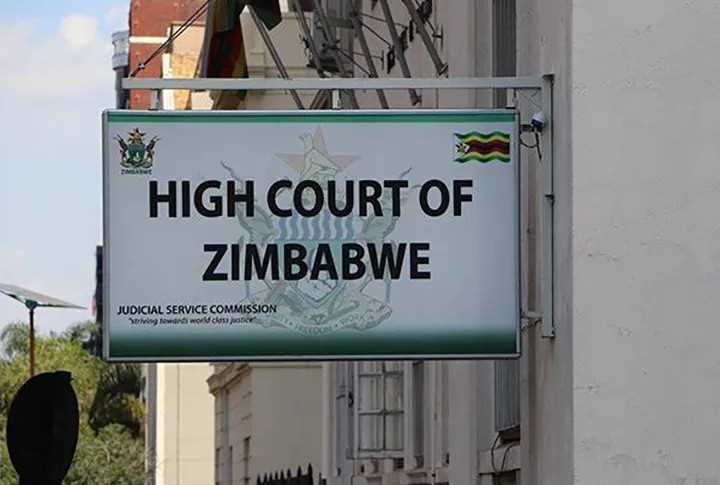
The High Court has dismissed a mining ownership claim after finding that the plaintiff’s pleadings were vague and embarrassing and failed to disclose a cause of action recognisable at law.
The court upheld an exception raised by businessman Rainas Gambiza against a lawsuit filed by Lungisani Ncube, effectively dismissing Ncube’s claim to ownership of the Van Roo 3 mining claim in Matabeleland South.
In a judgment delivered in Bulawayo, Justice Mpokiseng Dube ruled that Ncube’s summons and declaration were fatally defective, failed to disclose a cause of action, and were vague and embarrassing. The court also ordered Ncube to pay Gambiza’s legal costs on an attorney-and-client scale.
Ncube had approached the High Court seeking a declaratory order confirming that he was the lawful owner of the Van Roo 3 mining claim, registration number 32656. He alleged that he acquired the claim as commission for facilitating the sale of mining claims belonging to the late Michael J. Van Rooyen.
He further sought the cancellation of any transfer of the claim to Gambiza or third parties, the eviction of Gambiza from the mining location, and costs on a punitive scale.
The Provincial Mining Director for Matabeleland South was cited as the second respondent.
Gambiza opposed the claim and raised an exception, arguing that Ncube’s pleadings failed to disclose a legally recognisable cause of action and lacked sufficient particularity, particularly in relation to allegations of fraud and misrepresentation.
Justice Dube held that Ncube’s claim was founded on an alleged commission agreement with the late Van Rooyen, a third party who was not cited in the proceedings.
Related Stories
The court noted that the pleadings failed to establish a legal nexus between Ncube’s alleged personal right under the purported agreement and Gambiza’s occupation or title to the mining claim. The judge emphasised that a personal right arising from an unregistered agreement cannot be enforced against a holder of a registered real right under Zimbabwean mining law.
The court further observed that mining rights are statutory in nature and governed by the Mines and Minerals Act, which prescribes strict procedures for the acquisition and transfer of mining claims. Ncube had failed to plead that the alleged agreement was reduced to writing, registered with the Mining Commissioner, or that the requisite statutory duties were paid.
On the allegations of fraud, the court found that Ncube failed to plead with the required specificity. Justice Dube ruled that merely alleging fraud, forgery, and misrepresentation without setting out material facts rendered the pleadings vague and embarrassing, thereby prejudicing the defence.
“The first defendant’s exception is well-founded. The pleadings fail to disclose a cause of action and are vague and embarrassing in a manner that causes real prejudice. The failure to join the executor of the estate of the late Michael J. Van Rooyen further rendered the process procedurally incompetent,” Justice Dube said.
The court also upheld Gambiza’s argument on non-joinder, finding that the executor of Van Rooyen’s estate and the alleged buyer, Philisani Ncube, had a direct and substantial interest in the matter. Their absence from the proceedings was deemed a fatal procedural defect.
In dismissing the claim, Justice Dube noted that while courts often allow defective pleadings to be amended, the defects in this case were so fundamental that any amendment would be futile.
The court criticised the pleadings for lacking professional rigour and faulted the plaintiff for persisting with the matter despite being advised to withdraw. Consequently, the exception was upheld and Ncube was ordered to pay Gambiza’s costs on an attorney-and-client scale.
.






Leave Comments