






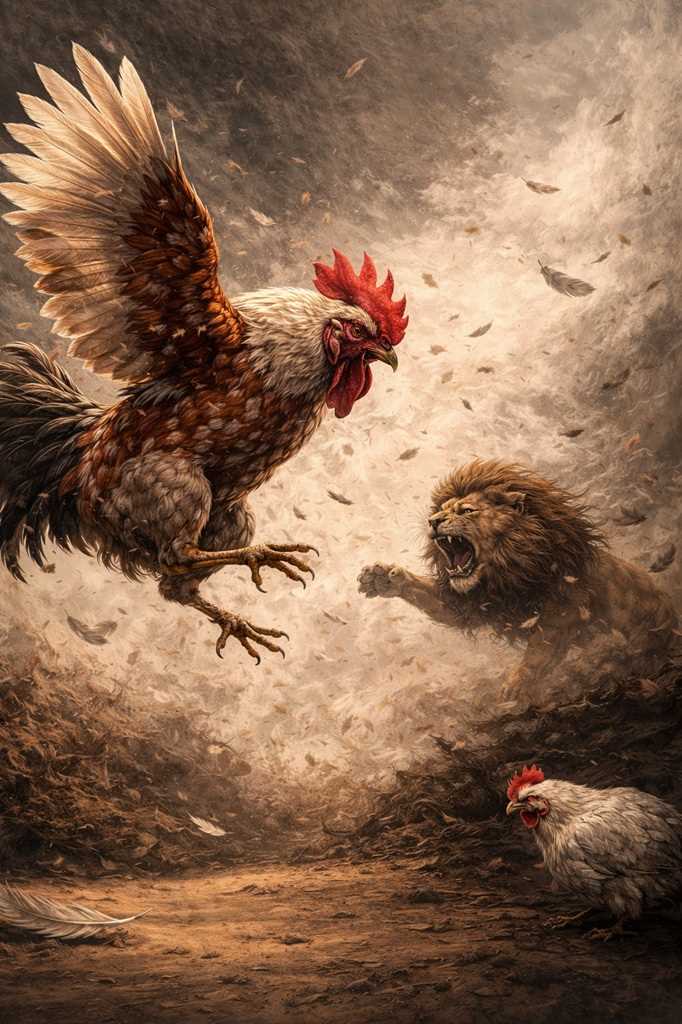
As Zimbabwe’s fast-food sector closes out the year, public debate has fixated on one question: can Hungry Lion dent Chicken Inn’s dominance?
But in the noise, a more telling story has slipped past largely unnoticed.
The brand that was literally created to challenge Chicken Inn is no longer part of the conversation at all. That brand is Chicken Slice.
While Chicken Inn and Hungry Lion are being weighed against each other in pricing, portion size, and expansion muscle, Chicken Slice barely features in consumer discourse.
Chicken Slice’s absence from the current debate is diagnostic. In brand terms, to be missing from comparison tables is worse than losing them. It suggests that, in the public psyche, the contest is already settled. Chicken Slice is no longer seen as a viable rival to Chicken Inn, joining the unnamed “others” like Eat n’ Lick, Chicken Hut, and the myriads of fast-food outlets.
Chicken Inn continues to enjoy pole position across key urban and peri-urban nodes. Its Greenfields outlet, for instance, was visibly packed on Christmas Day, sharing the bumper crowd with Hungry Lion.
By contrast, Chicken Slice’s comparable branch at Long Cheng struggled to attract similar numbers. The brand has failed to expand to rival Chicken Inn, shrinking its physical and psychological footprint just as competition intensifies. In fast food, presence equals relevance. And relevance is earned daily.
While Others Innovate, Chicken Slice Explains
The sector’s most interesting momentum this year has not even come from the global brands.
Outlets like Huku and Chips, operating largely outside the social media spotlight, have found a working formula in crowded downtown areas: blend fast food with cultural familiarity.
Related Stories
Chicken and chips remain on the menu—but the same place has sadza and sweet confectionery. The result is a hybrid offering that speaks to price sensitivity, taste preferences, and everyday eating habits. No loud branding. No viral moments. Just queues.
That is strategy working. The Huku and Chips branch in Park Street is clearly giving stiff competition to the two Innscor food courts nearby.
The “Sapatina” happened. And Chicken Slice’s invested in claiming symbolic moments by loudly insisting that the viral episode involved their meal, not Chicken Inn’s. But a visit to Chicken Slice outlets shows that after all that excitement, noise is cheap, but foot traffic is not. Brand noise without market strategy rarely moves the needle.
And so, ironically, while the debate of whether the Hungry Lion will consume Chicken Inn rages on, Chicken Slice’s vulnerability has been laid bare.
Chicken Inn, with its scale, locations, and deep brand muscle, is well positioned to absorb the challenge, and as the novelty of the brand fades, Hungry Lion will have to fight harder for every inch.
Chicken Slice, lacking both expansion momentum and a differentiated value proposition, finds itself squeezed from both ends: global price pressure below and entrenched brand loyalty above.
As the sector heads into a tougher year, the brands that survive will be those that listen beyond social media, innovate beyond slogans, and meet consumers where they eat.
The real year-end verdict is that as Chicken Inn fends off Hungry Lion, it is Chicken Slice that is losing ground.






Leave Comments