



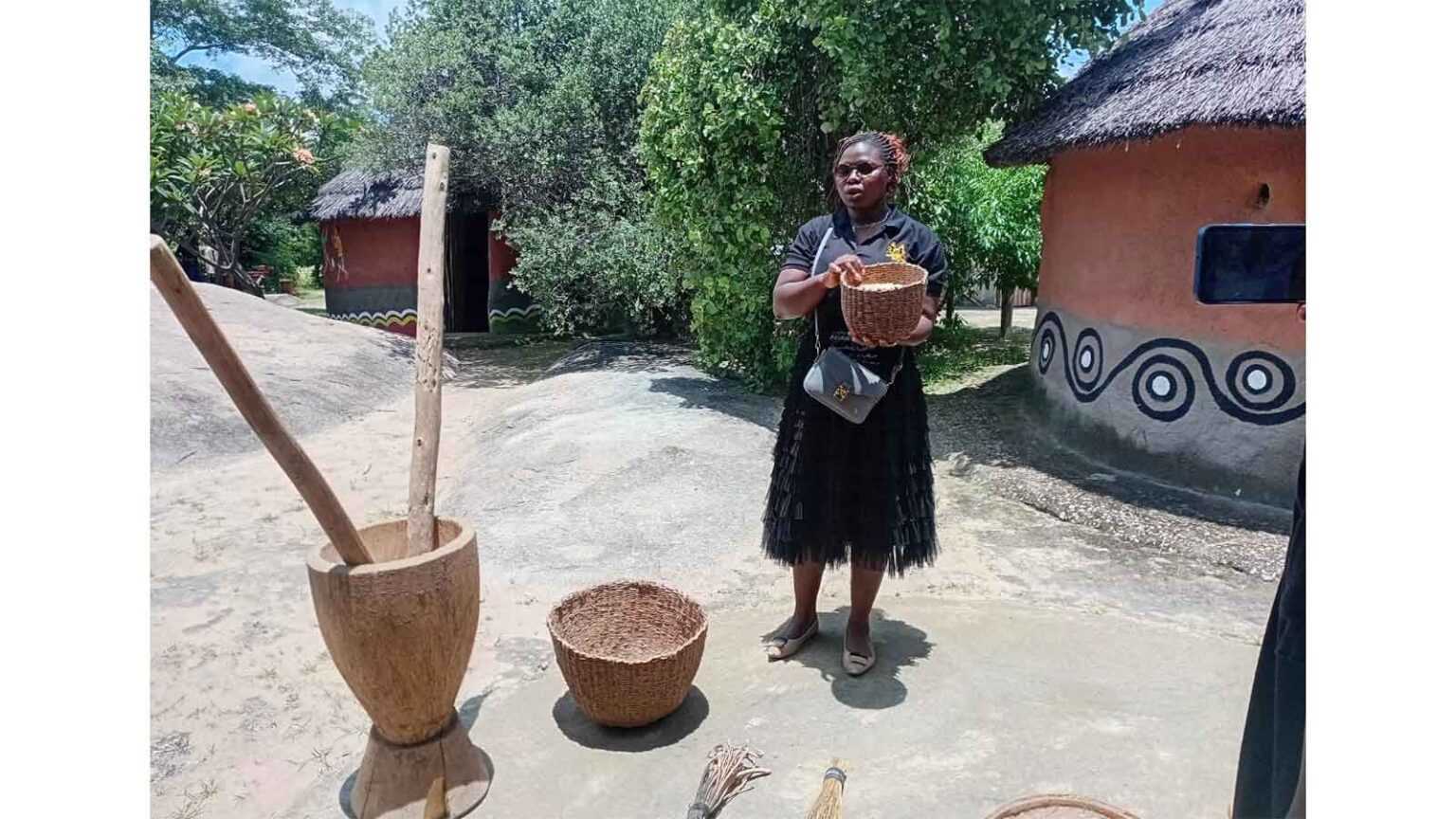
The importance of culture and heritage as living, community-driven assets took centre stage on Wednesday, January 28, when Panyatsime Cultural and Heritage Centre in Chitungwiza hosted a media tour as part of its Global Community Engagement Day commemorations.
The tour brought together 20 journalists representing various print and electronic media houses who converged for an immersive experience designed to strengthen understanding of indigenous knowledge systems and encourage more sustained coverage of cultural heritage issues.
Global Community Engagement Day, whose debut celebrations date back to 2018, seeks to build and strengthen relationships among stakeholders who include business, leadership, local residents, faith-based groups, cultural groups, voluntary groups and virtual groups, among others.
The Panyatsime programme opened with a guided walk through the centre’s indigenous trees garden where visitors were introduced to plant species traditionally used for food, medicine and spiritual practices.
This was followed by a tour of the traditional huts area and the dare, a communal space historically used for dialogue, learning and dispute resolution.
The engagement concluded with journalists sharing traditional cuisine prepared by the hosts, underscoring Panyatsime’s philosophy that culture must be experienced to be fully understood.
Addressing the media, Panyatsime Cultural and Heritage Centre director, Mrs Rumbidzai Dihwa, traced the origins of the institution, describing it as a response to growing concerns over the erosion of indigenous knowledge and cultural values.
“Panyatsime was established to create a space where our culture is not only preserved, but lived, taught and passed on,” she said. “We want people, especially the younger generation, to understand that heritage is not something frozen in the past — it is part of who we are today.”
Mrs Dihwa highlighted the centre’s partnerships with government, local communities, cultural practitioners and development organisations, noting that collaboration has been key to sustaining its work.
“Our programmes are community-centred. We work with elders, artists, teachers and young people because culture survives through participation, not isolation,” she said.
Related Stories
She acknowledged, however, that cultural institutions continue to face significant challenges, particularly limited resources and insufficient visibility in the mainstream media.
“One of our biggest challenges is that cultural and heritage issues are often treated as side stories,” Mrs Dihwa observed. “Yet culture speaks to identity, values, governance and even development. It deserves consistent and informed coverage.”
Calling on journalists to play a more proactive role, she emphasised the media’s influence in shaping public perception and policy priorities.
“The media has the power to elevate cultural discourse,” she said. “When heritage stories are told properly and regularly, they help communities to appreciate their value and encourage decision-makers to invest in preservation.”
Beyond the recently-organised media engagement, Panyatsime runs a range of ongoing programmes aimed at strengthening cultural awareness and community resilience. These include heritage education initiatives for schools, indigenous language promotion, environmental conservation programmes linked to traditional ecological knowledge, and intergenerational dialogues that connect elders with youth.
The centre also hosts cultural festivals, research activities and creative residencies that document and celebrate Zimbabwe’s diverse traditions.
Mrs Dihwa said such initiatives are increasingly important in the face of rapid social and economic change.
“As the world changes, we must ensure that development does not come at the cost of identity,” she said. “Our culture is a resource — socially, spiritually and even economically — if we take care of it.”
The Global Community Engagement Day offered journalists not only insight into Panyatsime’s work, but also a broader reflection on the role of culture in national life.
And as Zimbabwe continues to navigate modernisation and global integration, institutions such as Panyatsime Cultural and Heritage Centre are positioning heritage as a foundation for dialogue, education and sustainable development — and urging the media to help tell that story.




Leave Comments