





…as Arts Council touts cultural exchange and new opportunities
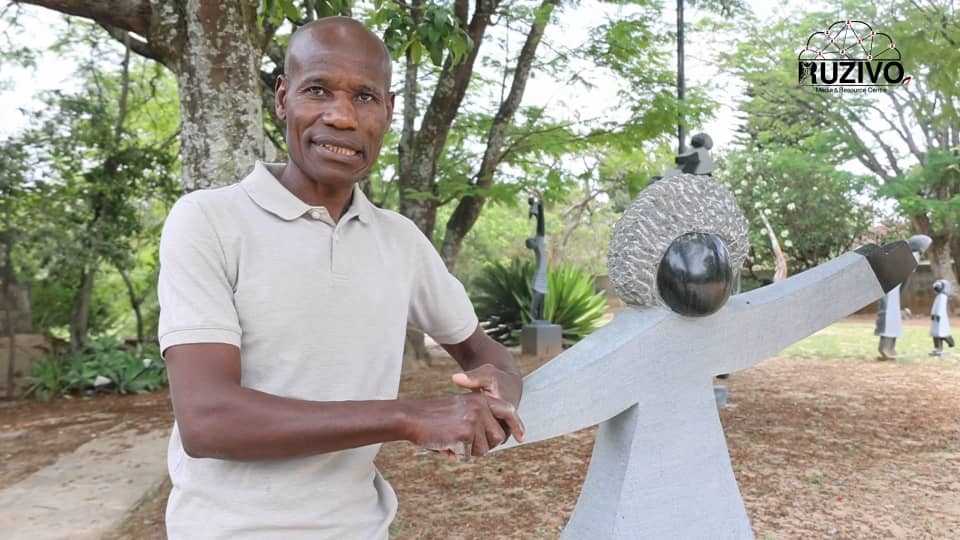
Renowned Zimbabwean sculptor Dominic Benhura has looked East.
The award-winning stone artist, celebrated globally for his mastery of Shona sculpture, is carving a new frontier in Asia, with China emerging as his latest and most promising market.
For decades, Benhura’s work has travelled the world, finding homes in major galleries and private collections across Europe and the United States. But now, nearly 50 years after breaking onto the international art scene, the veteran sculptor is charting a fresh course, one that reflects Zimbabwe’s deepening cultural ties with China.
And the results are already tangible.
Benhura is featured in the newly released documentary Zimbabwe-China Relations @45, produced by local think tank Ruzivo Media & Resource Centre, where he reveals how his entry into the Chinese market began on a historic note.
“As you know, the President of China, His Excellency Xi Jinping, has two of my pieces,” Benhura tells the documentary producer.
He says the presidential gifts opened doors to a wave of new commissions, relationships, and visibility.
“After the President’s gifts, I also did some pieces that were presented to some Chinese officials. I had a lot of coverage from Chinese journalists stationed in different parts of Africa. They all came here. I was on many platforms, newspapers, and interviews.
“So as a result, I now have a lot of friends and clients from China,” Benhura said.
WATCH THE DOCUMENTARY HERE
Related Stories
Benhura has since exhibited in China, including at the prestigious 9th Beijing International Arts Biennale in 2022, a global showcase that draws more than 5 000 artists from 114 countries and promotes harmony through contemporary art.
His strategic pivot to China reflects a broader shift in Zimbabwe’s creative economy, leveraging strong bilateral relations, cultural diplomacy, and growing people-to-people exchanges.
The National Arts Council of Zimbabwe says the partnership with China is opening new doors for local artists, especially the youth.
Chief executive officer Napoleon Nyanhi said Zimbabwe and China are cooperating extensively in arts and cultural exchange, creating platforms that could transform the local creative sector.
“The National Arts Council of Zimbabwe has been at the forefront of facilitating exchange programs for young people, artists, and practitioners with their Chinese counterparts,” Nyanhi said.
“These programs have been of great benefit to our artists in the country.”
One of the most visible examples of this collaboration is DreamStar, a Chinese-sponsored nationwide talent search competition that identifies and empowers young Zimbabwean creatives in music, dance, and beatboxing.
Winners receive prizes, recording contracts, and opportunities to tour and perform in China. The platform has already unearthed some of Zimbabwe’s most exciting contemporary acts, including award-winning Afro-contemporary group Fusion 5 Mangwiro.
Ruzivo Media & Resource Centre team leader, documentary producer, and director Tichaona Zindoga said the arts dimension of Zimbabwe-China relations remains one of the most powerful, yet often overlooked, pillars of the partnership.
“This arts and cultural exchange aspect highlights an important dimension of relations between Zimbabwe and China,” Zindoga said.
“Art and music are universal languages with the power to unite people and deepen friendship. It is in the interest of stakeholders to invest in this sector to strengthen ties between Zimbabweans and Chinese people, especially among the younger generation.”
From stone to stage, Zimbabwe’s creative industry is steadily sculpting its place in China, one artwork, one melody, and one cultural bridge at a time.






Leave Comments