








The controversy surrounding a US$12,450 fine imposed on a Harare homeowner for installing a speed hump without council approval has intensified, exposing deeper frustrations over unserviced stands, missing title deeds and what residents describe as selective enforcement by local authorities.
The City of Harare’s Director of Works, Engineer Isiah Chawatama, confirmed that the speed hump was constructed without authorisation, saying the installation violated provisions of the Roads Act.
“It has come to my attention that the occupant or owner of 7714 Dawn View Park, Tynwald, installed a speed hump across a road without authority from the City of Harare Department of Works,” Chawatama said.
“In accordance with the Roads Act [Chapter 13:18], Part VIII, Sections 46 and 47, this constitutes a violation.”
He said the homeowner was required to obtain an invoice for penalty fees amounting to US$12,450.50, adding that failure to comply would result in the amount being charged to the property’s rates account. Council also ordered that the speed hump be removed within 48 hours.
While the city maintains that its actions are grounded in law, residents argue that the issue goes far beyond a single structure in one neighbourhood.
“Since 2004 we have been pushing council to catch up with developmental issues, some of them emanating from technological advancement and the emergence of sectors such as MSMEs,” said Tawanda Muchengeti.
“We have lobbied councils to update and amend their by-laws to be compatible with this new world, but this institution remains intoxicated by colonial and repressive laws, maintaining unfair rules.”
Muchengeti questioned the scale of the fine and council priorities.
“Where on earth can one be fined that amount of money? Council was approached countless times to install these community necessities. This burden on Harare ratepayers needs a total overhaul,” he said.
Residents from several suburbs say their grievances stretch back more than a decade.
“Ku Area 3 Extension kuma new stands hameno kuti tinobatsirikawo sei. Takatenga ma stands muna 2014 tikazo allocatwa muna 2019,” said Simbarashe Gwanzura.
Related Stories
“The agreement of sale said the area would be fully serviced within a year, but to date there are no roads, no drainage, no street lights. Tibatsireiwo.”
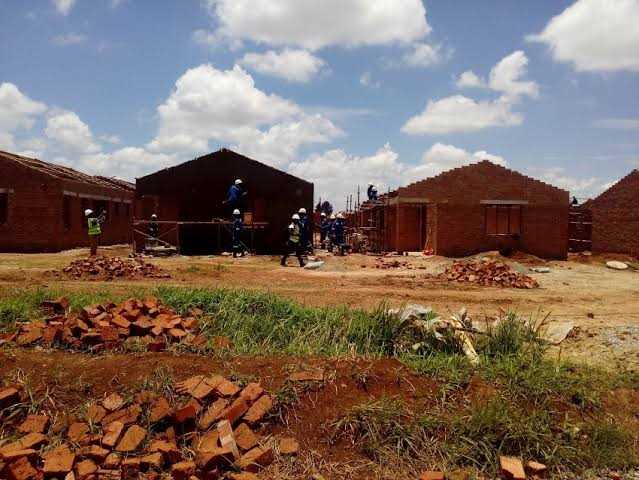
Others said they bought stands from private developers but are now trapped in legal limbo.
“We purchased stands from a land developer, we have dusty roads, no water and no drainage system,” said Nyasha Mavhunga.
“People have built homes, but we cannot get title deeds. Council says the developer failed to meet compliance requirements, while the developer says there is no money to complete development because his bank account was affected by the closure of Allied Bank.”
“It has been years without a resolution. We are paying council bills and our homes are inspected by council, but we still cannot get title deeds. Toita sei kuti tiwane title deed?” she asked.
Another resident, Tapiwa Zinyemba, echoed similar concerns.
“We are in the same situation. Since 2014 there is no sewer, no water, yet we bought the stand from the municipality,” he said.
The speed hump fine has now become a lightning rod for broader anger over unserviced land, broken development timelines, unpaid infrastructure promises and rising municipal charges.
“I have said it again and again that we need to revamp leadership in our municipalities,” said Rudo Chikomba.
“There is a lot of dead wood occupying critical positions.”
As the debate intensifies, the controversy has shifted from a single enforcement case to a wider reckoning over urban governance.
For council, the matter is one of statutory compliance. For residents, it reflects a system that demands strict adherence to regulations while thousands of homeowners remain without roads, drainage, water connections and title deeds years after purchasing their stands.








Leave Comments