






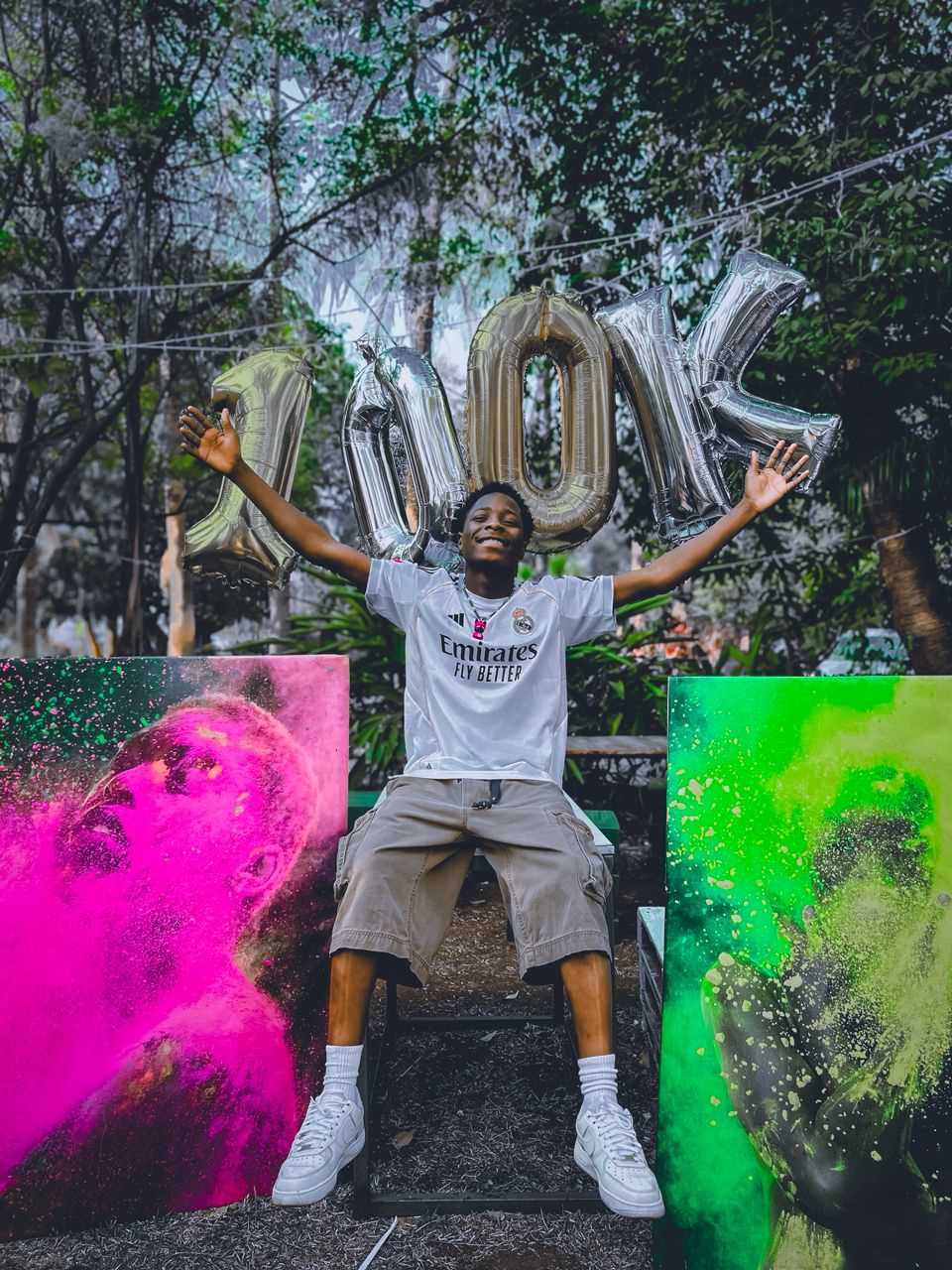
For Spina, comedy is not something he switches on for the camera. It is something he lives, observes, and quietly collects from the streets before releasing it in short, familiar bursts of laughter that feel unmistakably Zimbabwean.
He still remembers where it all began — not in a studio, not with professional equipment, but in Zengeza 2, armed with little more than ambition and a Samsung S6.
“I watch people every day,” Spina says. “The way we talk, the way we argue, the way we joke even when things are hard — that is comedy already.”
Long before thousands of viewers began sharing his skits, the journey started humbly in 2022. There was no crew, no budget, and no clear promise of success.
“My first video, I made it in Zengeza 2,” he recalls. “That was in 2022. I always wanted to be a content creator. Ndaka shooter ne Samsung S6.”
There was no certainty the videos would travel beyond his neighbourhood. What kept him going was instinct and persistence.
“I didn’t wait for perfect conditions,” he says. “I just started.”
Today, known online as @skits_by_spina, he commands over 300,000 followers, placing him among Zimbabwe’s fastest-rising digital comedians. His skits, rooted in everyday life, draw humour from homes, kombis, street corners, and ordinary arguments that Zimbabweans instantly recognise.
“I don’t wake up saying, ‘Let me be funny,’” he says. “I wake up and ask, ‘What did I see yesterday that was real?’ Then I exaggerate it a bit.”
After spending more time creating content in Harare, Spina says the capital reshaped both his mindset and creative direction.
“Harare is a big and great city,” he says. “I learned so much — through experience, interaction with other content creators, touring, and exploring different parts of the city.”
The exposure, he explains, sharpened his understanding of audience diversity, pacing, and the competitive rhythm of the digital space.
His comedy relies less on heavy dialogue and more on timing, facial expressions, and silence — a style deeply rooted in Zimbabwean communication.
“Sometimes silence is the joke,” he says. “Zimbabweans understand silence. We understand looks.”
That approach has produced a string of widely shared skits. In October 2025, he released Scott Maphuma’s Hilarious Skits, highlighting ghetto creativity and street confidence.
“I wanted to show that talent is everywhere,” he says. “Even in places people ignore.”
In June 2025, he followed up with Hondo Mupfungwa, a sketch exploring overthinking and internal battles — a theme that resonated deeply with viewers.
“We fight battles in our heads every day,” he says. “If we laugh at them, they lose power.”
Related Stories
By November 2025, his Sapatina Skits turned the lens inward, playfully examining relationships, rivalry, and collaboration among Zimbabwean TikTok creators.
“People think creators are enemies,” he says. “But most of us are just trying to grow. Collaboration is also comedy.”
Spina is candid about the business side of content creation — a subject many local creators still avoid.
“Content pays according to your growth,” he explains. “I have over 300,000 followers, so I earn money weekly from advertising.”
His digital success has also opened doors offline, with performances at major entertainment events.
“I have performed at shows like the ChiTown Colour Festival,” he says.
Behind the laughter and recognition, however, Spina admits the pressure of constant visibility is real, making mental health a priority.
“I protect my mental health by praying and staying focused,” he says. “Sometimes I even isolate myself.”
He credits his creative circle for keeping him grounded, especially fellow content creators who understand the demands of the industry.
“I mostly surround myself with other content creators,” he says. “Especially Takunda Jayden from Chitungwiza.”
While his humour remains deeply local, Spina’s ambition stretches beyond Zimbabwe’s borders.
“I’m different from other creators in Zim because I see myself in the USA,” he says. “I make new-school skits. My style is different. I want to go international.”
Still, he insists authenticity must come first.
“I don’t want to sound foreign,” he says. “I want to sound like home.”
For Spina, consistency — not luck — is the engine behind growth.
“If you disappear, people move on,” he says. “You must show up, even on days you don’t feel creative.”
As Zimbabwe’s digital comedy scene continues to evolve, Spina represents a new generation of storytellers turning lived experience into laughter, proving that global ambition can rise from township streets and second-hand smartphones.
“I just want to tell our stories,” he says. “If people laugh, that means they understand.”








Leave Comments