








Zimbabwe’s capital markets have entered 2026 against a backdrop of structural change, with liquidity dynamics increasingly determining where companies choose to list, raise capital, or exit altogether.
Developments on both the Zimbabwe Stock Exchange (ZSE) and the Victoria Falls Stock Exchange (VFEX) over the past week highlight a decisive shift by issuers toward hard-currency markets.
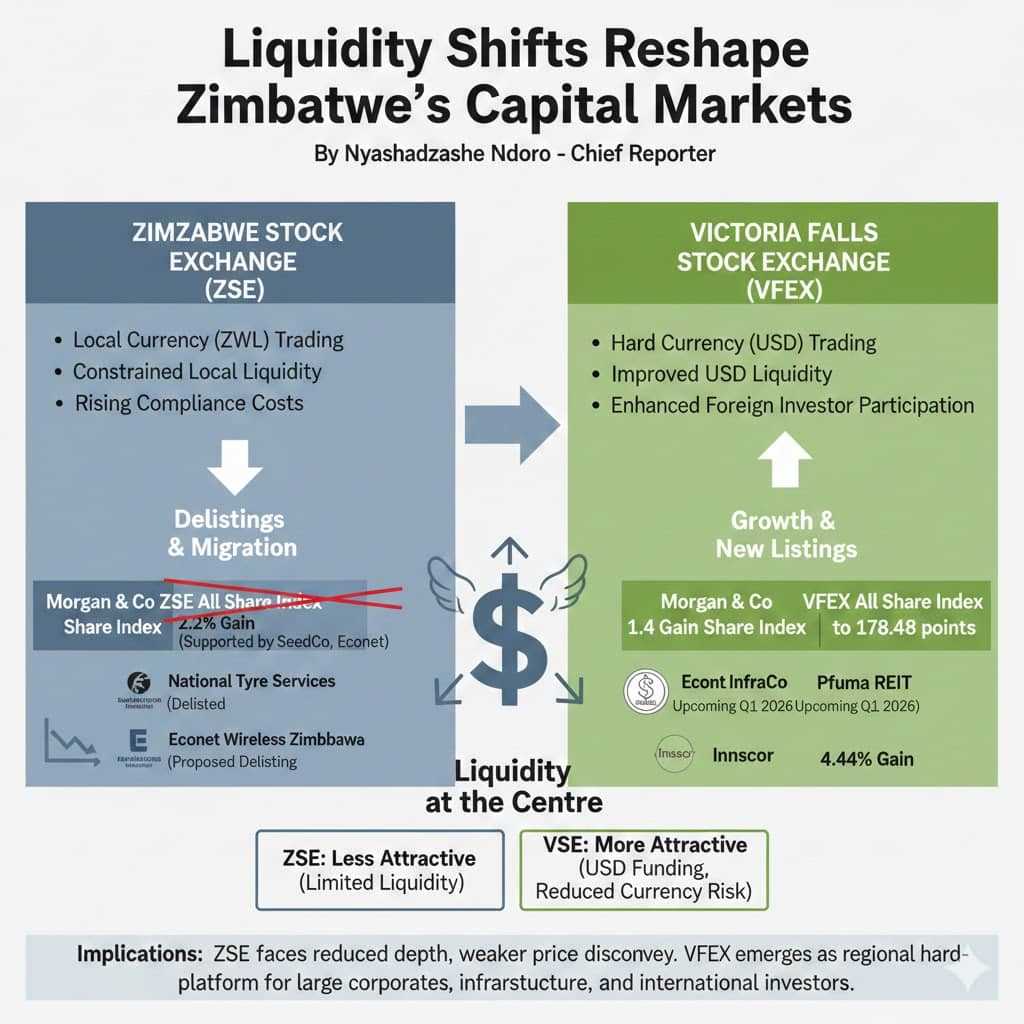
The year began on a positive note for the VFEX, which is expected to onboard two additional counters, Econet InfraCo and Pfuma REIT, by the end of the first quarter. This momentum was reflected in the Morgan & Co VFEX All Share Index, which rose 1.4% to 178.48 points, buoyed mainly by a 4.44% gain in Innscor to US100.00c.
In contrast, the ZSE entered 2026 on a subdued footing. The delisting of National Tyre Services and the prospect of a voluntary delisting by Econet Wireless Zimbabwe, one of the market’s most liquid blue-chip stocks, have weighed heavily on sentiment. Despite this, the Morgan & Co ZSE All Share Index added 2.2% on the first trading day of the year, supported by double-digit gains in SeedCo Limited and Econet Wireless.
However, these gains mask deeper structural challenges facing the ZSE.
Liquidity at the Centre of Strategic Decisions
At the heart of current market movements is a story of shifting liquidity. Monetary policy conditions have constrained the availability of local currency, which remains the currency of trade on the ZSE. At the same time, a relatively stable macroeconomic environment has improved United States dollar liquidity, the trading currency on the VFEX.
As capital flows increasingly favour USD-denominated platforms, issuers are responding rationally by following liquidity. For companies seeking fresh capital, the VFEX offers access to deeper pools of USD funding, enhanced foreign investor participation, and reduced currency risk. For those not in immediate need of capital, remaining listed on the ZSE is becoming less attractive due to rising compliance costs and limited liquidity.
Related Stories
This dynamic is accelerating a trend of migration from the ZSE to the VFEX, alongside outright delistings from the local currency exchange.
Econet: A Bellwether for the Market
Econet Wireless Zimbabwe’s proposed voluntary delisting from the ZSE underscores the magnitude of this shift. In a further cautionary announcement this week, the company confirmed it has commenced engagements with the Zimbabwe Stock Exchange regarding a circular to shareholders on the proposed delisting and the simultaneous listing of Econet Infrastructure Company (Econet InfraCo) on the VFEX.
The proposed transaction involves unbundling key infrastructure assets, including real estate, telecommunications towers and renewable energy investments, into a separate vehicle to be listed in USD on the VFEX.
If approved, the move would mark one of the most significant restructurings in Zimbabwe’s capital markets in recent years. It would also reinforce the VFEX’s growing role as the preferred platform for large corporates with long-term infrastructure assets and foreign currency revenue streams.
Implications for Market Structure
The likely migration of major counters from the ZSE raises important questions about the future shape of Zimbabwe’s equity market. Continued exits by liquid blue-chip stocks risk reducing market depth, weakening price discovery and further dampening investor participation on the ZSE.
Conversely, the VFEX is steadily positioning itself as a regional hard-currency exchange, aligned with international capital and long-term investment horizons. The onboarding of diversified assets such as REITs and infrastructure companies could strengthen its appeal to pension funds, offshore investors and development finance institutions.







Leave Comments