



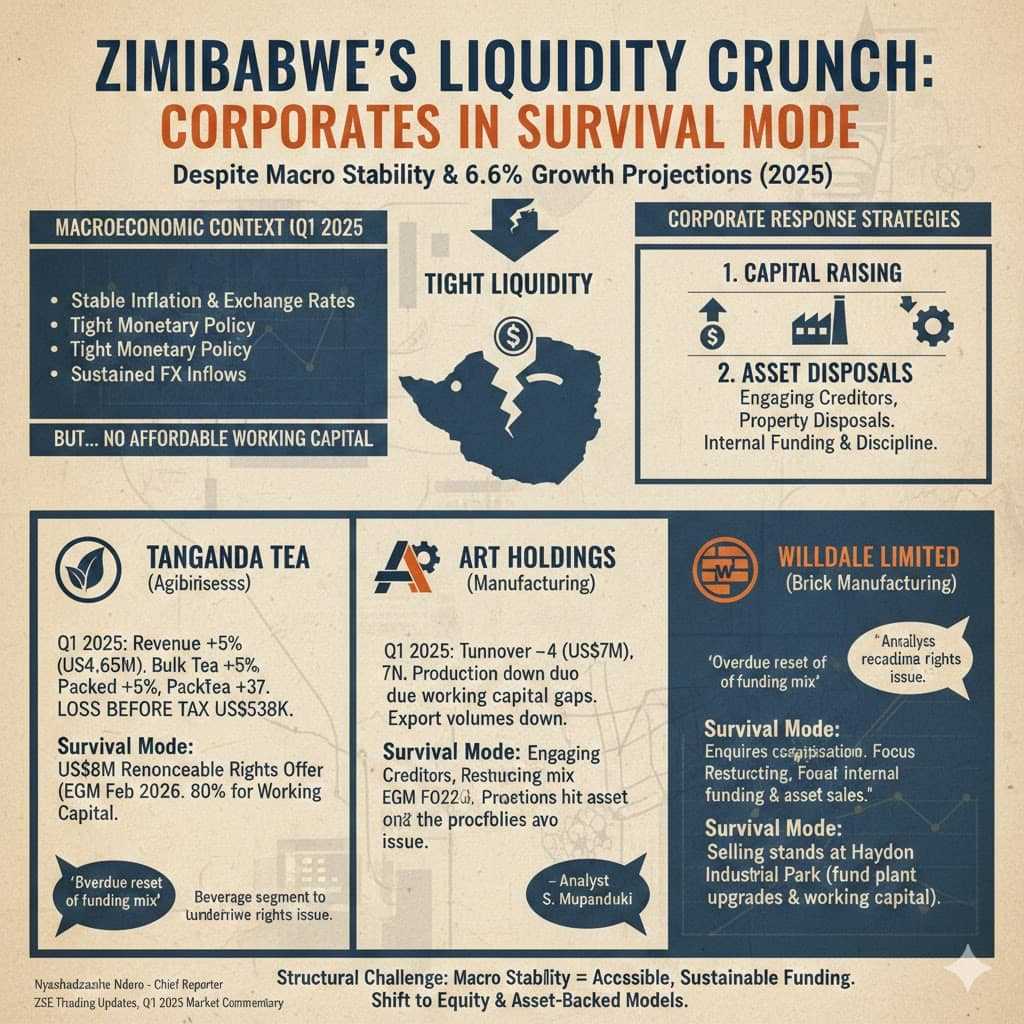
Despite official projections of macroeconomic stability and 6.6% economic growth, companies listed on the Zimbabwe Stock Exchange are increasingly operating in survival mode, turning to capital raising, asset disposals and cost containment as a persistent liquidity squeeze tightens its grip.
A review of first-quarter trading updates for the period ended 31 December 2025 shows a widening disconnect between headline stability — marked by subdued inflation and relative exchange rate calm — and the lived reality of constrained access to affordable working capital.
For many corporates, stable macro indicators have failed to translate into cash flow relief, forcing a recalibration of funding strategies.
Stability Without Liquidity
Tanganda Tea Company Limited illustrates the contradiction. While the group reported a stable operating environment supported by tight monetary policy and sustained foreign currency inflows, liquidity pressures persisted.
Bulk tea production rose 5% to 1 530 tonnes, while packed tea volumes surged 37% to 453 tonnes. Revenue increased to US$4.65 million from US$4.44 million in the prior year. Yet the company still posted a loss before tax of US$538 497, underscoring the challenge of converting operational gains into financial resilience.
To stabilise operations, Tanganda has secured shareholder approval for an US$8 million renounceable rights offer following an Extraordinary General Meeting held on 18 February 2026.
Market analyst Sylvester Mupanduki said the structure of the capital raise exposes the depth of the liquidity strain. He noted that 80% of the proceeds are earmarked for working capital, arguing that this “lays bare” structural funding weaknesses that cannot be solved through short-term export-backed lending alone.
Related Stories
“The rights issue reflects an overdue reset of the company’s funding mix,” Mupanduki said, adding that the underwriting of the offer by a beverage company — which contributes nearly half of Tanganda’s revenue — signals a strategic shift toward a more durable capital structure.
Pressure Spreads Across the Market
Liquidity stress is not isolated.
ART Holdings Limited reported quarterly turnover of US$7 million, down 4% year-on-year, as production was constrained by working capital gaps despite improved power availability. The group has tightened regional credit terms, engaged creditors and begun pursuing property disposals, with recapitalisation acknowledged as unavoidable.
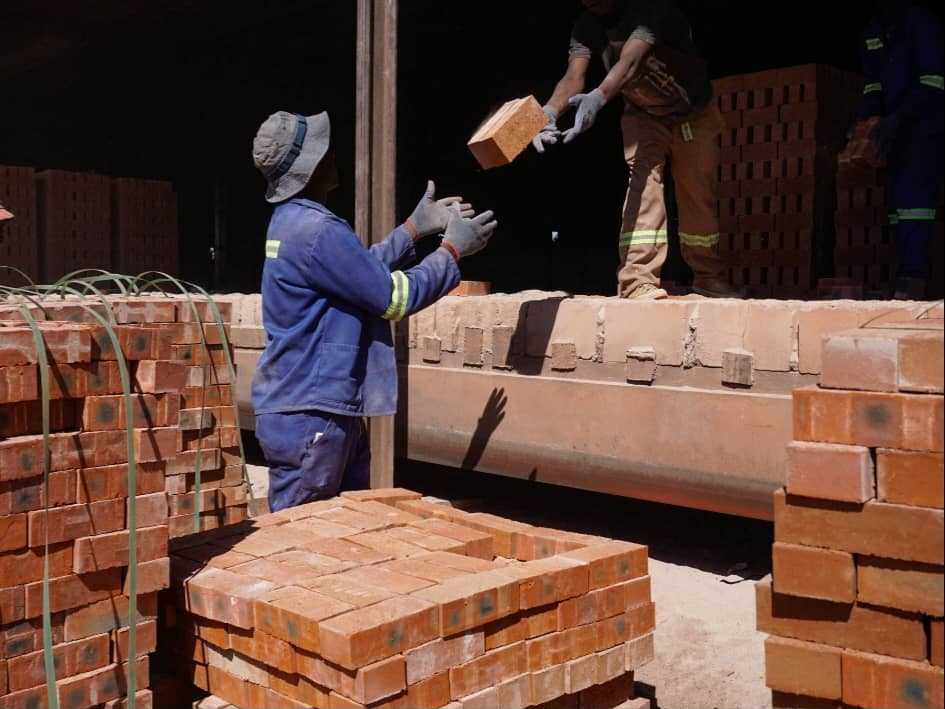
Brick manufacturer Willdale Limited also cited liquidity shortages that curtailed production and capital expenditure. Sales volumes plunged 49% due to low stock availability, contributing to a 36% revenue decline. The company has turned to selling stands at its Haydon Industrial Park development to ease cash pressures and fund plant upgrades.
Equity Over Debt
The emerging pattern across the market is clear. While macroeconomic stability has reduced volatility, liquidity within the financial system remains tight and borrowing costs elevated. Corporates are responding by scaling back operations, tightening credit exposure, disposing of non-core assets and seeking equity injections from shareholders.
Analysts say the trend highlights a structural challenge: macro stability alone is insufficient without accessible and sustainable funding channels.
For Zimbabwean corporates, survival is increasingly defined not by expansion, but by balance-sheet repair — a shift away from short-term debt dependence toward rights issues and asset-backed recapitalisation.







Leave Comments