








Simbarashe Namusi
Zimbabwean football has developed a long memory — one that archives errors, mourns missed chances and treats every defeat as evidence. From historic howlers to modern AFCON blame games, this is how trust quietly disappeared.
Zimbabwean football doesn’t forget. It records.
Mistakes are archived. Misses are timestamped. Every new failure is quietly cross-referenced against an old wound, as if history itself is the loudest pundit in the room. This is a football culture trained not only to expect heartbreak, but to recognise its precise shape the moment it appears.
Over time, Zimbabweans have learnt to watch football defensively — bracing for the error that will undo everything.
Where the word “howler” took root
The vocabulary of disaster begins with John Sibanda. His late error against Congo (Brazzaville) in the decisive 1992 AFCON qualifier did more than cost Zimbabwe a place at the finals. It embedded a lasting truth in the national psyche: that ninety minutes of discipline can be erased by a single moment of misjudgement.
From that point, goalkeeping mistakes were no longer just technical errors — they became moral failures. The term howler stuck, and it stuck hardest to those wearing gloves. Sibanda didn’t simply concede a goal; he became a reference point, a cautionary tale, a name summoned whenever confidence wavered in the six-yard box.
Across African football, every nation has its own version of this moment. Zimbabwe’s just happened to arrive early — and it never left.
The pain of the goal that never was
If howlers taught Zimbabweans to fear conceding, near misses taught them to mourn what might have been.
AFCON 2004 should have been remembered as arrival — Zimbabwe finally stepping onto Africa’s biggest football stage after decades of frustration. Instead, collective memory keeps circling one image: Wilfred Mugeyi, presented with a clear chance in a group-stage match where Zimbabwe were still alive, failing to convert.
Near misses hurt differently. They don’t end matches instantly; they linger. They invite counterfactuals. If that goes in… Suddenly, an entire tournament — even a generation — feels like it pivoted on one swing of a boot.
Across the continent, football folklore is crowded with such moments. But in Zimbabwe, they calcified. Chances that promised transformation delivered regret, and regret became tradition.
Same script, louder noise
Fast-forward to AFCON 2025 and the pattern remains stubbornly familiar.
In a tight contest decided by fine margins, Zimbabwe lose narrowly to South Africa. Almost immediately, the post-match discourse snaps into place with mechanical precision. Clips circulate. Freeze-frames appear. Judgment is swift.
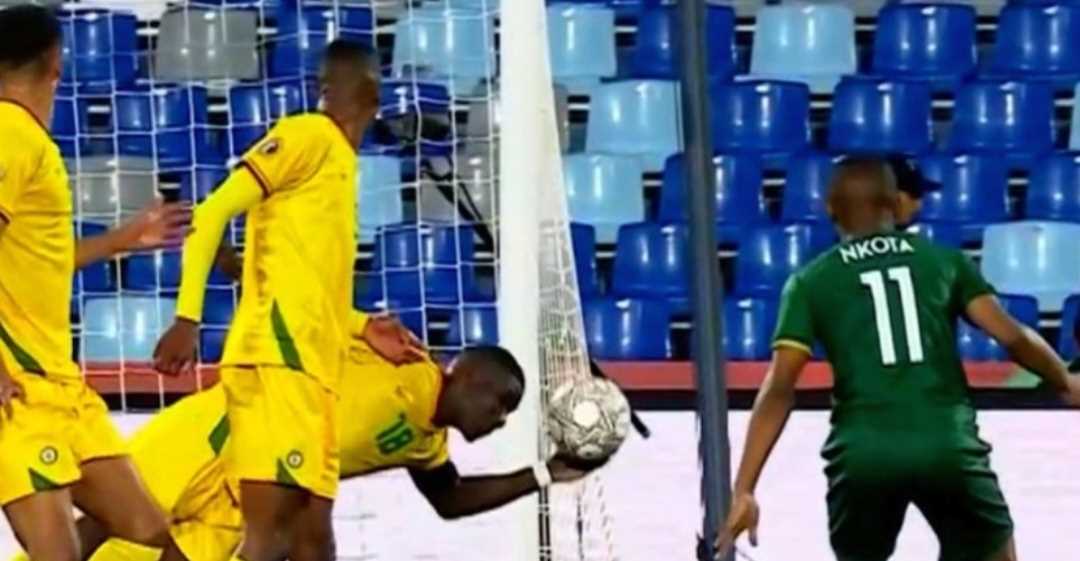
Attention narrows on Marvellous Nakamba, Divine Lunga and Washington Arubi. A handball. A defensive hesitation. A goalkeeper caught between decisions.
Related Stories
Once again, a collective performance — shaped by tactics, fatigue, preparation and pressure — is distilled into individual culpability. Zimbabwe doesn’t review football; it prosecutes it.
This reflex is not uniquely Zimbabwean, but in Zimbabwe it is unusually unforgiving.
What Asiagate broke — beyond the scoreline
This culture of suspicion did not emerge in a vacuum. Asiagate didn’t merely expose match-fixing between 2007 and 2010. It shattered trust.
After that scandal, Zimbabweans stopped watching mistakes as footballing incidents and began treating them as evidence. Every lapse demanded interrogation. Every defeat carried subtext. The benefit of the doubt quietly disappeared.
In this post-Asiagate reality, innocence is no longer assumed. Football is watched with folded arms, narrowed eyes and a readiness to believe the worst. A late goal conceded is not just unfortunate — it is questionable. A missed chance is not just wasteful — it is unforgivable.
Few footballing communities recover easily from betrayal. Zimbabwe never truly did.
A culture that leaves no room for recovery
The cost of this long memory is severe.
Zimbabwean football rarely allows redemption arcs. Players are frozen at their lowest moment, often defined by a single clip replayed endlessly. Errors fossilise careers. Context is drowned out by outrage. Growth is denied the time it requires.
Standards matter — no serious football nation survives without them. But standards without proportion curdle into cruelty. And Zimbabwe has become unusually skilled at turning disappointment into permanent indictment.
The deeper tragedy is that while fans sharpen memory, structural problems persist. Administrations change. Promises repeat. Development pathways remain uneven. Players inherit a history they did not create, yet are punished for echoing its patterns.
They play not only against opponents, but against expectation itself.
What must change
Zimbabwe does not need amnesia. It needs perspective.
Mistakes must be analysed, not mythologised. Misses must be understood, not ritualised. Accountability should be systemic before it is personal. Not every error is destiny. Not every lapse is betrayal. Not every loss is a replay.
Until Zimbabwe learns to separate critique from ritual punishment, the Warriors will continue playing with ghosts at their backs — and the loudest voice in the stadium will never be the coach, the captain or the crowd.
It will be history, whispering: we’ve seen this before.
Simbarashe Namusi is a peace, leadership and governance scholar and media expert. He writes in his personal capacity.






Leave Comments