



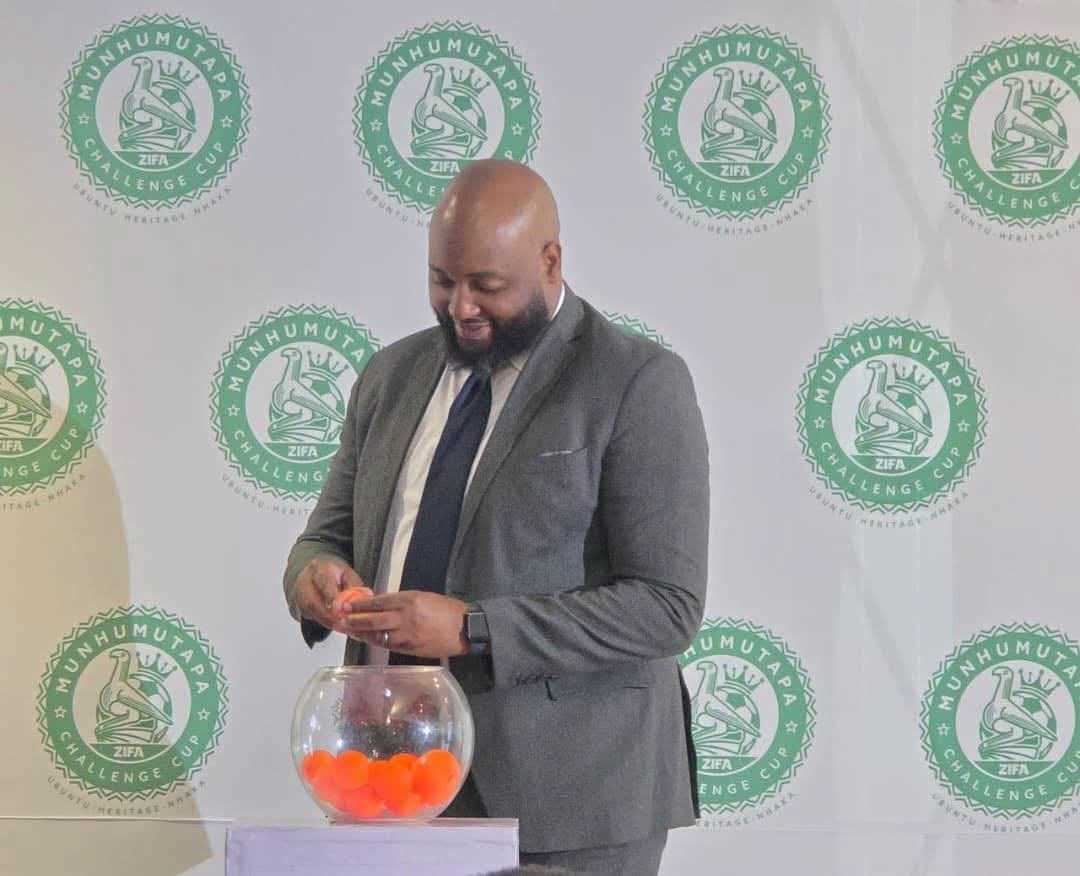



For years, Zimbabwean football operated in survival mode reacting to problems, scrambling for funding, and planning matches only weeks in advance. One year into his presidency at the Zimbabwe Football Association, Nqobile Magwizi says that culture is finally changing.
“We are no longer looking at our calendar two or three months ahead,” Magwizi said in an interview reflecting on his first year in office. “We are now planning 15 to 18 months in advance. That alone changes everything.”
His biggest shift has not been results on the pitch, but the introduction of strategic planning in an environment historically dominated by firefighting.
“When we came in, we realised that football in Zimbabwe was being run from one crisis to the next,” he said. “You cannot build a serious football nation like that. You need predictability, systems and long-term planning.”
Under his leadership, ZIFA has ensured that national teams no longer miss international windows due to poor preparation. Over the past year, the Warriors and Mighty Warriors played more matches than in previous cycles, including trips to Morocco, Saudi Arabia, Qatar and Malawi.
“In the past 12 months, no FIFA window passed without our teams playing,” Magwizi said. “That builds confidence in players and professionalism in the association.”
“Football never sleeps. If you want competitive teams, they must be playing regularly, not once or twice a year.” he continued
Related Stories
That forward planning approach also extends to administration, where ZIFA has focused on training and capacitating officials through partnerships with FIFA, CAF and local universities.
“One of our biggest problems was that administrators were passionate but lacked exposure,” Magwizi said. “If you don’t know that you don’t know, you can’t improve. Now we are equipping people with real knowledge.”
Magwizi says the results of this approach will not be immediate, but they are necessary for sustainable success.
“You don’t fix football by starting with the national team,” he said. “You fix it by fixing systems, coaching, administration and grassroots structures.”
According to Magwizi, planning ahead has also helped restore confidence among partners and sponsors. Several corporate players, including Ecobank and Better Brands, have returned to Zimbabwean football after years of absence.
“When partners see that you are organised and predictable, they are more willing to invest,” Magwizi said. “Nobody wants to fund chaos.”
However, on infrastructure, he confirmed that long-term projects are now central to ZIFA’s planning cycle, including the rehabilitation of the National Sports Stadium and new stadium developments in Kwekwe and other regions.
“Infrastructure cannot be built in panic,” he said. “It requires long-term thinking, partnerships and patience.”




Leave Comments