







A town should not need a national gathering to get water, oxygen and passable roads. Chinhoyi got all three within weeks, and that is the problem.
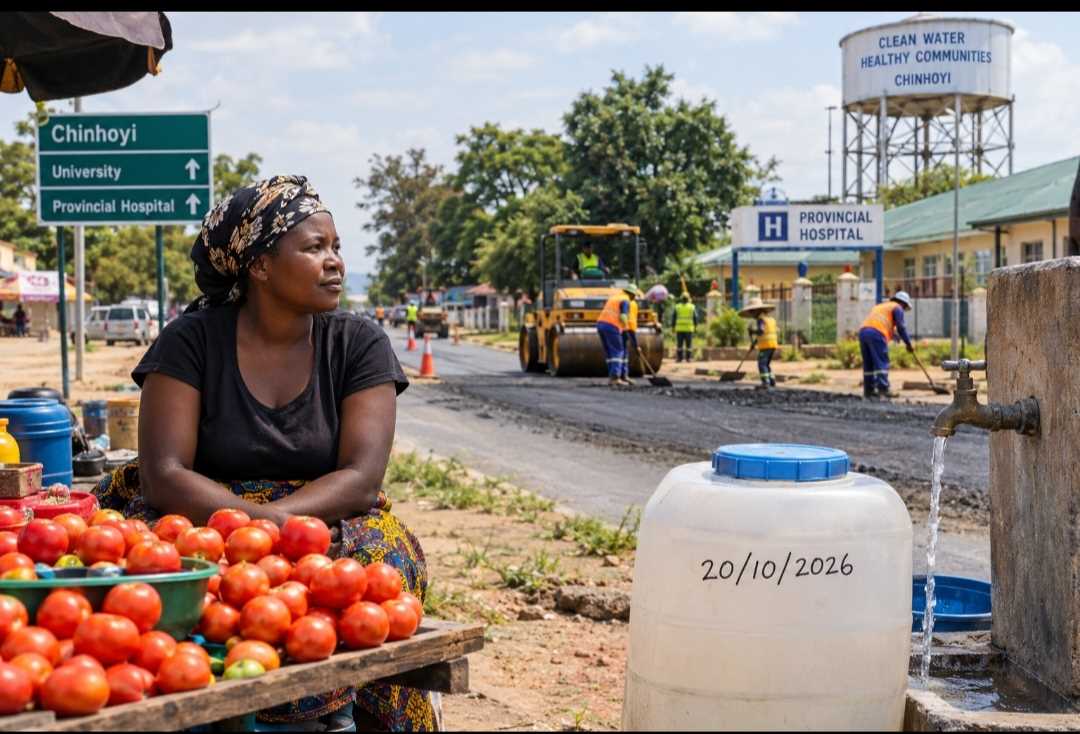
Mai Tafadzwa sells tomatoes on a street corner there. She is a composite character, but her experience will be familiar to anyone living in a provincial town.
For years, her road had potholes she could name. Her tap ran dry for days at a time. She raised the issue at ward meetings. She waited. Nothing changed.
Then a conference was announced. Within weeks, roads leading to the university and provincial hospital were being repaired. Crews worked late. Officials spoke of a legacy.
The state press set the test itself. Its coverage said the legacy should be judged by what remains for residents to use every day, not by speeches and resolutions. That is the right test. It is also the one the town now faces.
Reports before the conference put the water upgrade at an increase from about 22 megalitres a day to nearly 88, alongside the installation of a new oxygen plant at the provincial hospital. These are welcome developments. But they are basic services the state owes the people who pay rates and taxes.
Related Stories
A week ago, the delegates left. The tents came down. On Monday, Mai Tafadzwa filled her 20-litre container and wrote the date on its lid with a marker. She will record the next date when the tap runs dry.
That is the real test of the legacy, and no speech will change it. The council must maintain these services with its usual budget and billing system, while managing a larger infrastructure network.
The coverage leaves two questions unanswered: who paid for the roads and water, and why was the money available for six days of delegates but not for the other 359 days of residents?
Elsewhere, towns that have never hosted such gatherings continue to endure potholes and dry taps. When services follow spectacle, residents become spectators to improvements staged for someone else. Infrastructure built for a deadline risks serving only that deadline.
Chinhoyi showed that an order from the top, backed by funding, can transform a town within weeks. The capacity existed all along. Nothing in Chinhoyi was beyond reach. It was simply unscheduled.
Mai Tafadzwa will keep selling her tomatoes. Her road is smooth. She will check the lid in March.
Simbarashe Namusi is a media expert writing in his personal capacity.







Leave Comments