







Operation Chenesa Harare has brought the long-running confrontation between the state and informal traders squarely onto the streets of the capital. But as the campaign intensifies, the municipal police officers carrying out the enforcement are increasingly becoming part of the story themselves.
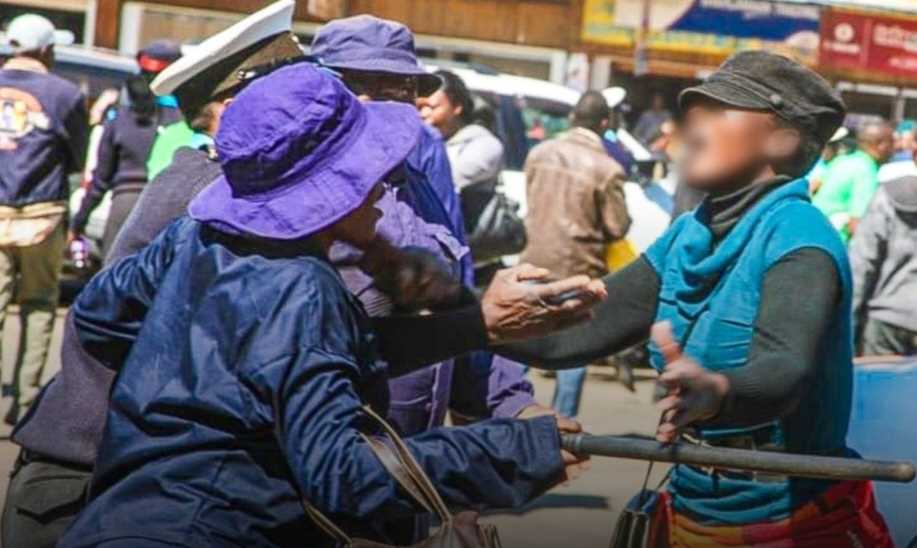
Municipal police officers serve as the most visible representatives of the campaign. They are the ones confronting vendors, removing structures, and enforcing the restrictions announced by the central government and the City of Harare. They are also the ones whose faces appear in photographs and videos that travel across social media long after an operation has ended.
For Gift Mwadziwana, a Harare municipal police officer based in Mabvuku, that visibility has come at a steep personal cost.
Photographs and videos of Mwadziwana participating in the campaign circulated widely online, making him one of the recognizable faces of Chenesa Harare. He says the exposure resulted in insults, threats, and hostility from people who associate him personally with an operation whose policy he did not formulate.
“I have become an outcast in my own community,” Mwadziwana said, describing how friends and relatives contacted him after discovering that he had gone viral. “I woke up to calls and messages from friends and family notifying me that I had gone viral and had been receiving attacks, threats and insults from Zimbabweans across the country.”
The hostility, he said, has not been confined to social media.
“I cannot even do my usual rounds where I live without people smearing me. I did what I was ordered to do, and it is my job to follow orders from my superiors.”
Mwadziwana’s account captures one side of an increasingly difficult question surrounding public enforcement: what happens to the official who becomes the human face of a controversial policy?
Precious Shumba, director of the Harare Residents’ Trust, frames the issue more sharply: does following an instruction remove personal responsibility when an official is accused of unlawfully exercising public power?
“Every public official who misuses their powers and authority by implementing unlawful and inhumane actions against the citizens must be prepared to face the consequences of their own actions,” Shumba said. “They should be held personally liable for their own professional conduct.”
Shumba rejects the idea that officials can simply hide behind instructions from superiors when residents believe their rights have been violated.
“Remember, these officials are using residents' funds to oppress the residents, hiding behind the force of illegal instructions from their bosses. Every action has consequences. Let society judge them as they see fit,” he said.
That debate forms the central tension of the campaign. Mwadziwana presents himself as an employee carrying out instructions within a chain of command, whereas Shumba argues that the existence of that chain does not automatically transfer responsibility away from the individual exercising authority on the ground.
The dispute is far from theoretical.
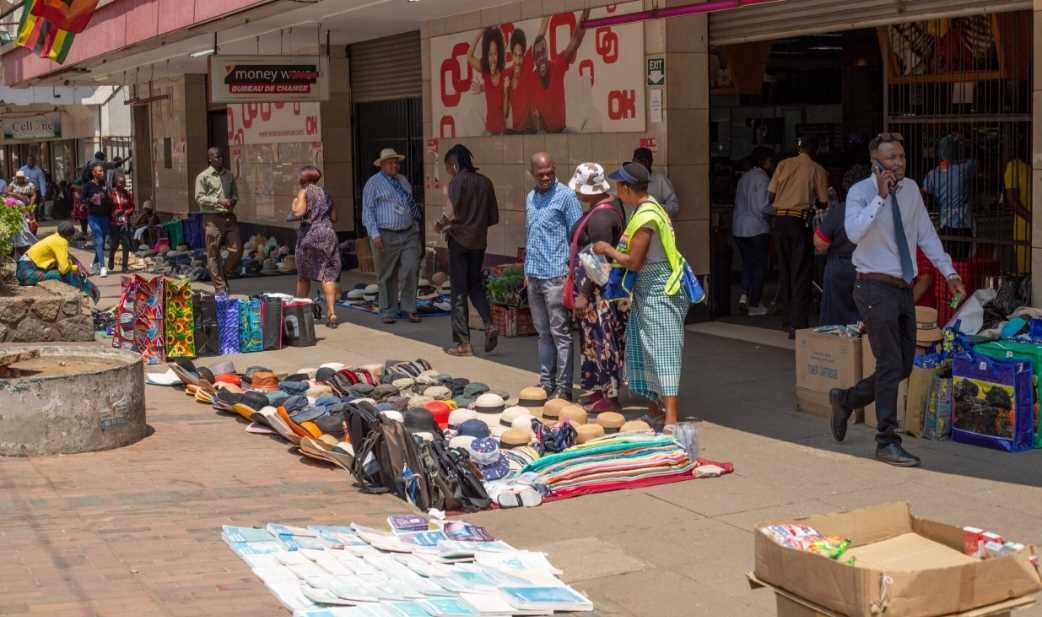
Chenesa Harare is a government-backed operation implemented in coordination with the City of Harare. The council says the campaign is intended to remove illegal vending from undesignated areas and restore order, cleanliness, safety, and accessibility in the capital, relying on enforcement of the city’s 2014 Vendors By-laws and related legislation.
The scale of the enforcement has placed municipal police at the center of the push. At least 300 officers were deployed as the operation intensified in September, with the city stating officers would work shifts around the clock to maintain pressure.
Harare Mayor Jacob Mafume has publicly defended the campaign, insisting vendors must move from undesignated areas into council-approved trading sites. On September 9, Mafume noted that the number of municipal police officers could be increased depending on circumstances on the ground.
The City subsequently confirmed that Mafume and Local Government and Public Works Minister Daniel Garwe toured the Central Business District together to monitor operations, with both government and council reaffirming their commitment to restoring order while urging vendors to relocate.
Related Stories
Minister Garwe has similarly framed the campaign as an urban-management intervention rather than an assault on informal traders. At the launch of the latest phase, Garwe stated that the government was concerned about the deterioration of urban order, insisting the operation was not intended to victimise vendors, formal traders, or homeowners.
He also emphasised that municipal police had been instructed to avoid force.
“There will be no violence between the municipal police and the vendors. We have given strict instructions that this operation should be very peaceful,” Garwe said, adding that vendors should feel free to report any cases of violence.
When enforcement operations play out on social media, the institutional chain of command often dissolves.
A minister announcing policy or a mayor defending it at a press conference may appear on camera once. However, a municipal officer confronting a trader is frequently filmed at close range, with videos stripped of legal context or preceding instructions.
The resulting images turn individual officers into permanent symbols of the entire operation, exposing frontline workers to public censure outside official disciplinary channels.
At the same time, Zimbabwe's broader legal framework distinguishes between lawful authority and individual abuse. The Police Act requires members to obey lawful directions while explicitly prohibiting conduct such as unnecessary violence or ill-treatment of the public. Meanwhile, the Criminal Law Codification and Reform Act establishes that obedience to a lawful order can constitute a defence, but obedience to an illegal order—particularly one so manifestly illegal that a reasonable person would refuse it—does not grant immunity.
Furthermore, the Constitution requires all security service members to act in accordance with the law and fundamental human rights, mandating independent mechanisms to investigate complaints of misconduct.
While municipal police operate under council jurisdiction rather than as part of the Zimbabwe Republic Police Regular Force, the overarching legal framework dictates that superior orders do not render every action automatically lawful.
Public sensitivity surrounding municipal enforcement is also informed by past legal battles.
In October 2025, the High Court ordered the City of Harare to pay US$21,830 to vendor James Chamisa following a 2018 assault by municipal police during an anti-vending operation. Court records indicated Chamisa suffered physical injuries after being struck with batons, fists, and booted feet.
While that case does not determine the facts of Operation Chenesa Harare, it illustrates how officer conduct generates direct legal liability for municipal institutions.
Conversely, residents and authorities face legitimate urban challenges, including CBD congestion, sanitation concerns, and obstructed pedestrian pathways.
City spokesperson Stanley Gama previously acknowledged that existing designated trading spaces have struggled to meet demand, though he noted the council aims to expand and upgrade sites to encourage voluntary relocation.
However, many vendors contend that designated sites are commercially unviable and too far from foot traffic, even as council data shows thousands of stalls remaining unoccupied across People's Markets and Home Industries.
In response, Minister Garwe announced a 60-day formalization programme aimed at improving infrastructure and helping informal traders transition into the regulated economy.
This leaves frontline officers enforcing policies whose ultimate success depends on higher-level administrative decisions, such as market construction, site accessibility, stall fees, and economic viability.
Attempts to obtain further comment from Mayor Mafume regarding officer protection and accountability protocols were unsuccessful, as calls to his phone went unanswered.
As the operation expands, the core institutional challenge remains. If an officer faces threats for carrying out lawful duties, the institution that deployed them holds a responsibility to protect them. Conversely, if an officer exceeds legal limits or uses unlawful force, individual accountability cannot be bypassed by pointing up the chain of command.






Leave Comments