






Zimbabwe has built a strong position in the global crocodile skin market, but the industry is heavily dependent on one company, raising questions about how well it can withstand changes in the international market.
The National Competitiveness Commission ranked Zimbabwe first in Africa and second in the world in crocodile skin exports in its 2023 Leather Value Chain Competitiveness Report.
But a recent analysis by Daily Viz shows that much of this export business is concentrated in one company.
Padenga Holdings supplied between 67 percent and 80 percent of Zimbabwe’s national crocodile skin exports in every year covered by the analysis.
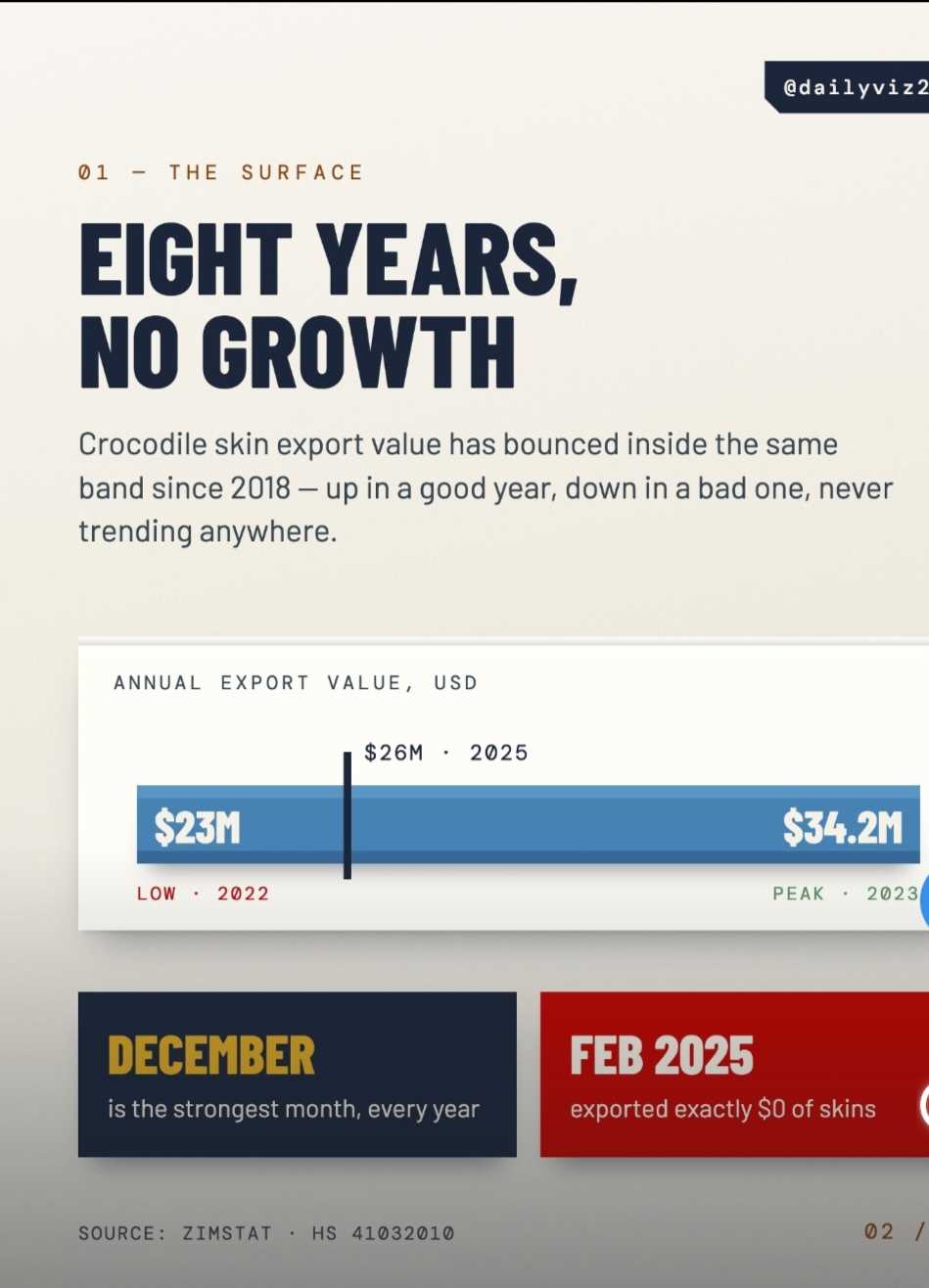
The company’s dominance comes as the value of Zimbabwe’s crocodile skin exports has moved up and down in recent years.
Annual export value stood at US$23 million in 2022 before rising to US$34.2 million in 2023. By 2025, however, the value had fallen to about US$26 million.
Export volumes have also declined.
Zimbabwe exported about 140 tonnes of crocodile skins in 2020, compared with 110 tonnes in 2025.
Despite the fall in volume, the industry remains an important source of export earnings and has given Zimbabwe a strong position in a specialised international market.
Padenga is at the centre of that industry.
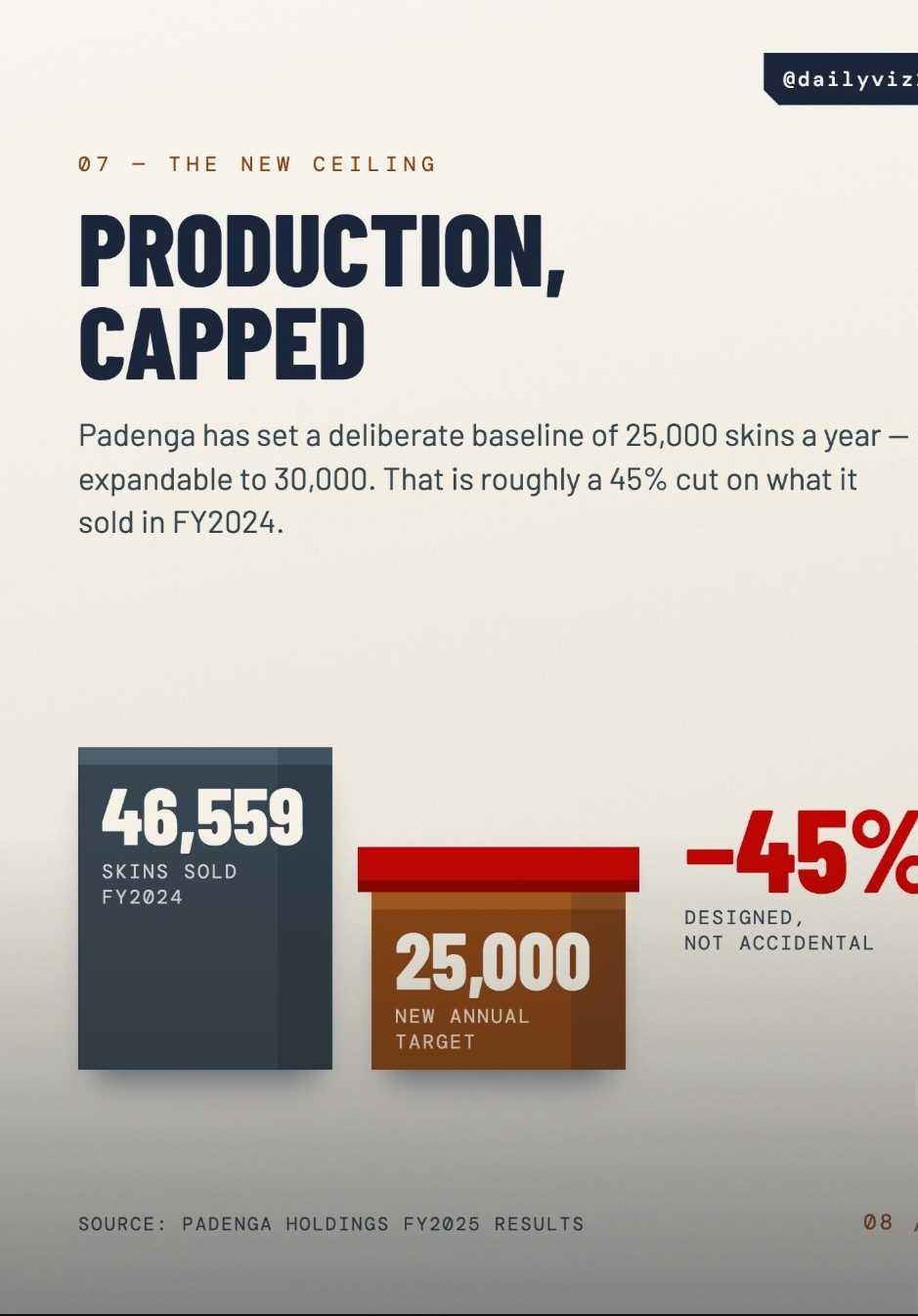
The company farms Nile crocodiles around Lake Kariba and produces skins for the international luxury leather market. It has set a deliberate production baseline of 25,000 skins a year, which can be expanded to 30,000.
Padenga’s 2024 annual report also shows its importance to the national industry. The company accounted for 67 percent of Zimbabwe’s wet-salted crocodile skin exports and about 87 percent of their total export value that year.
Related Stories
This means that what happens to Padenga can have a significant effect on Zimbabwe’s crocodile skin exports.
The concentration creates a risk if demand falls, a major customer changes its buying patterns or conditions in the international luxury leather market change.
It also raises questions about whether Zimbabwe is getting enough value from an industry in which it already has a strong competitive position.
The NCC report identified crocodile skins as one of Zimbabwe’s competitive areas, ranking the country first in Africa and second globally.
But the wider leather industry still faces challenges in adding value locally.
Between 2016 and 2021, Zimbabwe exported about US$189 million worth of raw hides and skins, while a further US$15 million worth of semi-processed, tanned or crust leather was exported.
The figures point to an opportunity for Zimbabwe to process more leather locally and produce finished goods instead of relying mainly on exports of raw or semi-processed products.
For the crocodile industry, this could mean producing more finished leather goods locally, while also expanding the number of buyers and markets.
The Daily Viz figures show that Zimbabwe has a valuable industry, but one that is highly concentrated.
The country has the production capacity, an established exporter and access to an international luxury market.
The challenge now is to make the industry stronger by reducing its dependence on one company and a small number of buyers.






Leave Comments