









When disaster strikes, the response is often visible: emergency crews rush to the scene, fires are extinguished, affected families are assisted and damaged infrastructure is repaired.
But for Harare, the bigger question is what happens before disaster strikes.
The city is now working within the Harare Metropolitan Province Disaster Risk Management and Climate Change Adaptation Plan for 2026–2030, a framework intended to shift disaster management from reacting to emergencies towards identifying and reducing risks before they become disasters.
The plan covers Harare, Chitungwiza, Epworth and Ruwa and is intended to inform local authority work plans, annual budgets and preparedness planning.
But the youth from different communities say having a plan is only the beginning.
Zimbabwe Resilience Network Representative Diana Harawa said Harare's approach to disasters remains too focused on responding after hazards have already caused damage.
“Harare City Council's approach to hazards is more reactionary than proactive disaster preparedness. Harare has faced recurrent fire outbreaks in its major industrial and market places with no deliberate effort to do a risk assessment and understand and address underlying risk factors,” she said.
Her concern goes beyond firefighting.
“Harare City Council should make every fire response a risk-reduction opportunity. Simply putting out the fire is not recovery. A response that does not generate lessons, reduce vulnerability, address unsafe conditions, and prevent recurrence leaves the underlying risk unchanged.”
The concern comes as the provincial plan identifies a range of interconnected risks facing the metropolitan province.
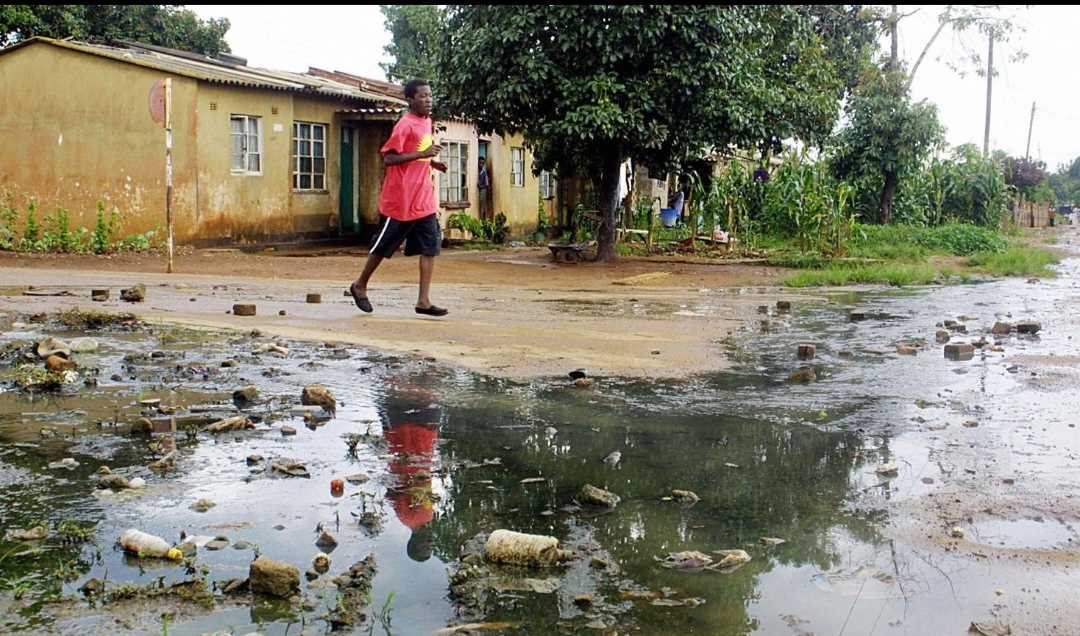
These include wastewater and sewage problems, ageing service infrastructure, dysfunctional settlements, shallow wells and water contamination, inadequate water supplies, solid waste, potholes and urban fires.
For residents, some of these risks are already part of everyday life.
Elaine Chikoto of the Disaster and Risk Management Association said communities need greater involvement in disaster preparedness, particularly through training.
“I would advise local authorities to enhance trainings and include everyone in communities. I think there is more to be done in terms of training people when it comes to disaster trainings,” she said.
Chikoto, who comes from Budiriro, said waste management and flooding remain major concerns.
“There is still more to be done on water management because there is waste everywhere and people in the community throw waste everywhere. Sometimes waste is not picked up by the municipality,” she said.
The provincial plan similarly identifies poor waste management as a driver of disaster risk, noting that illegal dumping and open burning can block drainage, pollute the environment and increase fire risk.
For the Combined Harare Residents Association, water security is another major test of the city's preparedness.
CHRA representative Reuben Akilli said concerns over disaster preparedness come against a background of persistent water supply problems in Harare and forecasts of a difficult climate season.
“CHRA is actually concerned because this year there has been the Super El Niño which has been predicted, but again the local authorities, particularly the City of Harare, have been facing water supply challenges,” Akilli said.
He questioned whether the city would cope if climate-related pressures intensify.
“At one point we had enough water and failed to provide. What about when we are hit by the El Niño?”
Akilli said government and local authorities needed to treat water as a disaster-risk issue and invest in alternative sources before shortages become more severe.
“At this period there is need to have alternative water sources,” he said.
He also questioned whether Harare currently has enough capacity to respond to disasters, pointing to what he described as a history of reactive rather than preventive action.
“We cannot say the local authority has the capacity to deal with disasters. From past events we have seen that the local authorities have been more reactive than proactive,” he said.
One of the concerns is where people are allowed to settle.
Akilli pointed to settlements in wetlands and areas where water problems are already evident.
“We have seen people settling in wetlands planned by the local authority itself. Right now people are given stands in Tafara where water oozes from the ground during the dry season,” he said.
The provincial plan identifies dysfunctional settlements, environmental degradation and wetland encroachment among factors increasing exposure to hazards. It calls for mapping and planning settlements, regularisation where possible and relocation of settlements that cannot be regularised.
Akilli said disaster-risk management must also be reflected directly in local authority budgets.
He said there had been fiscal commitment towards emergency response previously, but argued that more resources should now be directed towards prevention.
“Last year we saw that there was a fiscal commitment towards emergency response, but it was not directly to DRM. This year we call for more resources to be committed towards prevention,” he said.
He also called for disaster-risk management to be integrated into the budgets of all city departments rather than treated as a responsibility of one unit.
“In all departments of the City of Harare there is need to integrate DRM in their budgets,” he said.
Sewerage and wastewater management, he added, should be among the priorities.
Related Stories
“We need more money to go towards sewerage. We need wastewater management.”
Akilli noted some positive developments, including the purchase of ambulances, but said more investment was needed.
“We hope they will purchase more,” he said.
The risks also extend beyond water and infrastructure.
Daniel Mangisi, a resident of Greystone Park, said recent events should force authorities to examine how prepared communities are before disaster strikes.
“If you look into the recent events, they shine a light into the level of preparedness. It would be wise to be proactive in order to prepare for disasters,” he said.
Mangisi acknowledged that budgeting remains a challenge but said authorities could explore partnerships with communities and the private sector.
“We know that the issue of budgeting is always a challenge but I think government can consult communities and also form partnerships with the private sector and come up with convincing mechanisms,” he said.
He also pointed to an information gap at community level.
“I also think that more should be done in terms of training communities because we still have an information gap in local communities.”
For Mangisi, land-use enforcement is another part of preparedness.
“In my area you will find that there are people who have settled in wetlands and nothing is being done about it. Laws should be effectively implemented to avoid such things.”
Akilli similarly called for greater community stewardship of the environment, particularly in informal settlements.
“What we have always proposed is stewardship management of the environment where the community plays a bigger role safeguarding the environment,” he said.
He said communities in informal settlements should also understand how local planning works.
“Informal settlement communities should be informed on the local planning.”
The problem, therefore, is not simply the absence of disaster-management structures. It is whether those structures are being translated into prevention, investment and enforcement before emergencies happen.
The plan illustrates how everyday urban problems can cascade into larger disasters.
Poor solid waste can block drains. Blocked drains increase flooding. Flooding can cause sewer overflows, which can contaminate water and increase disease risks. Poor roads can also delay emergency response.
This means disaster preparedness is not simply about what happens when an emergency call comes in.
The provincial plan calls for prevention, mitigation and preparedness before disasters occur.
Preparedness includes contingency plans, drills, early warning systems, emergency stockpiles, trained responders and evacuation arrangements, while mitigation includes measures such as drainage improvements, stronger buildings, fire-safety measures, wetland protection and sewer rehabilitation.
Tinovonga Zhuwao from Stoneridge believes the new plan could mark a change in how disaster management is approached.
“I think the plan will be different in terms of disaster management and in terms of proactiveness because the plan is practical and can be easily traced as to how local authorities are planning and reacting to disasters in their local authorities,” Zhuwao said.
The challenge, however, is implementation.
The plan identifies a critical gap in the disaster-management system: local authorities need properly staffed, resourced and adequately budgeted disaster-risk-management units.
For Harare, this raises an uncomfortable question: how much of disaster preparedness is actually being funded and implemented before emergencies occur?
A proactive approach would require authorities to identify high-risk areas, address unsafe conditions and use lessons from previous disasters to prevent similar events.
The plan calls for fire-safety standards to be enforced, hotspots inspected, communities trained and emergency access routes, water points and response capacity maintained.
Diana acknowledges that the city is not starting from zero.
“We appreciate the Harare City Council DRM committee, the policies and Harare disaster risk management, and climate change adaptation plan (2026-2030) in place. These provide important foundations for building a more resilient city,” she said.
“What is needed now is the political and administrative courage to connect them.”
That connection will ultimately be measured beyond policy documents.
The plan calls for a shift from waiting for emergencies and spending heavily after damage occurs towards identifying risks before investment, reducing exposure, maintaining infrastructure, using early warning for early action and integrating disaster-risk management into planning and budgets.
It also gives communities and young people a role in identifying risks, participating in planning, advocating for risk reduction in budgets and monitoring whether agreed projects are delivered.
For a city facing recurrent fires, flooding, water and sanitation failures and infrastructure problems, preparedness therefore cannot begin when the sirens start.








Leave Comments