







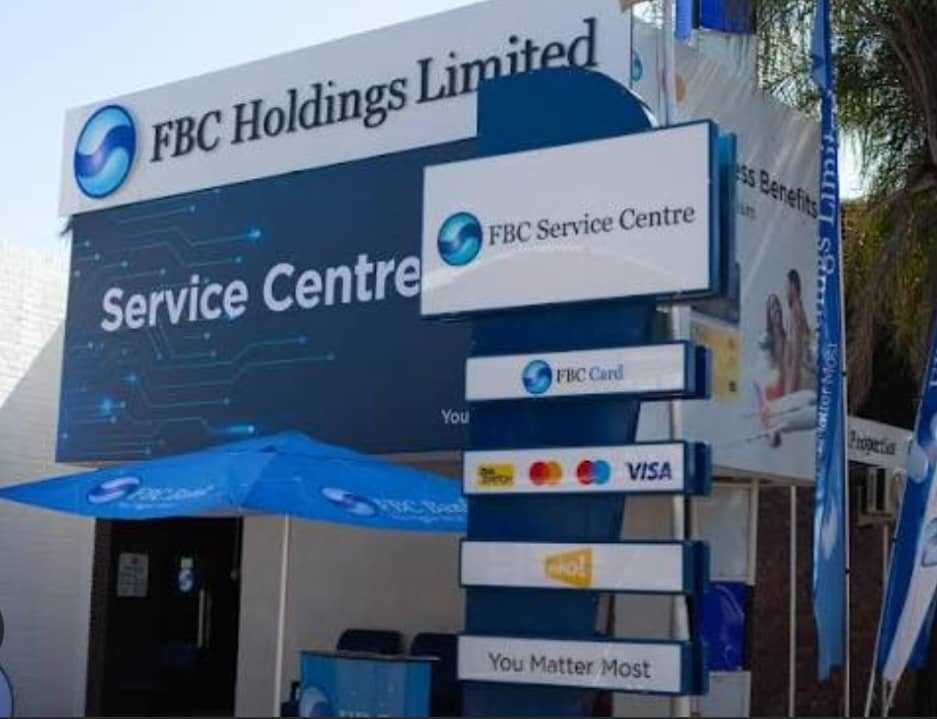
FBC Holdings recorded strong revenue growth in the six months to June 2026, but higher tax expenses weighed heavily on profitability, with profit after tax falling 62.2% despite a 17.7% increase in total income.
The financial services group reported total income of ZWG2.16 billion, up from ZWG1.83 billion in the comparable period, as growth in net interest income, payments and processing, and fees and commissions supported earnings.
FBC said the performance reflected the benefits of its diversified business model, which helped the group navigate a difficult operating environment.
“Total income increased by 17.7% to ZWG2.16 billion,” the group said. “This robust revenue increase has been achieved despite the benefits of our diversified business model, enabling us to withstand the headwinds of the operating environment.”
Profit before tax, however, declined 23.4% to ZWG668.62 million, from ZWG878.51 million in the prior year, while profit after tax fell to ZWG344.22 million from ZWG909.69 million.
The group attributed the sharper decline in after-tax earnings mainly to increased tax expenses.
“Profit after tax decreased by 62.2% to ZWG344.22 million, compared with ZWG909.69 million in the prior year, mainly due to increased tax expenses,” FBC said.
The earnings performance was nevertheless supported by growth across the group's core revenue streams. Net interest income increased to ZWG774.2 million, while net fee and commission income rose 12.4% to ZWG710.3 million.
Non-funded income exceeded funded income during the period, driven by fees, commissions and investment activities, highlighting the growing contribution of non-interest revenue to the group's earnings.
The balance sheet also expanded, although the figures supplied by FBC show significant differences between translated reporting measures that require caution when making direct comparisons.
Related Stories
Loans and advances increased to ZWG11.96 billion from ZWG10.99 billion at December 2025, while deposits and lines of credit rose to ZWG16.12 billion from ZWG15.68 billion.
FBC said total assets rose 9.3% to ZWG20.33 billion, supported by improved liquidity and an increase in the value of its investment portfolio.
Asset quality also improved, with the non-performing loan ratio falling to 3.03% from 4.22% at the end of December 2025.
The improvement in bad loans provides some support for the group's lending expansion, suggesting that the increase in loans and advances has not been accompanied by a deterioration in portfolio quality.
FBC also maintained a dividend for shareholders, with the board declaring an interim dividend of US0.38 cents and ZWG1.95 cents per share for the six months ended June 30.
“The declaration of an interim dividend reflects the Board’s confidence in the Group’s financial position and its commitment to delivering returns to shareholders while retaining sufficient capital to support future growth,” the group said.
The group said digital transformation remained central to its strategy during the period, with investments in technology contributing to operational efficiency and improvements in customer experience.
FBC expects Zimbabwe's economy to maintain positive growth, citing estimated GDP growth of 3.7% in 2025 and a 4.2% projection for 2026, although it warned of broader risks, including geopolitical tensions, trade fragmentation, rising capital costs and climate change.
The group said its diversified business model, digital transformation and disciplined cost management would remain important as it seeks to sustain growth.
“As we look ahead, we remain focused, committed and committed to delivering sustainable growth and long-term value for our stakeholders,” Group Chairman Herbert Nkala said.
The results also brought changes to the group's board. Malvinah Mombeshora was appointed an independent non-executive director effective July 1, while Malvinah Ndlovu stepped down on June 30 after reaching retirement age.







Leave Comments