







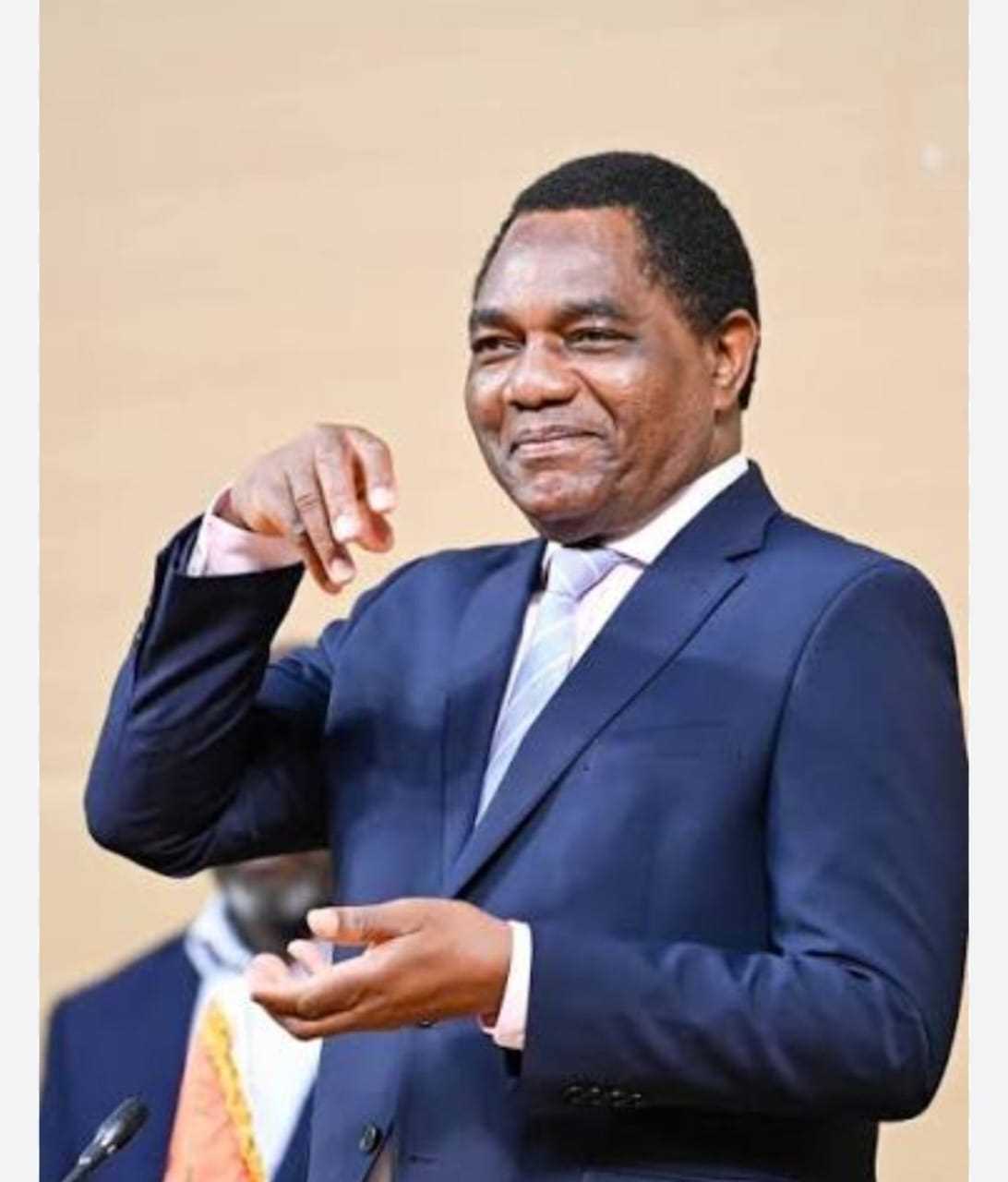
Zambia’s 2026 presidential election has ended with Hakainde Hichilema securing a second five-year term, but the result came after a campaign marred by political violence, allegations of intimidation, a disputed counting interruption, an opposition victory claim and the arrest of opposition-linked figures on election night.
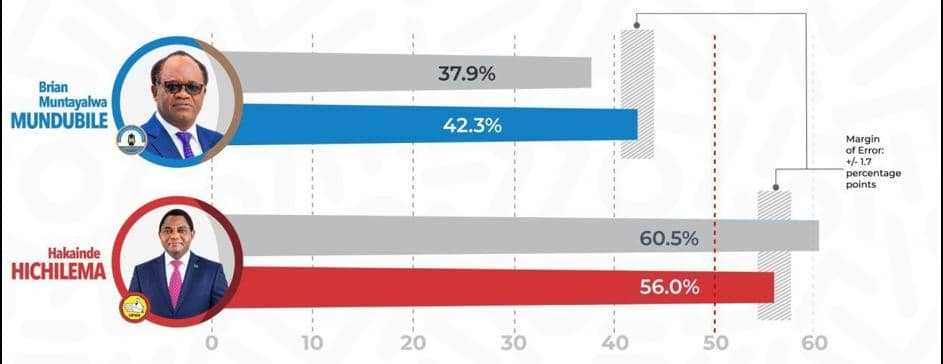
The Electoral Commission of Zambia declared Hichilema the winner with 2,965,326 votes, or 61.4%, against Brian Mundubile’s 1,855,217 votes, giving the incumbent a clear majority and a second term. The result also made Hichilema only the third of Zambia’s six presidents since the return to multiparty politics in 1991 to win two consecutive five-year terms.
But before the final tally, ECZ chairperson Mwangala Zaloumis had warned candidates not to pre-empt the commission, declaring: “Premature claims of victory are illegal.” The warning became significant when Mundubile subsequently claimed he had won while the official national count was still incomplete.
The election had been carrying political baggage long before voters went to the polls on August 13.
The Human Rights Commission of Zambia had documented concerns about political violence, intimidation and inflammatory rhetoric during the campaign. Chairperson Pamela Towela Sambo said such conduct threatened fundamental rights, warning that “violence and threats of violence undermine fundamental human rights and freedoms”, including the rights to life, security, expression, assembly and participation in public affairs.
The commission’s warning was backed by specific incidents. Sambo cited deaths allegedly linked to political violence involving Nelson Chikumbi in Lusaka, Stanley Sakala in Magoye East and Humphrey Lwisha in Kaputa, while also calling for impartial investigations.
The Christian Churches Monitoring Group had separately condemned violence, harassment, intimidation and online threats reported during candidate nominations, saying some aspirants were prevented from filing their nomination papers. The group also criticised the Electoral Commission for not responding swiftly enough to those incidents.
By July, Zambia’s Catholic bishops were warning that the country’s reputation for peaceful political transitions was at risk.
“We wish to be unambiguous on the issue of violence, because ambiguity may cost lives,” the bishops said in their pastoral statement. They added that “no political office, no electoral victory, and no grievance, political or otherwise, can ever justify aggression, intimidation, or the shedding of blood.”
Those warnings gave the election an uncomfortable backdrop. Zambia has long distinguished itself in the region through peaceful transfers of power, most notably when Hichilema defeated Edgar Lungu in 2021 after five unsuccessful presidential bids.
Five years later, however, the political contest was being fought amid allegations that democratic space had narrowed under Hichilema.
The opposition argued that state institutions were being used selectively against political opponents and that the playing field was uneven. The government rejected accusations of repression and maintained that law-enforcement agencies were acting within the law.
The Human Rights Commission itself had urged authorities to ensure that law enforcement remained impartial. In May, it said political competition “must never be pursued through violence, coercion or threats”, while calling on police and prosecutors to act “swiftly, professionally and impartially” in cases of political violence.
That distinction became crucial after voting.
The election itself was broadly peaceful in many areas, but the count was interrupted after the Electoral Commission reported attacks on election officials and the theft of marked ballot papers. A party official was killed and suspects were arrested, while security forces were deployed in Lusaka.
The ECZ subsequently announced that the security threat had been contained and resumed the count.
Yet the interruption created an information vacuum at the most sensitive stage of an election: the period between voting and the official announcement.
Preliminary constituency-level figures were circulating, political parties were compiling their own tallies and pressure was building for the ECZ to announce the national result.
Mundubile moved first.
The opposition candidate claimed victory even though the ECZ had not completed its official tally. He also raised concerns about possible interference with the results and later called for an independent investigation.
Hichilema, meanwhile, urged citizens to remain calm and wait for the official results.
The competing claims transformed the count into a battle over credibility. The opposition’s figures suggested one outcome; the Electoral Commission’s national verification process was pointing towards another.
The problem was not simply who was ahead.
Related Stories
It was whether voters could trust the process sufficiently to accept whoever was eventually declared the winner.
That question became even more complicated on election night when authorities announced the arrest of opposition-linked figures in a separate security operation.
The government said police had raided a suspected militia operation after receiving information about a group allegedly planning an armed insurrection. Authorities said shots were fired at police and that high-grade military weapons were recovered. Eleven people were arrested, including individuals linked to the opposition.
The government described the operation as a national-security intervention.
Mundubile gave a dramatically different account, saying armed personnel had raided his home and that the operation threatened his life. The opposition rejected the government’s militia allegations, while civil-society groups accused the authorities of suppressing opposition activity. The government denied the claims of political repression.
The significance of the arrests lies partly in their timing.
Coming as the country was waiting for the presidential results, the operation intensified an already volatile political atmosphere. It also raised a question that Zambia’s institutions will have to answer: where does legitimate national-security enforcement end and political interference begin?
The evidence presented in court will ultimately matter more than competing political narratives.
But by then, another important development had occurred.
The ECZ resumed counting, continued verifying results from constituencies and eventually announced Hichilema’s victory.
The final numbers are striking when compared with 2021.
Hichilema received 2,852,348 votes when he defeated Lungu in 2021. In 2026, his tally rose to 2,965,326 — an increase of about 113,000 votes.
Mundubile’s 1,855,217 votes, meanwhile, were remarkably close to Lungu’s 1,870,780 votes in 2021.
That means the opposition vote did not collapse despite the change in candidate.
Hichilema instead appears to have consolidated enough support to convert a relatively similar opposition vote into a much larger winning margin.
His victory also reflects an economic argument that remained central throughout the campaign.
Since taking office in 2021, Hichilema’s government has overseen Zambia’s restructuring of its debt, improved relations with international lenders, expanded free education and attracted investment into the mining sector. Copper prices have also provided a major tailwind, strengthening export earnings and the country’s economic outlook.
But the economic recovery has not eliminated popular frustration.
High living costs, unemployment and poverty remained central concerns during the campaign. The opposition argued that macroeconomic improvements had not translated quickly enough into better living conditions for ordinary Zambians.
That gives Hichilema’s second term a dual mandate.
He has been given another five years to turn economic stabilisation into prosperity.
But he has also inherited unresolved questions about democratic governance.
The final result establishes who won the presidency. It does not automatically erase concerns raised throughout the electoral process.
The violence reported before polling, complaints about intimidation, attacks on election officials, stolen ballot papers, the temporary suspension of counting, the premature opposition victory declaration and election-night arrests have all contributed to a more complicated picture of Zambia’s democracy than the final 61.4% figure suggests.





Leave Comments